MAM
IBF advises broadcasters to stop carrying TV commercials on net billing issue


Mumbai/New Delhi: The spat between TV channels and advertising agencies on the net billings issue took a new turn today with the former‘s association, the Indian Broadcasting Foundation (IBF), telling its members to stop airing any TV commercials from 1 May.
At the time of writing, the response to the IBF missive was mixed with some broadcasters taking off commercials while others continued airing them.
The advisory sent last evening said ‘it is in our best interest that broadcasters consider net billing transaction from 1 April to avoid further litigious and tax related issue. To further avoid complications, the release orders were received for you to stop facing the scrutiny from authority. You are best off not carrying work on your channel unless the release orders have been changed for the transacted rate.”

A representative from a niche channel told indiantelevision.com that IBF‘s advisory is a word of caution and there is no clear cut statement saying that action will be taken against those who do not switch off the ads.
“We cannot afford to lose revenue which bigger players like Star and Sony can. Also, it is the channel‘s decision whether it should air ads or not. We are going against the advisory of IBF and not the diktat of the body.”
Also, ads being shown on channels are believed to have been released by agencies which are not the members of AAAI. The advertisements on channels carried during the Indian Premier League 6 (IPL) have also been exempted.
IBF secretary general Shailesh Shah told indiantelevision.com that all member channels have been asked to take ads off the air.
He said the stand-off will continue till the issue is resolved, adding that the television channels had given adequate warning to the advertising agencies.
Star CEO Uday Shankar told indiantelevision.com that the non-airing of ads will continue till the issue is resolved. “We have been negotiating with the agencies for nearly two months now. But it has not worked.”
Referring to his own group, he said ads of those media agencies which were okay with net billing were being carried.
Both Shankar and Shah refused to give details of losses per day to the TV channels, but said the amounts were ‘huge’.
The IBF had last month asked its members to send net bills to media agencies for television commercials carried on channels. These will replace the gross bills which used to be the norm. A month or so earlier, certain broadcasters received notices from the Income Tax Department on gross bills not having a deduction of TDS on 15 per cent agency commissions.
The IBF then decided to move over to the net billing system from the first billing cycle of April, something which the AAAI opposed. The IBF then told its members to defer the dispatch for another week to allow the IBF, the AAAI and the Indian Society of Advertisers (ISA) to hammer out a solution.
“Broadcasters had last week started sending out net bills to agencies. AAAI had responded that its members would return the bills to broadcasters if they were not on a gross basis. It also said that joint representation should be made to government by the IBF and AAAI on resolving the issue. But the two could not come to terms on a common ground,” says a media observer. “Fearing that the impasse would continue, the IBF decided to take this extreme step.
Gross billing is the value of the bill including the 15% agency commission; net billing is the value of the bill minus the commission.



Brands
Jubilant FoodWorks faces Rs 47.5 crore GST demand, plans appeal
Tax authorities flag alleged misclassification of restaurant services
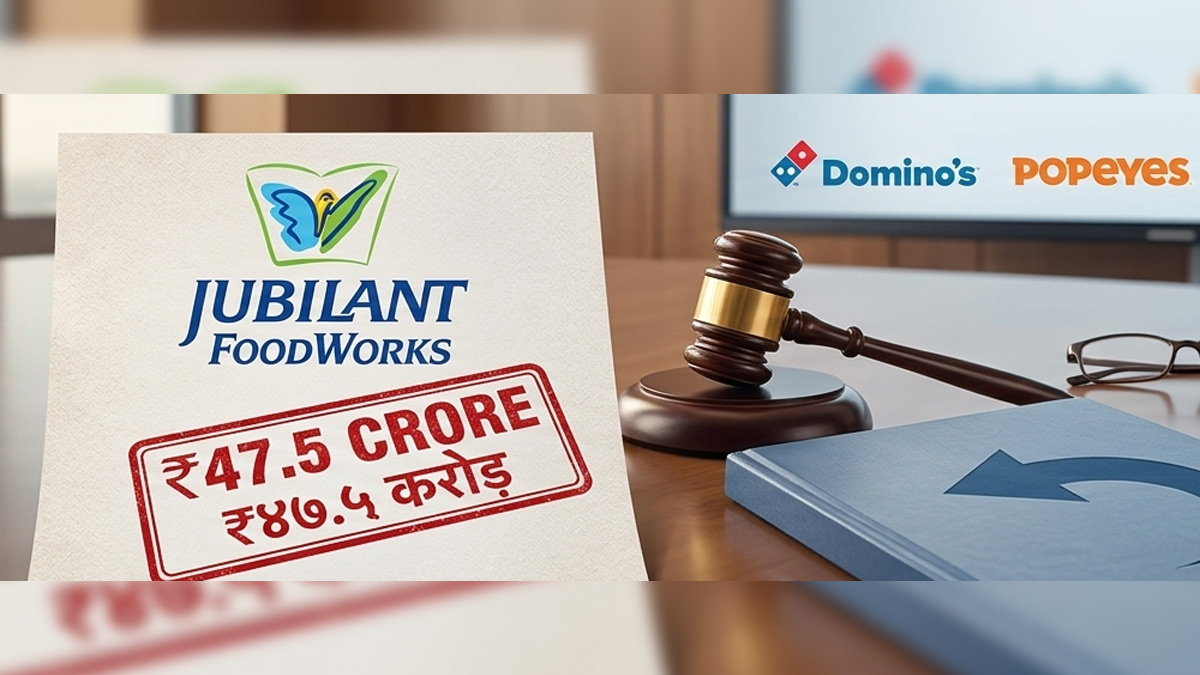
MUMBAI: Jubilant FoodWorks Limited has landed in a tax tussle after receiving a GST demand of Rs 47.5 crore from the office of the additional commissioner of CGST and central excise in Thane, Maharashtra.
The order, issued under the provisions of the Central Goods and Services Tax Act, 2017, relates to an alleged incorrect classification of certain services under the category of restaurant services. According to the tax authorities, this classification resulted in a short payment of goods and services tax for the period between the financial years 2019-20 and 2021-22.
The demand includes Rs 47.5 crore in GST along with an equal amount as penalty, in addition to applicable interest. The order was received by the company on March 13, 2026.
In a regulatory filing to the BSE Limited and the National Stock Exchange of India Limited, the company said it disagrees with the order and believes its arguments were not adequately considered.
The company is preparing to challenge the decision and plans to file an appeal. It added that once the redressal process is complete, the demand is likely to be dropped.
Despite the sizeable figure attached to the notice, the company said it does not expect any material impact on its financials, operations or other activities.
The disclosure was signed by Suman Hegde, EVP and chief financial officer, who confirmed that the company received the order at 19:06 IST on March 13 and has already initiated steps to contest it.
The development places the quick service restaurant major in the middle of a tax debate that could hinge on how certain restaurant-linked services are classified under GST rules. For now, the company appears ready to take the matter from the tax office to the appeals desk.







