MAM
I&B ministry urged to review soft provisions in advertising code

NEW DELHI: The Ahmedabad-based Consumer Education and Research Centre (CERC) has expressed “serious concerns” about the inadequacies in the draft Code and Guidelines for television advertising, prepared by a committee under the information and broadcasting ministry.
The draft Code states that it “is designed to inform advertisers of the standards expected in television advertising” and “is based on enduring principles that advertising should not mislead, cause deep or widespread offence, or lead to harm, particularly to the vulnerable.”
But according to CERC Senior Director Pritee Shah, the draft Code does not cover advertisements in the print media and on the Internet. CERC has pointed out in its representation to the Ministry that the code “does not provide complete protection to the interest of consumers”.

Furthermore, it says the important aspect of the pre-vetting of advertisements is also missing. CERC has proposed the pre-vetting of advertisements in certain fields which are meant for vulnerable consumers such as children, the sick, etc. as well as in fields related to over-the-counter drugs, food supplements, health and physical fitness, weight control, baldness, financial matters, hazardous substances, etc.
In the light of the experience and insight gained by CERC vis-?-vis advertisement Standards and regulatory mechanisms as well as in the light of the I&B draft Code, CERC has urged the I&B ministry in its representation to frame a comprehensive law on advertisements and set up Advertisement Standards Regulatory Commissions at both national and state levels.
In another development, the Union ministry had set up a working group on Misleading Advertisements under the chairpersonship of Alka Sirohi, additional secretary in the department of consumer affairs. As a member of the Group, Prof Manubhai Shah, chairman emeritus, CERC, was entrusted with the preparation of a long-term report and recommendations.
Shah says the most disturbing factor is that the ministry proposes to allow the broadcasting of alcohol advertisements. CERC has opposed this approach in the interest of public health, especially keeping the Indian scene in view.
CERC has also emphasized the need for substantiation of all advertisements and their claims with documentary evidence and independent research. Besides, it has sought provisions in the Code for sanction, issue of corrective advertisements, replacement of goods and services, compensation to the consumers who have suffered loss and/or injury because of false, unfair, illegal, indecent or misleading advertisements and provisions for minimum imprisonment and fine in the case of any breach of the Code.
The Food Safety and Standards Act 2006 provides for fine for a misleading advertisement, which may extend up to Rupees 10 lakh.
The representation has pointed out that the present performance of the Advertisement Standards Council of India (ASCI), which has only one office at Mumbai, “is far from satisfactory and is not effective in curbing false or misleading advertisements”. ASCI has also failed to address the issue of disguised advertisements in the form of advertorials or editorials. The decisions of ASCI are not respected or complied with by their own members. Moreover, advertisements not only in the electronic media but also those in the print media need to be regulated.
Furthermore, CERC says that decisions on advertisements cannot be entrusted to the complaints committee of ASCI which cannot implement its own orders through its own members. This should be done by an independent neutral body, consisting of independent, impartial leading citizens. In any case, this cannot be effective unless there is a special piece of legislation to deal with all types of advertisements.
The representation has added that under a CERC-European Union project on regulatory framework for false and misleading advertisements, CERC has prepared a draft Indian Code of Advertisement Standards and a draft Law called Advertisement Standards Regulatory Commission Act. Under the project, senior CERC representatives undertook study tours of various countries of Europe for research on the regulation prevailing there and organised a one-day seminar each at Ahmedabad, Mumbai, Kolkata and Chennai, involving a cross-section of stakeholders, viz. advertisement agencies, the media, legal experts, Government officials, academics, consumer groups, etc.


Brands
Jubilant FoodWorks faces Rs 47.5 crore GST demand, plans appeal
Tax authorities flag alleged misclassification of restaurant services
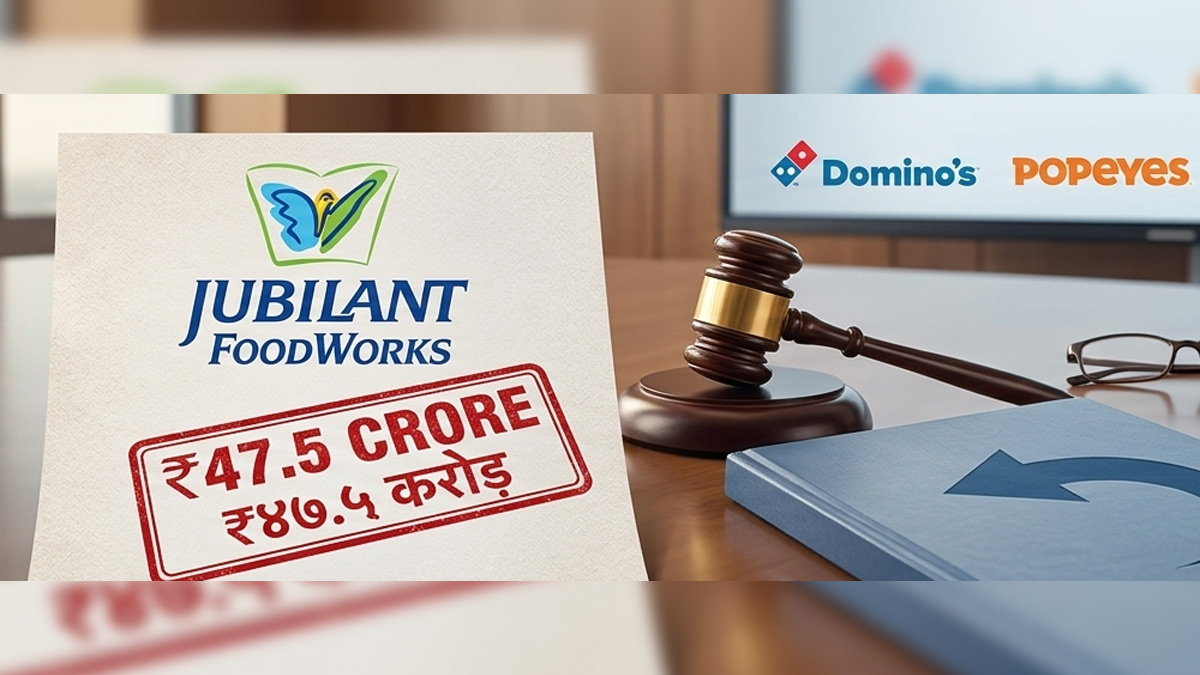
MUMBAI: Jubilant FoodWorks Limited has landed in a tax tussle after receiving a GST demand of Rs 47.5 crore from the office of the additional commissioner of CGST and central excise in Thane, Maharashtra.
The order, issued under the provisions of the Central Goods and Services Tax Act, 2017, relates to an alleged incorrect classification of certain services under the category of restaurant services. According to the tax authorities, this classification resulted in a short payment of goods and services tax for the period between the financial years 2019-20 and 2021-22.
The demand includes Rs 47.5 crore in GST along with an equal amount as penalty, in addition to applicable interest. The order was received by the company on March 13, 2026.
In a regulatory filing to the BSE Limited and the National Stock Exchange of India Limited, the company said it disagrees with the order and believes its arguments were not adequately considered.
The company is preparing to challenge the decision and plans to file an appeal. It added that once the redressal process is complete, the demand is likely to be dropped.
Despite the sizeable figure attached to the notice, the company said it does not expect any material impact on its financials, operations or other activities.
The disclosure was signed by Suman Hegde, EVP and chief financial officer, who confirmed that the company received the order at 19:06 IST on March 13 and has already initiated steps to contest it.
The development places the quick service restaurant major in the middle of a tax debate that could hinge on how certain restaurant-linked services are classified under GST rules. For now, the company appears ready to take the matter from the tax office to the appeals desk.