MAM
IAS introduces mobile in-app support for unified media quality and eye-tracking

Mumbai: Integral Ad Science (Nasdaq: IAS), a global media measurement and optimisation platform, announced the expansion of its Quality Attention measurement product, adding support for mobile in-app environments. Quality Attention is the first measurement product to unify media quality and eye tracking with machine learning to deliver proven results.
This enhancement to Quality Attention continues IAS’s commitment to providing advertisers with expanded coverage across additional channels and formats. In addition to expanded environment support, the Quality Attention model has improved the accuracy of the correlation between attention scores and outcomes. IAS’s attention model is designed to predict if an impression is more likely to lead to a business result including awareness, consideration, and conversion.
According to eMarketer, apps are predicted to reach a dominant 82 per cent share of the anticipated $200B in mobile ad spend this year. Advertisers now have access to an attention measurement product that will drive superior results across their mobile in-app campaigns and protect their growing investments in mobile. In the recent IAS report, Taking Action on Attention: Volume II, when comparing business results between low and high attention scores, higher attention impressions experienced success rates (e.g. conversions) that were twice as high as those with low attention.

“It’s essential for attention measurement to drive outcomes and campaign performance for advertisers,” said Integral Ad Science CMO Khurrum Malik. “The latest enhancements to our purpose-built Quality Attention offering are expected to provide advertisers with more granular signals and expanded coverage across the channels and formats that are most important to them.”
Quality Attention provides global advertisers with:
● Expanded Coverage and Metrics: Measurement across mobile in-app environments and new metrics including the number of ads that paused, resumed, skipped and started a video ad, in addition to volume change and sub-metrics of volume change.
● An Advanced Machine Learning Model: A singular view of campaigns’ attention performance, trained based on a pool of data consisting of billions of impressions and millions of conversion events.
● Proven Performance and Brand Results: Up to a 130% lift in conversion rates when comparing high attention impressions to low attention impressions, with greater attention scores seeing 91 per cent higher brand consideration and 166 per cent higher purchase intent.
● Unification of Media Quality with Human Attention: IAS is the first company to combine one of the world’s largest consumer attention biometric data sets with media quality metrics to provide the most accurate picture of attention for global advertisers.
With Quality Attention, advertisers can capture higher attention to drive campaign performance and unlock proven results. Quality Attention uses advanced machine learning technology, actionable data from Lumen Research’s eye-tracking technology, and a variety of signals obtained as part of IAS’s core technology, including viewability, ad situation, and user interaction, and weighs them into a single attention score.
“The latest enhancements to IAS’s Quality Attention offering are a step forward in creating a more accurate picture of attention for advertisers,” said Mike Follett, CEO at Lumen Research. “We were excited to combine our cutting-edge eye-tracking data with IAS’s attention model and now advertisers have access to even more granular information across the in-app environment.”
In January 2024, IAS announced the general availability of its Quality Attention measurement product – the first to unify media quality and eye tracking with machine learning. The offering provides transparent metrics to help global advertisers increase return on investment, drive brand consideration, and boost conversions.





Brands
KKR sixes to power EV charger rollout under VIDA campaign
Cricket meets clean mobility as big hits spark India’s charging growth
NEW DELHI: VIDA, the electric mobility arm of Hero MotoCorp, has teamed up with Kolkata Knight Riders to launch a campaign that turns cricketing flair into real-world impact.
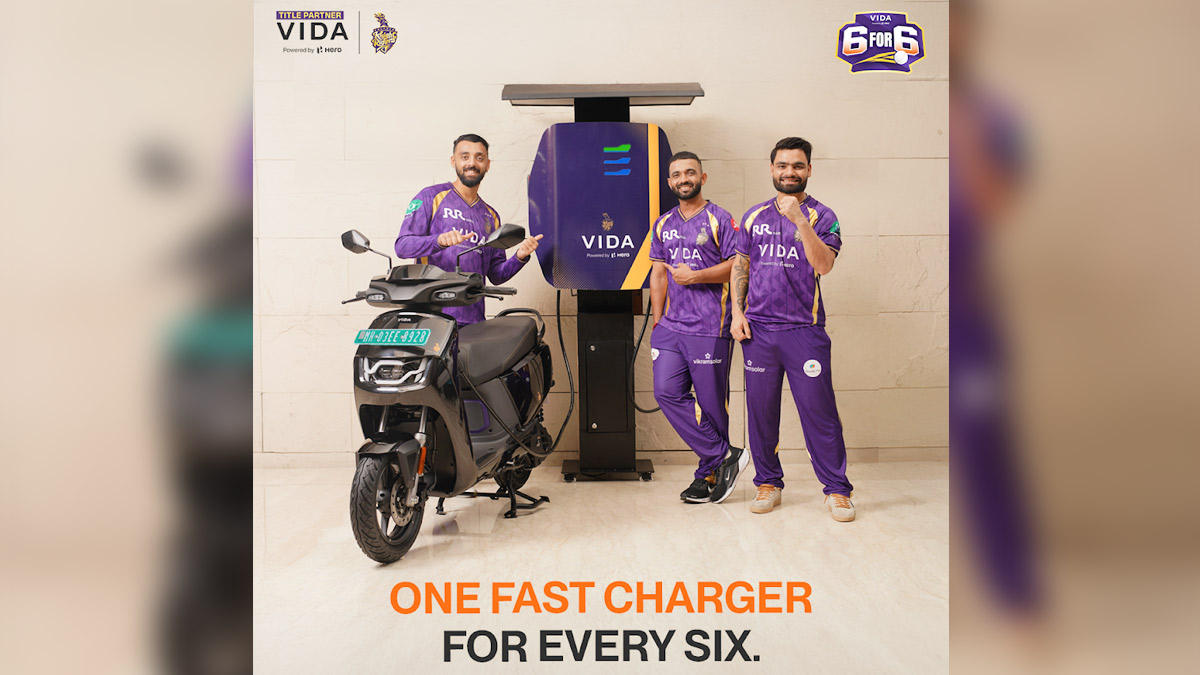
Titled ‘6 for 6’, the initiative promises to install a 6kW fast EV charger for every six hit by KKR during the ongoing Indian Premier League season. The idea is simple but powerful, as each big hit on the field contributes directly to expanding India’s fast-charging infrastructure.
The campaign builds on VIDA’s growing network, which already spans over 5,300 fast-charging points across more than 430 cities. With EV adoption gaining pace, the brand is using cricket’s mass appeal to accelerate both awareness and infrastructure growth.
Explaining the thinking behind the move, Hero MotoCorp emerging mobility business unit chief business officer Kausalya Nandakumar said, “Cricket has an incredible ability to unite and inspire millions across the country. With the ‘6 for 6’ campaign, we are turning every big hit on the field into a step towards a cleaner and a more accessible mobility future.”
She added that VIDA’s expanding fast-charging network and removable battery technology are designed to make EV ownership more convenient and practical for everyday users.
From the franchise’s side, the campaign is also about giving on-field moments a larger purpose. Kolkata Knight Riders chief executive officer Venky Mysore said, “The ‘6 for 6’ campaign exemplifies the potential of sport as a platform for meaningful, real-world impact. By linking every six to the expansion of EV charging infrastructure, this partnership transforms fan excitement into tangible progress.”
As part of the rollout, VIDA has introduced co-branded charging stations in KKR’s signature colours, with a flagship installation unveiled alongside team players. The chargers are designed for quick top-ups, powering VIDA scooters from zero to 80 percent in about an hour, while also being positioned along key highways to support longer journeys.
The initiative also taps into VIDA’s removable battery system, which allows users to charge using standard household plug points, adding flexibility to the charging ecosystem.
By blending the thrill of cricket with the urgency of clean mobility, VIDA and KKR have found a neat way to make every six count twice, once on the scoreboard and again on India’s road to an electric future.








