MAM
IAA debate: Metro markets are losing their sheen to tier II & III towns?


MUMBAI: The first in a new season of IAA Debates, organised by the International Advertising Association (IAA) India Chapter and presented by the Dainik Bhaskar group, will be held on Friday, November 28, 2014 at Gallops, Mahalakshmi Race Course, Mumbai.
Industry captains will speak for and against the motion on: Metro Markets are losing their sheen to Tier II & III Towns for Consumer Products/Services. The speakers are

• Sadashiv Nayak, CEO, Future Retail Ltd
• Ronita Mitra, Senior VP, Brand Communication & Insights, Vodafone India
• Amitabh Pande, Senior Director – Consumer Insights and Strategy, PepsiCo India Region
• Atul Phadnis, CEO, Whats-On and GM (APAC), Gracenote
The debate will be moderated by Mini Menon, Executive Editor, Bloomberg TV India.
Srinivasan K Swamy, President, IAA India Chapter & Vice President – Development, Asia Pacific, IAA and Chairman & Managing Director, R K SWAMY HANSA Group, on the new season of IAA Debates said, “The IAA Debates has traditionally seen industry leaders deliberate on topics of vital importance to the stakeholders we serve. We have had debates on the relevance of print and TV in the digital age – whether social media is a good business, the role of creative becoming more critical with media fragmentation. I am happy that the new season of IAA Debates is kicking off with a topic of much relevance to the fraternity.”
Pradeep Dwivedi, Chief – Marketing & Corporate Sales Officer, D B Corp Ltd. added, “We are delighted to partner with IAA in bringing the thought-provoking industry debates again to the entire advertising & marketing fraternity. The great French essayist, Jospeh Joubert, once famously said that ‘It is better to debate a question without settling it than to settle a question without debating it.’ At Dainik Bhaskar, it is our constant endeavour to contribute to this spirit of discovery and hence be a harbinger of change and evolution. We look forward to the upcoming Dainik Bhaskar-IAA debates as an important step in that direction.”
The IAA Debates hosted so far have been in Mumbai, Goa, Delhi, Bengaluru, Hyderabad and Chennai. The Debates have featured senior advertising, media and marketing professionals such as Prasoon Joshi, Vikram Sakhuja, Lloyd Mathias, Josy Paul, Pratap Bose, Deepika Warrier, Anupriya Acharya, Arun Anant, Arunabh Das Sharma, Partha Sinha, Monica Tata, Vikram Chandra, Punitha Arumugam, Mahesh Murthy, Virginia Sharma, Ashok Lalla and Zerin Rahman, speaking for and against the motion.
Delegates (including media) wishing to attend the IAA Debates on November 28, need to pre-register at execseciaa@gmail. Or call: +91 22 2874566 (Extn 162). Please send in your name, designation and organisation represented. A limited number of seats are available and you will be intimated by the IAA India Chapter.






Digital
OpenAI’s Stargate lead Peter Hoeschele exits with two senior leaders
Trio behind compute push set to join new startup amid leadership reshuffle
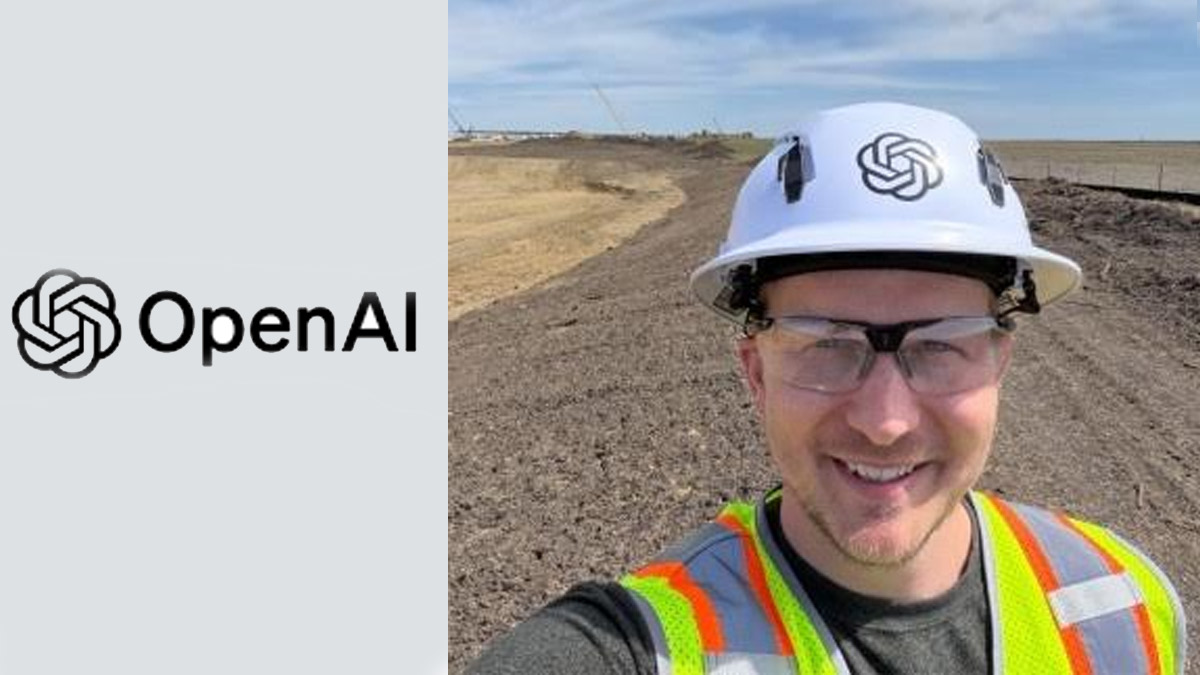
SAN FRANCISCO: Peter Hoeschele, a key figure behind OpenAI’s early Stargate data centre initiative, has exited the company, according to a report by The Information.
The departure is part of a broader leadership shift, with two other senior executives, Shamez Hemani and Anuj Saharan, also set to leave in the coming days. All three are expected to join the same new startup, although details about the venture remain under wraps.
The trio played a central role in OpenAI’s Stargate effort, an initiative aimed at building large-scale data centre capacity in-house to reduce reliance on external infrastructure providers. Their exits mark a notable moment for the company’s compute strategy as it continues to scale rapidly.
OpenAI spokesperson said in a statement to The Information, “We’re grateful for the contributions Peter, Shamez, and Anuj have made to OpenAI and wish them the very best in what comes next.” The company also pointed to the recent appointment of Sachin Katti to lead its industrial compute organisation, signalling continuity in its infrastructure roadmap.
OpenAI has indicated that it does not plan to directly replace Hoeschele’s role, suggesting a possible restructuring of responsibilities within the team.
As competition intensifies in the race to build next-generation AI systems, leadership changes in core infrastructure teams are likely to draw close attention. For now, the spotlight shifts to what this departing trio builds next, and how OpenAI adapts as it scales its ambitions.






