MAM
“I just think you can never sit on your laurels”: NB’s Alan Dye

Mumbai: Since the last in-person Designyatra in 2019, the world has spun on its head.
The pandemic prompted a re-evaluation of not just how we work, but the kind of work we’re creating as well. With massive shifts in nearly every aspect of life, it triggered the need for new design narratives to match the flux of life. We had to reimagine how we engage and communicate with everything from brands and business to art, entertainment, and activism. Mindsets changed. And so did the tools available to us. It was time for a reset.
A reset. It’s not just about starting over; it’s about reimagining, realigning, and redrafting some of the rules. It’s about rethinking conventions, challenging norms, and creating fresh narratives. All to remain relevant.

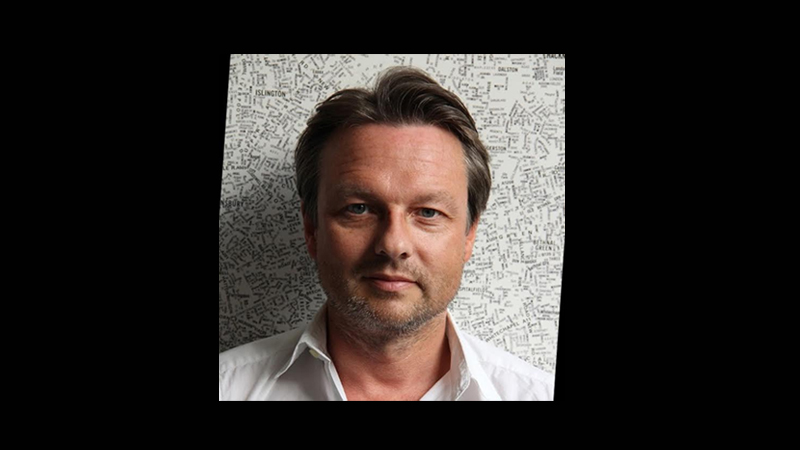
Indiantelevision.com caught up with Alan Dye on the sidelines of the Kyoorius Design Yatra 2023.
Alan co-founder and creative director of NB boasts over 30 years in design, leading notable projects like Philharmonie Luxembourg, Pernod Ricard and the V&A.
Alan is a seasoned judge for international awards, he chaired Typographic Circle for nearly a decade, fostering design appreciation through curated talks. Alan’s impact is undeniable, bridging creativity and industry recognition.
On the ‘reset’ in your life in the context of this year’s Designyatra theme being ‘Reset’
Oh my god! Well, since COVID, I think I have been resetting every single day. In fact, every single day at work for the last 25 years running my own company, we’re always resetting. I just think you can never sit on your laurels. Every single brief is new. You just got to keep going forward and thinking about the new and just working with incredible, amazing people. I think as a designer, you’re just resetting all the time. As soon as you become a designer you see everything around you, i.e., you walk into a restaurant, you pick up the atmosphere, you look at the tablecloth, the music playing, the ambiance of the light, the typography on the menu, and I just think that’s what you do as a designer. It’s just natural in you. So I don’t know if that’s resetting. But I think reset for me is just always constantly thinking about stuff or solving problems. In the bigger sense, I suppose, reset, and after COVID times, it’s just who we think and how we do things I imagined. I don’t really have a kind of heavy, serious question, because running a business is quite a freedom thing. We’re always trying to reinvent or be ourselves and tell different stories. For a designer, resetting is just part of our natural disposition, something we do almost instinctively.
On some of your memorable works
For me, the most memorable work is always the next one, to be honest. You start with a blank sheet of paper. I could be designing the Philharmonie Luxembourg, or the set of stamps for the wall mount or even crafting a Mother’s Day card for my mom. I approach them all with the same dedication. Whatever you do, even if it’s washing dishes, I believe in doing it well. I’ve had the privilege of working on various projects, such as the V&A in England, collaborating with a theater company, and currently, we’re involved with Pernod Ricard. I don’t really have a favorite among them; they’re all memorable in their own way. The most memorable one is usually the current project we’re working on. It’s all about looking forward to the jobs of tomorrow, and I find that quite enjoyable.
On your thoughts on the incredible impact you’ve made and bridged creativity and industry recognition
I had no idea I was incredible. I work in London, and there are so many incredible designers, not just in London, but all around the world. So I don’t really have an answer for that. We’re all part of a larger creative community, and I believe that making the world better and encouraging people to think differently is a wonderful pursuit.
On the feeling of attending Designyatra
Originally, when I was approached, it was just about two weeks ago. It happened because I asked Ashish, who happens to be a mutual friend with Michael Wolfe, a well-known designer in England who played a significant role in shaping the global brand and Indian portfolio. I told Ashish about this book we’ve created with Michael, who is 90 years old, and it’s currently on Kickstarter. I asked him if he could help promote it. He responded by suggesting that I come and be the emcee for an event. At that moment, I didn’t even know what “MC” meant, so I had to quickly look it up. My initial reaction was a mix of surprise and doubt, thinking, “I’ve never done this before.” Now, they want me to stand up and introduce 22 individuals who are making a substantial difference in the world, all without personal agendas but with a shared goal of making the world a better place for everyone.
Being part of Design Yatra is an exceptional platform for these remarkable people to share their experiences, whether they are product designers, furniture makers, AI specialists, graphic designers, space entrepreneurs, or any other creative profession. They can share their insights with the audience, and if just one person leaves feeling inspired, that’s truly remarkable.
On Designyatra helping upcoming talent in India
Certainly, the inspiration will come naturally just by being here. If Designyatra doesn’t inspire young designers, then what will? Designyatra is simply incredible, serving as a fantastic platform for both young and experienced designers. It doesn’t matter if you’re 90 years old or you’re still a foetus – Designyatra is the place to be. It’s an event that can inspire people of all ages to look at things differently, challenge conventional thinking, and generate amazing ideas. And here’s the thing, whether you realize it or not, we are all designers in one way or another.
On your secret sauce behind your success and mantra for the audience here
Each day, I head to work with a sense of excitement, like butterflies in my stomach, because I’m truly passionate about what I do. If I were to share a mantra with young designers, it would be this: “Don’t overthink it; just get to work.” Overthinking can bog you down. What’s most crucial is to be yourself and trust your instincts. Your intuition and gut feeling are valuable guides. Regardless of what others might advise, you always have that inner sense. Follow your instincts and let your subconscious, which has been working behind the scenes, catch up with your conscious mind.
Additionally, collaboration is key. Work with exceptional people, collaborate with those who might seem unexpected partners, because the synergy created by collaborating with like-minded but unexpected individuals often leads to a unique and remarkable outcome. In my world, one plus one typically equals three. So, don’t hesitate to collaborate with people who may seem a bit crazy or unconventional; it can yield extraordinary results.

MAM
India’s experience economy grows as live events market hits Rs 17,000 crore
EY-Parthenon and BookMyShow report finds 78 per cent Indians prefer experiences over products

MUMBAI: India’s live entertainment scene is no longer just about music, comedy or festivals. It is increasingly becoming a powerful stage for brands seeking deeper connections with consumers.
A new report titled Beyond Attention, Into Immersion by EY-Parthenon and BookMyShow suggests that India’s experience economy is entering a strong growth phase, driven by consumers who are choosing memorable moments over material purchases.
According to the study, the country’s live events ecosystem, which includes concerts, comedy tours, festivals and immersive exhibitions, is estimated to reach around Rs 17,000 crore in 2025. The growth reflects a broader cultural shift in how Indians spend their time and money.
The report finds that 78 per cent of Indian consumers now prefer spending on experiences rather than physical products. From attending concerts and festivals to participating in interactive brand installations, audiences are increasingly seeking engagement, community and shareable moments.
This change in consumer behaviour is particularly evident among younger audiences who want to participate rather than simply watch. Instead of passively consuming entertainment, many now look for experiences that allow them to interact, express themselves and connect with like minded communities.
For marketers, this shift has turned experiential marketing into a strategic priority rather than a promotional add on. Brands are moving away from interruption driven advertising and towards immersive formats that allow consumers to discover, test and emotionally connect with products.
The report suggests that experiential marketing now plays a role across the entire consumer journey. It can spark brand discovery, strengthen storytelling, encourage product trials and ultimately influence purchase decisions and loyalty.
The impact is already visible. Post event surveys conducted among 7,450 attendees at major events including Lollapalooza India and concerts by Ed Sheeran and Guns N’ Roses highlight the effectiveness of these experiences.
Around 59 per cent of attendees recalled brands they interacted with during the events, while 55 per cent said those interactions increased their likelihood of purchasing from the brand. A further 63 per cent reported that brand activations actually enhanced their event experience rather than distracting from it. Nearly 29 per cent also said the interaction improved their perception of the brand.
Brands are also changing the way they approach events. Instead of simply putting logos on stages or banners, companies are building experiences into the fabric of the event itself.
Financial services brands, for example, are offering early ticket access, exclusive lounges and curated event experiences for cardholders. Fashion and beauty companies are using festivals to showcase products through pop ups, interactive installations and social media friendly spaces that encourage visitors to share their experiences online.
The scope of experiential marketing now stretches far beyond live entertainment. Retailers are designing experiential stores where customers can explore products in lifelike environments. Entertainment platforms are extending popular intellectual properties into immersive exhibitions and fan events. Technology is also playing a growing role through augmented reality and virtual try on tools that blend digital discovery with physical interaction.
Cultural festivals remain one of the most powerful platforms for such engagement in India. Celebrations such as Navratri and Holi bring together large communities, emotional participation and heightened consumer spending. For brands, these moments offer an opportunity to become part of the celebration rather than simply advertise around it.
Despite the momentum, the report notes that some companies still hesitate to adopt experiential marketing at scale. Budget constraints, limited expertise and uncertainty around measuring return on investment remain common concerns.
However, the growing body of data around consumer engagement and brand impact is gradually addressing these challenges. More marketers are expected to allocate a larger share of their budgets to experiential formats over the coming years.
Taken together, the findings point to a clear trend. As consumers seek meaning, memories and moments worth sharing, live experiences are emerging as one of the most powerful ways for brands to stay relevant in a crowded media landscape.