MAM
“I believe in the power of self-branding and good PR:” Suresh Mansharamani

Mumbai: In today’s fast-paced business environment, having a strong entrepreneurial spirit and leveraging modern marketing techniques is essential for success. Entrepreneurs must not only be resilient and innovative but also adept at using digital tools to build their personal and business brands. With the rise of social media, establishing a solid online presence has become a crucial aspect of business strategy, helping leaders connect with their audience and grow their ventures.
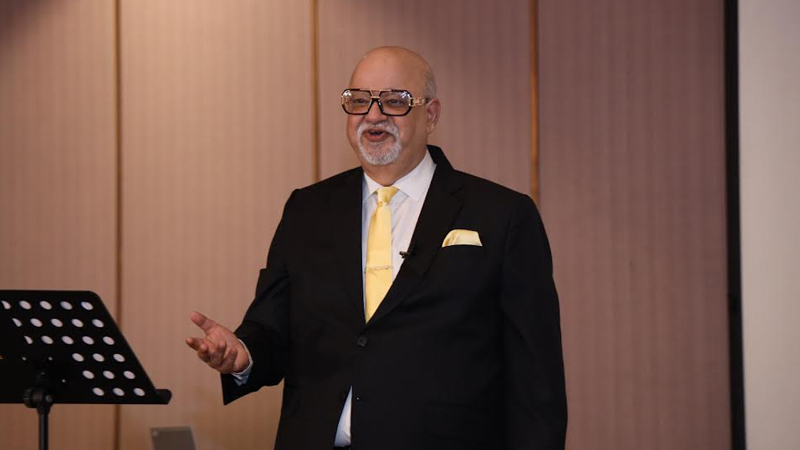
One exemplary figure who embodies resilience and innovation in the business world is Suresh Mansharamani. Starting with just 300 rupees, he launched a 300-times oversubscribed IPO in 1995. He has trained over 10,000 business owners, authored seven books, and built a thriving community of over 5,000 members. Honored with the “Business Excellence Award,” he also boasts a strong social media presence with 1.3 million followers on Instagram and 480,000 plus YouTube subscribers. He is the co-founder and CEO of Tajurba Business Network, dedicated to empowering MSMEs through comprehensive business education.
Indiantelevision.com caught up with a dynamic entrepreneur, motivational speaker, prolific business leader and Tajurba Business Network co-founder Suresh Mansharamani to know more about his journey and exemplary works.

Edited Excerpts:
On your early experiences shaping your entrepreneurial journey and philosophy
My early experiences have made me a resilient person, someone who loves embracing challenges and coming up with creative ideas to navigate through them successfully. I was born in a refugee camp, you can assume how things would have unfolded for me. However, I was always excited for new opportunities that came along my way, that allowed me to grow from a novice to an industry leader.
I started with Rs 300 and built a 300-times subscribed IPO. But that’s not all, I too have failed a couple of times. My online DVD rental business MovieMart., in which I invested a lot, did well earlier but later failed. I was initially affected by it but with time, I learned many important lessons. This was a kind of awakening, that led me to establish Tajurba Business Network in 2017, through which I aim to empower MSMEs to drive them towards success. My only mantra is, “Never give up and stay resilient in the face of adversity.” This is what keeps me going at this age.
On the importance of personal branding for business leaders in media and marketing sector
Times have changed and so have the techniques of marketing and brand building. Gone are the times, when customers wouldn’t be interested in connecting with the founders of the brand. This is the era of digitization, where entrepreneurs are building their strong personal identities online. Every entrepreneur must build his brand, which defines who he is and describes his potential. Since most people use social media, they will connect with you and will acknowledge your expertise. This will help your brand to gain visibility and will further convert it into leads.
On the common challenges that entrepreneurs face today, and the strategies you’ve found effective in helping them overcome these challenges
Although new entrepreneurs face many challenges. However, some of their common challenges include how to attract investors, lack of adaptability and financial knowledge due to which, many entrepreneurs give up too early. I have built a comprehensive set of strategies, through which I help my clients to deal with such issues. Most importantly, I empower my clients with financial knowledge as without it, your business will be in ventilator mode. For this, I empower my clients by teaching them how to practice smart financial management and ways through which, they can secure funds at low interest rates. Apart from this, I emphasize the need to promote innovation as without it, the business cannot stay afloat.
On strategies that you’ve found most effective in integrating digital tools to enhance customer engagement and increase brand visibility
I believe in the power of self-branding and good PR. Personally, I have benefitted from it and I highly recommend MSME owners to invest in it. Instagram, YouTube and Facebook are great portals to start with. One can do paid promotion of their product or service and can directly reach out to their potential customers. Using these tools effectively can ensure their brand’s presence and can increase the engagement of their customers. Moreover, people share feedback, which is one of the best ways to generate organic leads, without spending a dime on it.
On assisting marketing teams in interpreting data to improve ROI and campaign effectiveness
When we receive the data, we measure it according to ROI (return on investment) and ROAS (return on advertisement spent). I regularly communicate with my marketing team to ensure that our ad campaigns are producing effective results. We carefully calculate the amount spent on ad campaigns and continuously optimize them to ensure they reach the right audience. This involves data analysis and implementing strategies to enhance campaign effectiveness with a focus on securing quality leads with minimal investment. By regularly monitoring our campaign’s performance, we ensure our marketing efforts are efficient and cost-effective.
On maximising the impact of social media marketing efforts
Social media marketing knowledge and its application is a must-have skill that every entrepreneur should gain. I have been using social media to create my brand and with time, I have been successful in building a community of 5 lakh+ subscribers on YouTube and over 10 lakh followers on Instagram. So, I think, I am capable of answering this question.
Therefore, I would highly recommend you to understand your audience. For this, you must conduct research to identify their demographics, interests and online behaviour. Publish engaging content and actively engage with your audience so they can connect with you. Also, deep dive into analytics and regularly monitor your social media campaign’s performance. Additionally, try to reach out to more people by using paid advertising with which you can target specific audiences and lastly, always stay updated with the trends. Follow these tips and you will observe an improvement.

Brands
Vodafone Idea elevates Vineeth Jayendranath as VP, marketing head Mumbai
Telecom marketer takes charge of Mumbai circle with growth and brand focus
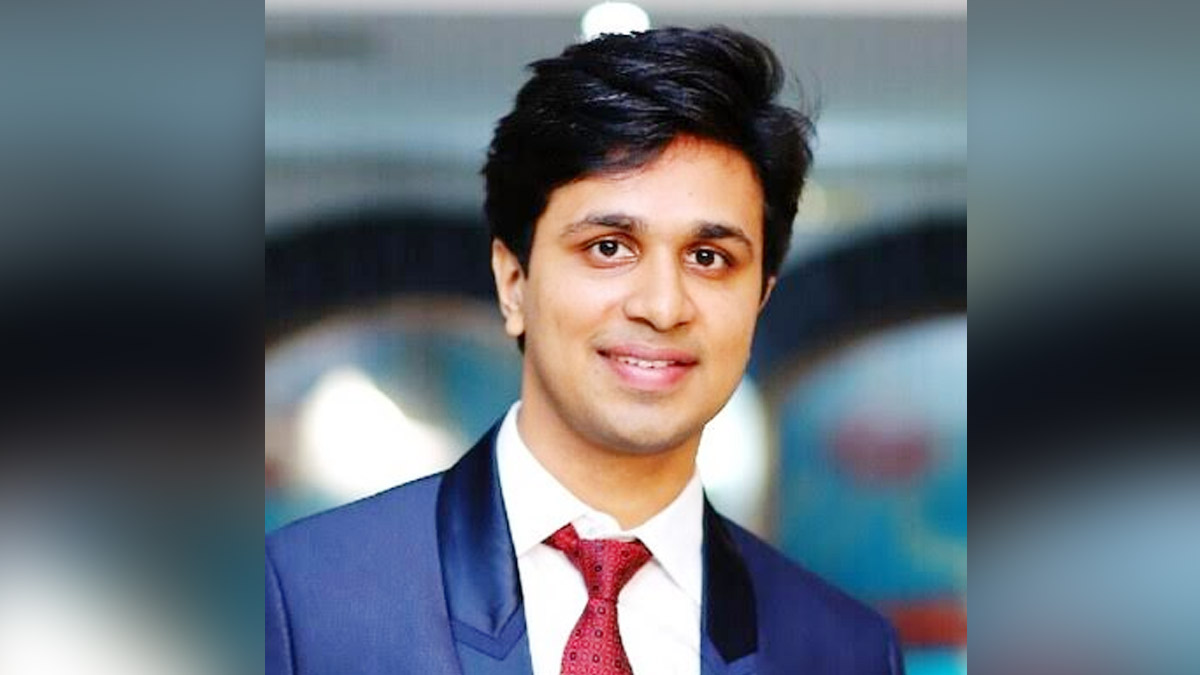
MUMBAI: Vodafone Idea Limited has promoted Vineeth Jayendranath to vice president, marketing head for the Mumbai circle, marking a key milestone in his career as the telecom operator sharpens its regional strategy.
In his new role, Jayendranath will lead marketing efforts across prepaid and postpaid segments in one of the country’s most competitive telecom markets. His mandate includes driving revenue growth, strengthening brand positioning, and deepening customer engagement, while also managing profit and loss responsibilities for the circle.
Sharing the update, Vineeth Jayendranath said, “Excited to share, I am starting my new stint as Vice President, Marketing Head for Mumbai circle at Vodafone Idea Ltd. Would like to thank everyone who has supported me in this journey.”
Jayendranath brings over 12 years of experience spanning telecom and IT, with a strong focus on customer value management and data-led marketing. Since joining Vodafone Idea, he has held multiple leadership roles, most recently serving as general manager leading customer value management and prepaid business across Gujarat, Maharashtra and Goa.
During this period, he handled large subscriber bases and multi-billion rupee revenue portfolios, while rolling out hyper-personalised campaigns and a “segment of one” strategy to improve customer retention and upgrades. He also championed a digital-first approach, pushing adoption of data services and unlimited plans through targeted, insight-driven initiatives.
Earlier, he worked with Idea Cellular Ltd in strategy and business intelligence roles, and began his career at Infosys as a systems engineer. A brief stint at Hyundai Motor India Ltd during his internship added early exposure to marketing strategy.
An alumnus of SVKM’s Narsee Monjee Institute of Management Studies, Jayendranath has steadily built a reputation for combining analytics with marketing execution.
His elevation comes as telecom players double down on circle-level strategies to stay competitive, and Vodafone Idea appears to be betting on data-backed marketing to keep Mumbai firmly in its corner.







