MAM
‘Hyperlocal’ is the latest buzzword for E-commerce sites


MUMBAI: The Great Indian Festive sales have gotten underway with every e-commerce platform launching its biggest annual blockbuster sale campaign. The growth in internet users, reduction in data prices, and changing consumer behaviour fuelled by the pandemic have spurred the evolution of online retail to go beyond the metros and tier-1 towns. The rapid growth of Bharat online is re-shaping India’s e-commerce landscape like never before with ‘hyperlocal’ being the new buzzword.
India’s e-commerce market is estimated to record sales worth $ 55 billion during 2021 with the addition of 40 million new online shoppers, as per a recent Indian Retail Industry Report. The number of online shoppers for 2021 is estimated to reach 190 million compared to 150 million in 2020. India is poised to become the third-largest online retail market by 2030 after the US and China with an annual Gross Merchandise Value (GMV) of S$ 350 billion. This changing e-comm landscape is largely driven by hitherto underpenetrated regions in the country, alongside the emergence and growth of multiple e-commerce platforms and D2C (direct-to-consumer) start-ups catering to these lesser explored segments.
The growing popularity of online shopping has led the e-commerce players to further expand their consumer base into the country’s villages and towns, in time for the busy festive season. Online marketplaces have been localising various offerings in the areas of regional language, Voice, and Video in a bid to break the language barrier and make e-commerce more accessible and convenient for customers pan India.

E-commerce giant, Amazon India announced that its website will now be available in Marathi and Bengali in addition to Hindi, English, Kannada, Malayalam, Tamil, and Telugu. The e-tailer plans to expand its regional language offering further with the launch of a voice shopping experience in Hindi. “Our aim is to make e-commerce accessible, relevant and convenient for customers. Every month, tens of millions of customers visit Amazon.in in regional languages and 90 per cent of the customers are from tier-2 and below cities,” said Amazon India director- customer experience & marketing Kishore Thota.
Snapdeal too announced the expansion of its call center capabilities to speak to users in eight Indian languages, making customer support services available in additional local languages. “The pandemic has accelerated the adoption of digital channels, and today people in smaller cities are now purchasing items such as everyday fashion, home decor, kitchenware, and other items online. And as more and more people gravitate towards e-commerce, they will increasingly expect customer services to be in their languages,” said a Snapdeal spokesperson.
Marketplaces like Amazon and Flipkart are leading the hyperlocal agenda by increasing Bharat’s presence into newer as well as niche markets, said WATConsult managing partner Sahil Shah. “E-tailers who are into mass-market products have shifted gears since the pandemic. There is a clear plan to capture the new India that comes from various parts of the country, using the most localised form of experiences that one can create,” he noted.
While events like Big Billion Days and special sales on Independence Day and Republic Day offering were organised earlier too, it is only now that India’s e-tailers have sensed an opportunity in regional festivals like Ganesh Chaturthi or Onam to propel sales in different states.
“E-commerce players are shifting focus to regional activations and are offering region-specific deals as people tend to shop more ahead of their own festivals. To achieve maximum penetration, e-tailers are using vernacular communication channels and deploying social media influencers popular in specific states or regions to promote such events,” said ClanConnect CEO and co-founder Sagar Pushp.
The changes have become more pronounced since the outbreak of the COVID-19. There has been a three-fold rise in the number of influencers being engaged by e-tailers to promote their sale events through personalised messaging.
With the Pujo and Navratri celebration underway, and Dusshera and Diwali just around the corner, lifestyle and fashion e-tailers like Myntra, Ajio, Meesho, Purplle have launched campaigns with distinctive regional flavour and feel in multiple vernacular languages. These shopping marts are trying to outdo one another in grabbing eyeballs and finger clicks onto their platforms with special offers & Pujo Makeup Guides and, exclusive launches, and cash-back schemes for their customers. E-tailers are leaving no stone unturned to increase their brand awareness through creative ad spend. After a brief lull in the April-June quarter, they are going all out to redefine KPIs and cater to the newly emerging consumer segments.
“In terms of marketing spends, we have seen a shift of 20-30 per cent budget being allocated to regional campaigns compared to last year. Focus has moved from generic creatives to specific ones in various vernacular languages to garner more sign-ups,” said cashback and coupons app, CashKaro co-founder Swati Bhargava. Celebrities and brand ambassadors are also picked carefully, with a heightened focus on regional audiences. There also has been a 3x rise in influencer-led digital promotions.
CashKaro has implemented measures like device-level and language-based targeting after studying the data from Tier-2 to Tier-6 cities, from where 45-50 per cent sale is expected. “At CashKaro, for instance, the activation rates for Tier-2 and beyond have shot up by 40 per cent because of integrating regionally popular creators into the pipeline. The organic impact has been massive as we’ve seen an 8x jump in our traffic during this sale time compared to last year,” shared Bhargava.
The rise of micro and macro influencers from small towns has come into the spotlight over the last year, as people looked for somebody they could relate to. To leverage this want, many e-tailers have implemented activation of regional celebrities and influencers to acquire more users.
Myntra’s celeb-heavy campaign features brand ambassadors with a massive regional following like Vijay Deverakonda, Dulquer Salmaan, Mallika Dua, Konkona Sen Sharma and Samantha Akkineni, in addition to those with a national following like Hrithik Roshan, Disha Patani and Kiara Advani. These stars will be seen in region-specific engagements through various content formats such as reels, videos, and stories. Apart from this, over 100 high-impact celebrities and influencers with heavy local presence from the worlds of Bollywood, OTT, reality TV, and digital will drive awareness through pre-buzz and event days for the e-tailer. Other Fashion e-sites like Ajio too have launched campaigns featuring a plethora of celebrities with each of the films voiced in a different regional language, targeting a particular zone across the country.
Meesho released its latest TVCs which will be aired on major regional TV networks, such as SunTV, VijayTV, Gemini TV, AsiaNet, UdayaTV, TV9, and ETV, in addition to YouTube, and OTT platforms in Hindi, Tamil, Telugu, Kannada, and Malayalam, in order to reach deeper into the Tier 2+ markets. The etailer also plans to leverage regional content creators on multiple alternate channels like – Sharechat, Moj, MX TakaTak, and other favoured content channels for the target group.
Purplle has also rolled out a 360-degree campaign across Television, Print, Digital, and Social Media channels which will see over 3000 regional influencers participating in a bid to reach out beyond metros to the tier 2, 3 towns.
“From onboarding regional influencers who create content in local languages to adaptations of the videos and even static content in local languages, we have personalised offers to drive traffic from these locations,” said digital-first agency Lyxel&Flamingo co-founder and COO Shreyansh Bhandari, adding that the agency also maps traffic and revenue from these new towns. “Across campaigns, we have seen the View through rates, CTRs (click-through rates) have been much better when we have localised content for the TG.”
Brands that were only focused on Tier-1 cities are now seeing exponential growth from smaller towns. What digital has been able to do so well is to provide them access to great content in their language. The confidence of creators, publishers, and OTT platforms is only increasing to keep investing and producing content for them.
“Digital and e-commerce in the last decade were about India– its urban, English-speaking audience. However, this decade is all about Bharat– it’s rural, small-town audiences who prefer to consume content in a language that is native to them,” added Bhandari.




MAM
Beacon Group appoints Dr Rajesh Patel as Group CEO
36-year healthcare veteran to lead Beacon Diagnostics, Vector Biotek, Biogeny.
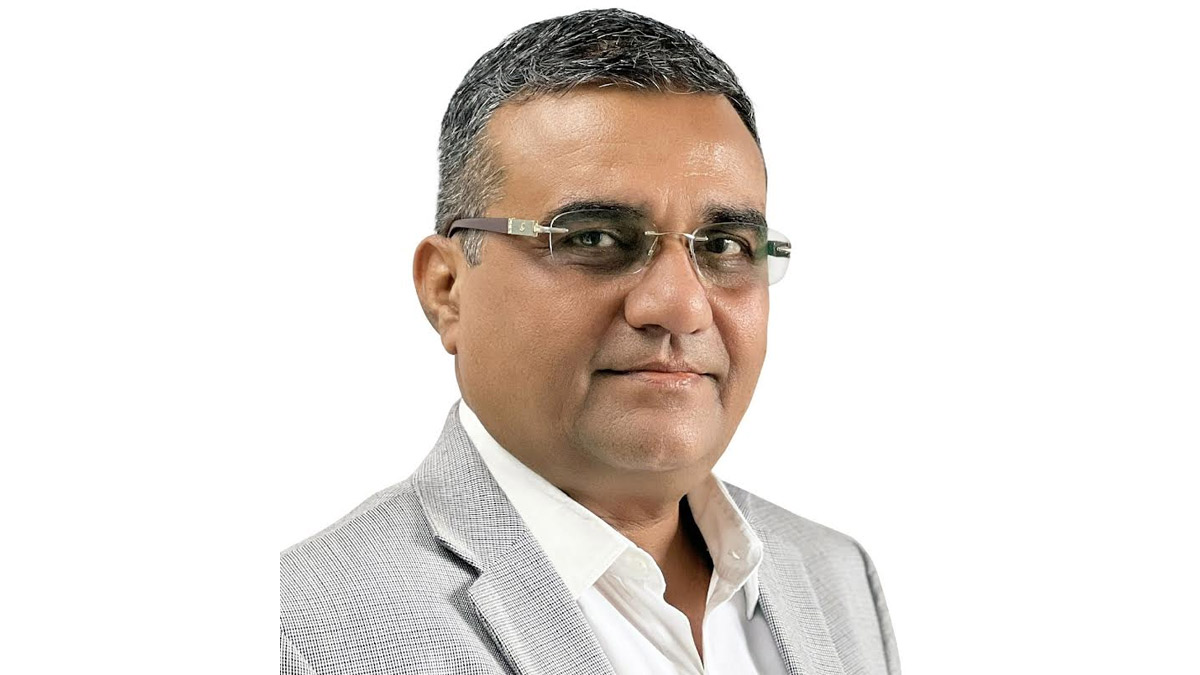
MUMBAI: A new chief, a fresh diagnosis and a sharper prescription for growth. Beacon Group has appointed Dr Rajesh Patel as its Group Chief Executive Officer, effective April 1, 2026, signalling a decisive push to scale its presence in the diagnostics and IVD space. Patel steps into the role with 36 years of experience across the healthcare and diagnostics industry, bringing a career shaped by leadership roles spanning sales, marketing, business development and operational strategy. His mandate is both expansive and precise: to steer the group’s overall strategic direction while tightening coordination across its three core entities Beacon Diagnostics, Vector Biotek and Biogeny Diagnostics.
In practical terms, that means driving cross-company synergies, accelerating market expansion and strengthening organisational capability areas increasingly critical as diagnostic players compete for scale in a fragmented yet rapidly evolving healthcare ecosystem. The group is positioning itself to capture unmet demand across chain laboratories, key accounts and standalone labs, segments that remain underserved despite growing diagnostic needs.
The appointment comes at a time when the In Vitro Diagnostics (IVD) sector in India is entering a more competitive and innovation-led phase, with companies focusing not just on product pipelines but also on service delivery, integration and customer-centric models. Beacon’s leadership appears to be betting that Patel’s execution-focused approach can help translate ambition into operational momentum.
Welcoming the appointment, Chairman Dr D K Joshi described Patel’s induction as a strategic move aligned with the group’s long-term vision, emphasising the role of leadership depth in navigating the next phase of growth.
For Beacon Group, the message is clear, in a sector where precision matters, leadership is the new differentiator—and this appointment is intended to set the tone for what comes next.






