Brands
HUL’s Shiva Krishnamurthy moves to General Mills as India CEO

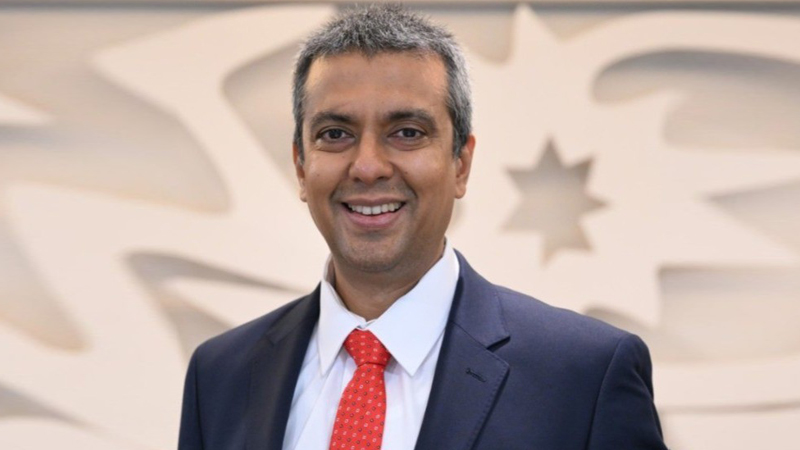
MUMBAI: General Mills has tapped Shiva Krishnamurthy as chief executive officer for India, roping in a seasoned FMCG operator from Hindustan Unilever as it sharpens its focus on the world’s fastest-growing food market.
Krishnamurthy, most recently executive director, foods & refreshment at HUL, will report to Balki Radhakrishnan, vice-president and managing director, global emerging markets. The appointment hands General Mills a leader with more than two decades of experience across marketing, brand-building and general management.
Announcing the move, Krishnamurthy said he was “delighted to join the General Mills mission of making food the world loves”, pointing to the company’s iconic brands, food science capabilities and talent depth. He said the business was well placed to capture the India opportunity and that he looked forward to building on the groundwork laid by earlier leaders.

Looking back at his HUL stint, Krishnamurthy called the company his “professional alma mater”, often dubbed the “CEO factory”. He credited former and current leaders, including Sanjiv Mehta, Sudhir Sitapati, Hanneke Faber and the late Anil Gopalan, for shaping his leadership journey.
Radhakrishnan said Krishnamurthy’s consumer-first mindset and people-centric leadership aligned closely with General Mills’ India ambitions and values. “He brings the right blend of brand acumen and talent leadership for our next phase of growth,” he said.
Krishnamurthy joined HUL in 2000 and held a series of senior roles across India and South-east Asia. He led marquee brands such as Lifebuoy and Lux in skin cleansing, drove Rin innovation in home care, and headed Unilever’s South Asia tea business from 2015. Over the past decade, HUL consolidated its position as the market leader in tea under his watch.
An alumnus of XLRI Jamshedpur, Krishnamurthy began his career with a short stint at PepsiCo before joining HUL as an area sales manager.
For General Mills, the hire signals intent. For HUL, it marks another senior exit from its deep leadership bench. For India’s packaged food market, the heat just got turned up.







Brands
Dunkin’ Donuts to exit India as Jubilant FoodWorks ends 15-year franchise deal
The quick service restaurant giant is ending a 15-year franchise partnership with the American doughnut chain, even as it renews its Domino’s agreement for another 15 years
NOIDA: Dunkin’ is done in India. Jubilant FoodWorks Ltd, the country’s leading quick service restaurant operator, has decided not to renew its franchise agreement with the American coffee and doughnut chain, and will wind down its Indian stores in a phased manner before December 31, 2026, bringing a 15-year partnership to a quiet, loss-laden close.
The decision, approved by JFL’s board on March 30, 2026, ends a relationship that began with a Multiple Unit Development Franchise Agreement signed on February 24, 2011. JFL will now evaluate and undertake what it described in a regulatory filing as the “rationalisation and/or cessation of certain operations and/or sale, transfer or disposal of assets and/or assignment or transfer of franchise rights,” all in consultation with Dunkin’s brand owners and strictly within the terms of the original agreement.
The numbers tell the story bluntly. In the financial year 2024-25, Dunkin’ India posted a revenue of Rs 37 crore against a loss of Rs 19 crore — a haemorrhage that was always going to test the patience of a parent company recording revenues of Rs 6,104 crore and a profit of Rs 194 crore in the same period. Doughnuts, it turns out, were never going to move the needle.
The contrast with JFL’s handling of its other marquee franchise could hardly be sharper. Even as it walks away from Dunkin’, the company has just doubled down on Domino’s, signing a fresh Master Franchise Agreement on March 31, 2026, granting it exclusive rights to develop and operate Domino’s Pizza stores in India for 15 years, with an option to renew for a further 10.
JFL, incorporated in 1995 and promoted by the Bharatia family, operates a network of more than 3,500 stores across six markets — India, Turkey, Bangladesh, Sri Lanka, Azerbaijan and Georgia. Its portfolio includes Domino’s and Popeyes on the global side, and two home-grown brands: Hong’s Kitchen and COFFY, a café brand in Turkey.
For Dunkin’, India was always a stretch. The brand never quite cracked the cultural code in a market where filter coffee and chai command fierce loyalty and where the doughnut remains, at best, an occasional indulgence rather than a daily habit. Fifteen years, mounting losses and a parent with better things to spend its capital on was always going to be a difficult equation to solve.
The doughnut has had its last day. The pizza, however, is staying.






