Brands
HUL to drive competitiveness of its brands


KOLKATA: Consumer goods major Hindustan Unilever Ltd (HUL) is looking at strengthening the core of its business and drive competitiveness of its brands in the market.
“We continue to strengthen the core of our business and drive the competitiveness of our brands in the market. At the same time, we are leading market development in relatively nascent categories such as packaged foods and premium personal care with strong results,” said HUL chairman Harish Manwani.

Talking about the packaged food segment, Kolkata-based Microsec Research said, “It was the fifth successive quarter of double digit growth in packaged foods segment, led by Kissan and Kwality Walls.”
On brand investments, Manwani added: “Brand investments were sustained at competitive levels across all segments even as competitive intensity stepped up in the commodity linked categories.”
It should be noted that from food and beverages to personal care, HUL’s brands are part of everyday life. “Our brands play a major part in helping us achieve our sustainable living aims of helping more than a billion people improve their health and well-being; halving the environmental footprint of our products and sourcing 100 per cent of our agricultural raw materials sustainably. Given the fast changing external environment, we are managing our business dynamically for sustained volume led growth and margin improvement,” the company said.
From last two quarters, input costs were benign with a fall in crude oil prices and this has started to reflect in the lower cost of goods sold, the company further said.
To pass on the benefits of reduced inputs costs, the FMCG major has reduced the prices of soaps and detergents, which accounted for around 50 per cent of its revenues in the last quarter.
When a city based analyst was called, he said in the current quarter one can expect price cut in skin cleansing products and tea and other verticals, which did not see any price correction.
Since price cuts are expected to take place in premium brands as well apart from mass brands, as the company hinted, HUL is aiming see consumers upgrading themselves, the analyst said.
As per Microsec Research, Pureit delivered another good quarter of double digit growth led by the premium segment.






Brands
Samsung certifies 1,000 Maharashtra students in AI and coding
The South Korean electronics giant marks its first large-scale skilling push in the state, with women making up nearly half the national programme’s enrolment
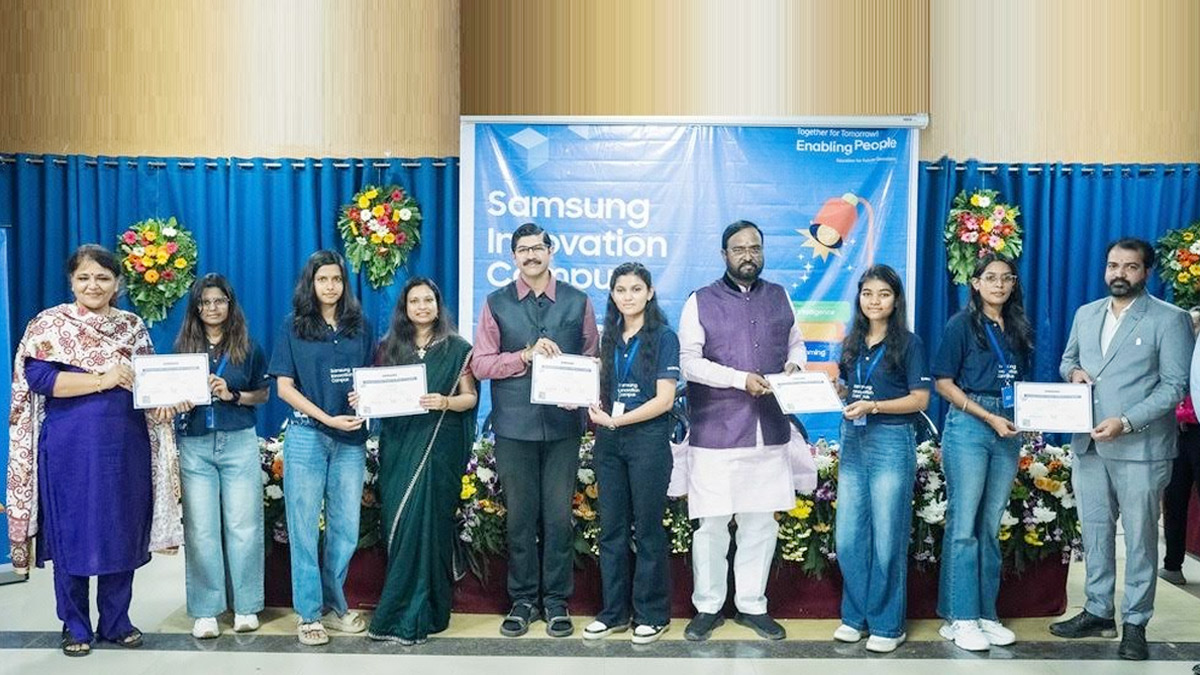
PUNE: Samsung has put 1,000 students in Maharashtra through a certified training programme in artificial intelligence and coding, the largest such drive the South Korean electronics company has run in the state and a signal that corporate India’s skilling ambitions are moving well beyond the boardroom brochure.
The certifications were awarded under Samsung Innovation Campus (SIC), the company’s flagship corporate social responsibility programme, which launched in India in 2022 with the stated aim of democratising access to future-technology education. The 1,000 graduates were drawn from four institutions: 127 from Savitribai Phule Pune University, 373 from Pimpri Chinchwad University, 250 from D.Y. Patil University’s Ramrao Adik Institute of Technology and 250 from Anjuman-I-Islam’s Kalsekar Technical Campus. All completed training in either AI or coding and programming, the two disciplines Samsung has identified as the critical pillars of the digital economy.
The programme does not stop at technical training. Soft-skills development and career-readiness modules are baked into the curriculum, a deliberate attempt to close the gap between what universities teach and what employers actually want.
“India’s digital growth story will ultimately be shaped by the quality of its talent pipeline,” said Shubham Mukherjee, head of CSR and corporate communications at Samsung Southwest Asia. “As technologies like AI move from the periphery to the core of industries, skilling must evolve from basic training to building real-world capability. This milestone in Maharashtra reflects how industry and academia can come together to create a future-ready workforce that is both globally competitive and locally relevant.”
The Maharashtra drive sits within a rapidly scaling national effort. Samsung Innovation Campus trained 20,000 young people across India in 2025, hitting its stated target for the year. Women account for 48 per cent of national enrolments, a figure the company cites as evidence of its push for an inclusive technology ecosystem. The programme is implemented in partnership with the Electronics Sector Skills Council of India and the Telecom Sector Skill Council.
Samsung, which is marking 30 years in India this year, runs SIC alongside two other initiatives, Samsung Solve for Tomorrow and Samsung DOST, as part of a broader effort to build what it calls a generation of innovators with both the technical depth and the problem-solving mindset to thrive in a fast-moving digital world.
A thousand certified students is a tidy headline. Whether they find jobs that match their new skills is the harder question, and the one that will ultimately determine whether corporate skilling programmes like this one are genuine pipelines or well-photographed gestures.






