MAM
How to leverage data driven insights to inform creative direction and execution


Mumbai:India by 2030, will have almost a billion active screens. Of this, around 240 million will be large (TV, laptop, PC) and the balance will be small (mobile phones, phablets). Maintaining creative consistency while effectively engaging audiences is very essential in the world of digital marketing. Data analytics has emerged as a powerful tool to achieve this balance, providing actionable insights that drive informed decision-making.
By leveraging data analytics, advertisers can maintain creative consistency while adapting to the dynamic needs of their audience. This approach not only enhances brand loyalty but also drives business growth through more effective and engaging advertising strategies.
While intuition and experience have traditionally guided creative decisions, data analytics now offers precise, actionable insights that can significantly enhance the effectiveness of creative strategies. By analyzing data related to locations, demographics, gender differences, and conversions, advertisers can refine their creative direction and execution to maximize impact.
Insights related to Line of Communication (LOC)

Data-driven insights play a pivotal role in refining the line of communication, particularly in the dynamic landscape of ecommerce. By harnessing data analytics, businesses can identify which forms of communication resonate most effectively with consumers. From performance marketing campaigns to social media posts, data unveils the nuances of customer engagement, revealing which channels drive views, purchases, and website traffic. Moreover, it provides crucial feedback on the effectiveness of communication strategies, pinpointing areas where engagement falls short of conversion. Equipped with these insights, businesses can tailor their messaging, optimizing communication to foster stronger connections with their target audience and drive measurable results. For example, if UGC is working really well for the beauty industry, then the concerned brands can take action to double down on influencer collaborations for their digital campaigns. The influencer marketing industry will continue to develop rapidly by 2028, with more than 80% of brands spending up to 30 per cent of their marketing budget on influencer marketing. Brands must identify influencers in the beauty niche with high engagement rates and authentic audience connections and incorporate them in their campaigns.
Demographic insights
Demographic data provides a wealth of information about the audience’s age, income level, education, and more. Analyzing these variables helps advertisers create more targeted and relevant content. For instance, an advertisement aimed at millennials might emphasize modern, tech-savvy visuals and language, while a campaign targeting older adults might focus on traditional values and simpler design elements.
Gender differences
Data analytics offer invaluable insights into the distinct ways males and females engage with marketing creatives. For example, an analysis might indicate that males tend to show higher engagement with advertisements featuring action-packed visuals or product demonstrations while females may exhibit a stronger affinity towards emotionally resonant storytelling or advertisements highlighting social impact. By identifying these nuanced responses, businesses can tailor their marketing strategies accordingly, crafting content that resonates authentically with each gender segment.
Conversions and High Click-Through Rates (CTR)
One of the most critical insights from data analysis is the disparity between high CTR and low conversions. This scenario indicates that while the creative is compelling enough to attract clicks, it fails to drive the desired action. By analyzing the point of drop-off, advertisers can identify weaknesses in the creative execution or the landing page experience. Adjustments such as clearer CTAs, more relevant content, or a more streamlined user experience can bridge this gap and enhance conversion rates. For example, in one of ETML’s partner brands having perfume as a SKU, data analysis indicated that showcasing the ingredients of a perfume in an ad resulted in high CTR, but the TG used to drop off during checkout. Same TG made huge purchases using ads highlighting the smell notes of the perfume. Hence, by studying this behavior, even though the earlier ads had high CTR, those were discontinued and new ads highlighting smell notes were incorporated ultimately improving the overall RoAS by 57%.
Performance vs. Branding Creatives
Balancing performance-driven and branding creatives is essential. Performance creatives are designed to drive immediate actions, like add to carts or purchases, while branding creatives focus on long-term brand recognition and loyalty. Data driven insights help in understanding which type of creative resonates more with the audience at different stages of the customer journey. This understanding allows for strategic placement of performance creatives to drive immediate results and branding creatives to build lasting relationships. For example, a performance focused creative of a home appliances brand would focus on USPs, benefits, usage with clear CTAs to perform a website action usually Add to cart, Initiate checkout or Purchase but the same brand would focus on their values and identity in the market using creatives when they would shift their focus on branding campaigns.
CTAs on Creatives
The call-to-action (CTA) is a crucial element in any creative. Data helps determine the most effective CTAs by analyzing which prompts lead to the highest engagement and conversions. Whether it’s a simple “Buy Now” or a more nuanced “Learn More,” the right CTA can significantly influence the success of an ad campaign.
Enhancing Creative Strategies
Data Collection: Centralize data from various sources to gain a comprehensive view of consumer behavior and preferences.
Segmentation: Break down the data by LOCs, demographics, gender, and behavior to understand the nuances of different audience segments.
Testing and Optimization: Use A/B testing to experiment with different creative elements and continuously optimize based on performance data.
Iterative Approach: Regularly update creatives based on the latest data insights to maintain relevance and effectiveness.
Conclusion
Leveraging data-driven insights transforms the creative process from a purely intuitive art to a precise science. By analyzing consumer behavior and preferences, businesses can uncover invaluable information that informs every aspect of their creative endeavors. From refining messaging and visuals to optimizing delivery channels, data empowers marketers to make informed decisions that resonate deeply with their target audience. Ultimately, this integration of data into the creative process enhances effectiveness, driving engagement, conversions, and long-term success in today’s competitive landscape.
This article has been authored by ETML co-founder and CCO Rajeev Garg




Brands
Axis Bank named Official Banking Partner of DP World PGTI
Partnership supports all tournaments this season to grow professional golf in India.
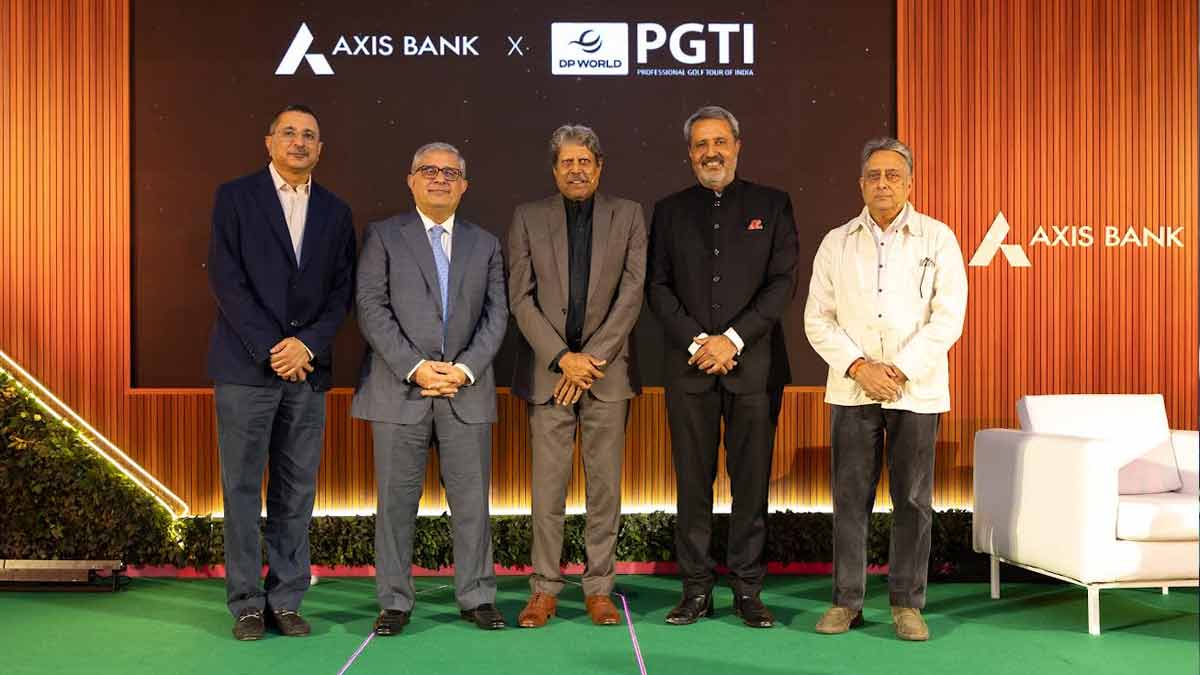
MUMBAI: Axis Bank just teed up a hole-in-one partnership because when a bank sponsors golf’s biggest swing in India, even the fairways feel more financially secure. Axis Bank has been appointed Official Banking Partner of the DP World Professional Golf Tour of India (DP World PGTI), strengthening its commitment to sporting excellence and community engagement while backing the growth of professional golf across the country.
Under the partnership, Axis Bank will support all DP World PGTI tournaments this season, contributing to talent development, enhanced tournament experiences and wider fan engagement. The collaboration aligns the bank’s values of precision, discipline and trust with the Tour’s focus on performance and opportunity.
Axis Bank executive director Munish Sharda said, “We are pleased to partner with DP World PGTI as its Official Banking Partner. Golf embodies precision, discipline, and a pursuit of excellence qualities that strongly reflect who we are at Axis Bank. This association also strengthens our engagement with India’s growing premium customer segments, where the sport has a deep and enduring connect.”
Professional Golf Tour of India president Kapil Dev said, “We are extremely pleased to welcome Axis Bank as a Tour Partner of the DP World Professional Golf Tour of India. Partnerships of this stature play a vital role in strengthening the foundation of the Tour, enhancing opportunities for our players, and expanding the sport’s reach across the country.”
Professional Golf Tour of India CEO Amandeep Johl added, “Axis Bank’s strong legacy of excellence, innovation, and nationwide reach aligns perfectly with DP World PGTI’s goal to elevate professional golf in India and provide greater opportunities for our players.”
In a sport where every stroke counts and every partnership drives distance, Axis Bank isn’t just backing golfers, it’s investing in the fairway to future, turning India’s greens into a stage where precision meets passion and every drive has the power to inspire.









