MAM
How Preschool Franchises in India Are Integrating Play-Based and Experiential Learning Approaches


Walk into a good preschool today, and you’ll notice a shift: fewer worksheets, more blocks, sand trays, puppets, music, and children moving with purpose. Indian preschool franchises are building learning-through-play into the timetable, and adding hands-on experiences that connect lessons to daily life. For parents, it feels joyful. For franchise owners, it’s also a dependable way to deliver consistent quality across centres.
Why play is moving to the centre
Early years learning works best when children can touch, try, repeat, and talk about what they are doing. India’s National Education Policy (NEP) 2020 and the Foundational Stage push have encouraged schools to reduce rote work and strengthen activity-based learning. Franchises are well placed to adopt this because central curriculum teams can design a clear approach, then train every centre to follow it.
What “play-based” looks like in a franchise classroom
Most organised networks now plan the day around short guided sessions and longer play blocks. Teachers set up materials, model language, and observe. They don’t “teach a chapter”; they create a situation where children discover ideas and practise skills.

Many classrooms run in small groups so children can choose activities and stay involved. You’ll often see stations like:
● Language and stories: picture books, puppet play, rhymes, and storytelling
● Maths and thinking: sorting, counting, pattern blocks, puzzles, and simple games
● Sensory and making: sand, water, dough, paint, clay, and safe loose parts
● Role play: a mini-kitchen, clinic, vegetable shop, or post office set-up
Because franchises standardise the learning goals for each theme, the play stays purposeful even when children set the pace.
Experiential learning beyond the classroom
Experiential learning is where franchises are getting more intentional. Many programmes now include a weekly “experience day” that brings real-life tasks into the theme. A unit on “plants” might involve sowing seeds, watering them daily, and recording growth with drawings. A unit on “community helpers” could include a visit from a nurse, a chef, or a traffic police officer.
In Indian cities, short neighbourhood outings are often easier than big trips: a walk to a fruit vendor, a nearby park, or a small library. In smaller towns, centres may partner with farms, dairies, or local artisans. The aim is simple: link new words and ideas to real sights, sounds, and people, so children remember them.
To keep experiences safe, franchises follow standard operating steps: parent permissions, child-to-adult ratios, first-aid kits, and short routes. Inside the centre, clear storage and sanitisation routines reduce mess and illness, especially during sensory play. These systems let teachers focus on learning, not firefighting.
Training teachers to guide, not lecture
Play and experiences only work when teachers know how to facilitate without taking over. Franchises are investing in educator development because it protects quality as they expand. Many use a “train-the-trainer” model: master trainers coach centre heads, who then support teachers through observations and feedback.
Support usually includes demonstration lessons, weekly planning formats with clear goals, and refreshers on behaviour guidance, safety, and inclusion. This also helps address a common parent worry: that play means “time pass”. Good teachers can show, in the moment, how play builds language, attention, problem-solving, and social skills.
Spaces and materials designed for discovery
A visible change in franchise preschools is in classroom design. Furniture is child-sized, storage is reachable, and materials are rotated so the room stays interesting. Many centres add simple “mini labs” for early science: colour mixing, floating and sinking, magnets, and shadow play – using safe, everyday items.
This affects budgeting too. The preschool franchise cost is not only about branding and fees; it often includes learning kits, sensory materials, outdoor play equipment, and planned upgrades. Operators who budget for these from day one find it easier to maintain standards without cutting corners later.
How progress is tracked without pressure
Assessment is also changing. Instead of tests, franchises use documentation that captures growth over time. Teachers note what a child can do during real activities: speaking in a group, solving a puzzle, or cooperating in pretend play. Portfolios, short observation notes, and simple milestone tracking are shared with parents in plain language, so families can see progress without exam stress.
Parents as partners, not homework monitors
Because Indian parents are deeply invested in early learning, franchises spend time explaining the approach. Orientation sessions, open houses, and demo days help families understand why play matters. Many centres share weekly ideas that fit home life – sorting laundry by colour, counting steps, naming vegetables at the market, so learning continues naturally.
What to look for when choosing a franchise
If you are evaluating options, ask to observe a class and read the day’s plan. Look for children who are engaged, teachers who speak with warmth, and a classroom that feels safe and organised. The best preschool franchise for your location is usually the one with strong training and daily teacher support, not just a good launch kit.
A reliable sign of real integration is that play and experiences are built into the timetable and curriculum, backed by regular coaching and clear parent communication.
The outcome that matters
When play-based and experiential learning are done well, children leave preschool curious, confident, and ready for primary school. They learn to communicate, collaborate, and think, without losing the joy that early childhood education is meant to protect.

Brands
YES Bank hands the keys to SBI veteran Vinay Tonse as it bets on a new era
Former SBI managing director appointed as YES Bank’s new MD and CEO
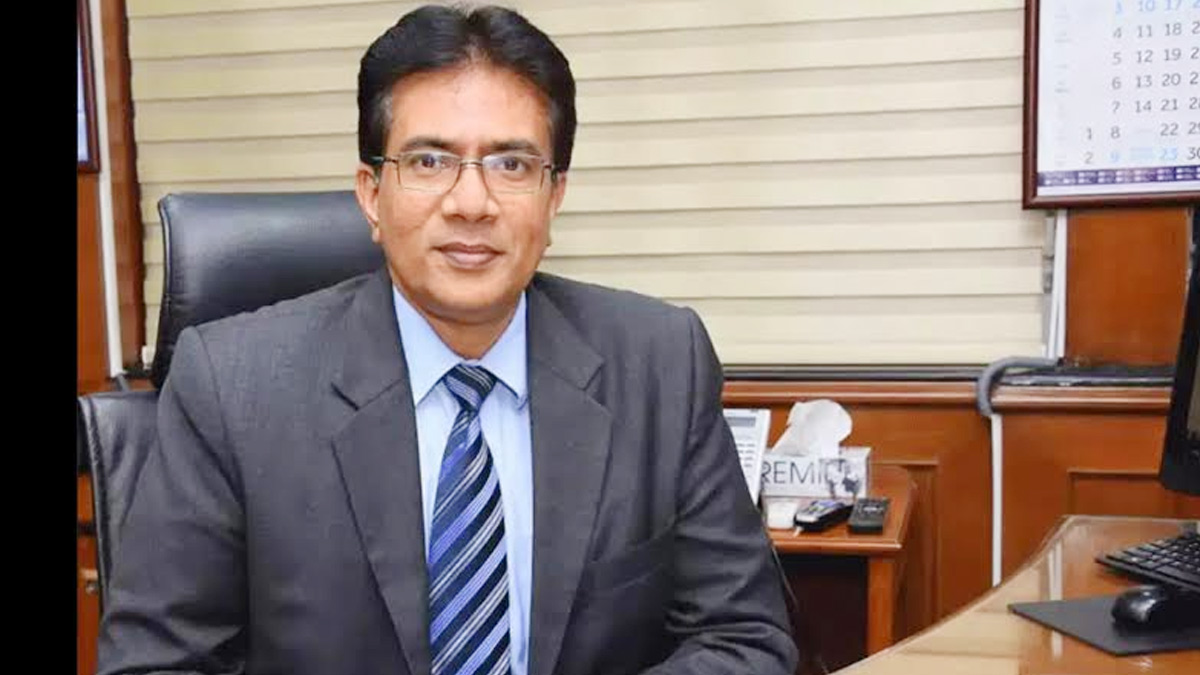
MUMBAI: YES Bank is done rebuilding. Now it wants to grow. The private sector lender has appointed Vinay Muralidhar Tonse as managing director and chief executive officer-designate, with RBI approval secured and a start date of April 6, 2026 confirmed. The three-year term signals the bank’s intent to shift gears from crisis recovery to full-throttle expansion.
Tonse, 60, is no stranger to scale. Most recently managing director at State Bank of India, he oversaw a retail book of roughly $800bn in deposits and advances, one of the largest in the country. Before that, he ran SBI Mutual Fund from August 2020 to December 2022, a stint that saw assets under management surge from Rs 4.32 lakh crore to Rs 7.32 lakh crore across market cycles. Add stints in Singapore and four years leading SBI’s overseas operations in Osaka, and the incoming chief arrives with a genuinely global CV.
His academic grounding is equally solid: a commerce degree from St Joseph’s College of Commerce, Bengaluru, and a master’s in commerce from Bangalore University.
The appointment follows an extensive search and evaluation process by the bank’s Nomination and Remuneration Committee. NRC chairperson Nandita Gurjar said the committee unanimously backed Tonse, citing his leadership track record, governance credentials and ability to drive the bank’s next phase of transformation.
Non-executive chairman Rama Subramaniam Gandhi was unequivocal. “I am certain that Vinay Tonse, with his vast experience as a senior banker, will propel YES Bank to its next phase of growth,” Gandhi said, adding that the bank remains focused on strengthening its retail and corporate banking franchises and expanding its branch network.
Rajeev Kannan, non-executive director and senior executive at Sumitomo Mitsui Banking Corporation, the bank’s largest shareholder, said Tonse’s experience across retail, corporate banking, global markets and asset management positioned him well to lead the lender. SMBC said it looks forward to working with Tonse and the board as YES Bank pursues its ambition of becoming a top-tier private sector lender anchored in strong governance and sustainable growth.
Tonse succeeds Prashant Kumar, who took the helm in March 2020 when YES Bank was in freefall following a severe financial crisis, and spent six years painstakingly stabilising the institution, rebuilding governance and restoring operational scale. Gandhi was generous: “The bank remains indebted to Prashant Kumar, who is responsible for much of what a strong financial powerhouse YES Bank is today.”
Tonse, for his part, struck a purposeful note. “Together with the board and my colleagues, I remain deeply committed to creating long-term value for all our stakeholders,” he said, pledging to build on Kumar’s foundation guided by his personal motto: Make A Difference.
Beyond the balance sheet, Tonse played cricket at college and club level and represented Karnataka in archery at the national championships — sports he credits with teaching him teamwork, situational leadership, discipline and focus. In quieter moments, he reaches for retro Kannada music, classic Hindi songs, and the crooning of Engelbert Humperdinck, Mukesh and Kishore Kumar.
YES Bank has its steady-handed rebuilder in Kumar to thank for survival. Now it has a scale-obsessed growth banker at the wheel. The next chapter starts April 6.