MAM
How Expats Can Get True Copy Attestation for UAE Visa Applications

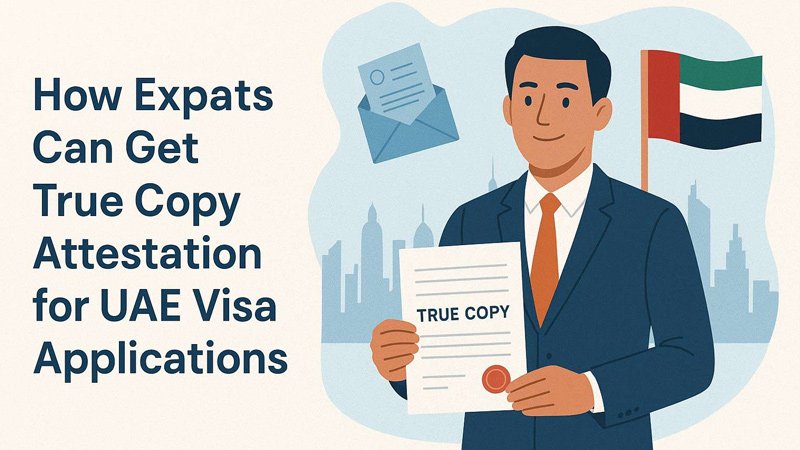
Applying for a UAE visa entails more than simply forms and documentation. True copy attestation is an important step that many expats tend to overlook. Without it, applications may be delayed or even rejected. This article describes what true copy attestation is, why it’s important for visa applications, and how to complete the process efficiently and accurately.
What Is True Copy Attestation in Dubai?
True copy attestation refers to an attestation method by which a skilled lawyer verifies that a photocopy of an original document is authentic and identical to the original. In Dubai, only licensed lawyers typically offer this service.

Unlike other photocopies, a certified true copy attestation in Dubai carries legal weight and confirms that the original document has been verified against the true copy.
Why Expats Need True Copy Attestation for Visa Applications
Expats often need to present certified copies of documents to prove their identity, education, or proof of residence. As a result of this, UAE visa authorities commonly request attested copies of:
• Passports
• Address proof that can be obtained through utility bills or tenancy contracts
• Employment or experience letters
• Educational certificates
So what happens if you submit an uncertified copy? Your document approval could be delayed or rejected. With true copy attestation, expats demonstrate that their documents are genuine and officially verified.
Certified True Copy Attestation in Dubai vs. Notarization
It is important to distinguish between attestation and notarization.
Certified true copy attestation in Dubai: A licensed lawyer certifies that a photocopy matches the original document.
Notarization: A notary public verifies but does not typically certify photocopies of passports or bills.
For UAE visa applications, immigration departments and free zones usually require certified true copies and not notarized documents.
Step-by-Step Guide to True Copy Attestation in Dubai
1. Check Requirements
The first step is to confirm with the visa authority or employer which documents need certified true copies.
2. Prepare Photocopies
Ensure all copies are clear, complete and free from distortions. Poor quality or blurred copies do not get approved.
3. Bring Originals to a Lawyer
Lawyers must inspect the original document before certifying the copy. Originals are essential for verification.
4. Certification by Lawyer
Following document inspection, the lawyer signs and stamps the copy, adding a statement that it is a true copy of the original, along with the date.
5. Use in Visa Applications
You can then submit the certified true copies instead of the originals to immigration or other authorities.
6. Additional Legalization if Needed
Documents issued overseas, such as marriage certificates or university degrees may require additional embassy legalization or Ministry of Foreign Affairs (MOFA) attestation, following the true copy certification.
Why Use Professional True Copy Attestation Services in Dubai?
While expats can approach lawyers directly, many prefer professional services that simplify the whole process for convenience. These professional services connect applicants with licensed lawyers. Many of these service providers also handle scheduling and ensure documents meet the legal requirements. This is particularly helpful when several documents from different countries need to be attested for a single visa application.
For expats, true copy attestation Dubai is not just a formality but a vital requirement in the visa process. It confirms the authenticity of essential documents and reassures authorities of their validity. By understanding the difference between notarization and certified true copy attestation, preparing documents properly and using professional services when needed, expats can ensure their visa applications proceed smoothly and without unnecessary delays.







Brands
KKR sixes to power EV charger rollout under VIDA campaign
Cricket meets clean mobility as big hits spark India’s charging growth
NEW DELHI: VIDA, the electric mobility arm of Hero MotoCorp, has teamed up with Kolkata Knight Riders to launch a campaign that turns cricketing flair into real-world impact.
Titled ‘6 for 6’, the initiative promises to install a 6kW fast EV charger for every six hit by KKR during the ongoing Indian Premier League season. The idea is simple but powerful, as each big hit on the field contributes directly to expanding India’s fast-charging infrastructure.
The campaign builds on VIDA’s growing network, which already spans over 5,300 fast-charging points across more than 430 cities. With EV adoption gaining pace, the brand is using cricket’s mass appeal to accelerate both awareness and infrastructure growth.
Explaining the thinking behind the move, Hero MotoCorp emerging mobility business unit chief business officer Kausalya Nandakumar said, “Cricket has an incredible ability to unite and inspire millions across the country. With the ‘6 for 6’ campaign, we are turning every big hit on the field into a step towards a cleaner and a more accessible mobility future.”
She added that VIDA’s expanding fast-charging network and removable battery technology are designed to make EV ownership more convenient and practical for everyday users.
From the franchise’s side, the campaign is also about giving on-field moments a larger purpose. Kolkata Knight Riders chief executive officer Venky Mysore said, “The ‘6 for 6’ campaign exemplifies the potential of sport as a platform for meaningful, real-world impact. By linking every six to the expansion of EV charging infrastructure, this partnership transforms fan excitement into tangible progress.”
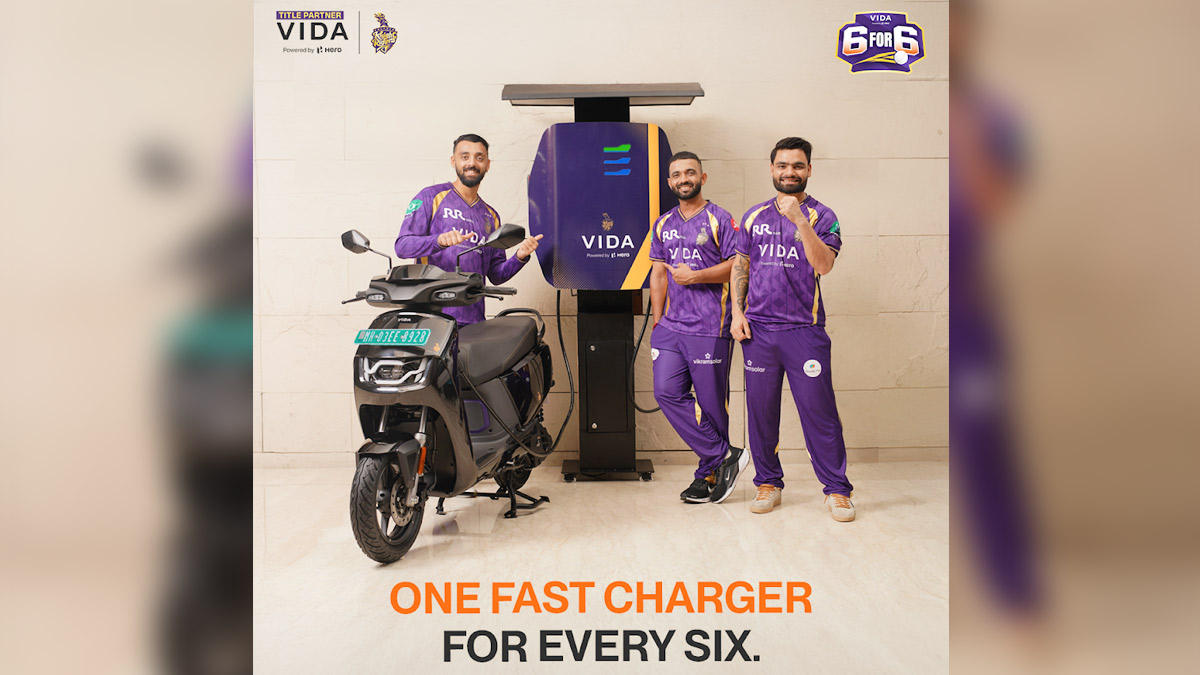
As part of the rollout, VIDA has introduced co-branded charging stations in KKR’s signature colours, with a flagship installation unveiled alongside team players. The chargers are designed for quick top-ups, powering VIDA scooters from zero to 80 percent in about an hour, while also being positioned along key highways to support longer journeys.
The initiative also taps into VIDA’s removable battery system, which allows users to charge using standard household plug points, adding flexibility to the charging ecosystem.
By blending the thrill of cricket with the urgency of clean mobility, VIDA and KKR have found a neat way to make every six count twice, once on the scoreboard and again on India’s road to an electric future.








