MAM
How can AI help brands to understand what will visually work

MUMBAI: For a brand to survive and succeed, reaching out to the readers and the non-readers — young or old — is critical. There is a section of the consumers who may not want to read, but they could look up and notice — at least. And, enjoy — may be. ‘Visual’ seems to the new norm in the communication strategy of all advertisers and strategists.
Can artificial intelligence really help brands to understand what will visually work with which types of consumers to make which buying decisions? Logograb CEO Luca Boschin recommends use of AI (Artificial Intelligence) to unlock the new visual age.
In his presentation, Boschin said that there is a social change in the way one shares and consumes content nowadays.

We have converted information into a commodity so that we could keep our businesses going and make them successful, said the Logograb CEO.
Gutenberg had invented the printing press. The purpose it served was manifold — from storytelling to reading. And, from books to reading on mobiles. However, in the last four years, there has been a massive change in how we read and where. Today, we are bombarded with content from multiple platforms. And, additionally, it’s a visual age.
Although there is a lot to see and read on multiple avenues, Boschin said, “Teen non-readers have tripled in numbers in the last two years as a result of visual-age. He said that 4000 million images are shared on social media every day.
63 per cent social media is made up by visual; about 83 per cent images on social media are talking about brands, that’s because consumers are communicating visually. Boschin concluded that the visual age has arrived and “visual is the new norm.”
Brands should make sure that they act on this trend and not ignore it.
Another speaker on the Day one at Zee Melt 2017 presented a session on ‘You are what you measure’. Google India apps and display product lead Neel Murty shared some interesting insights.
Murty said: “Sometimes we have the numbers but one thinks that we could do more. But, how could we define success? We can achieve more by thinking about the metrics that we are measuring with. He spoke about three major things that is setting goals and measuring success.
Measuring for success in the app world and pitfalls in measurement: Vodafone — Using universal app campaigns to drive downloads of their MyVodafone app, to improve customer experience and reduce customer service call volumes.
Result: 19 of overall app downloads across all marketing channels are driven by UAC (universal app campaigns), surpassing original target by 373%
On an average 20 per cent of users drive 70 per cent of business, and so one needs to focus on LTV instead of short term. Use metrics for long term instead of short term.
The last speaker for the session was Kantar Media APAC MD Nick Burfitt who spoke about TV to TV that is from television to total video. Today, there is a greater need than ever for clear standards of audience measurements. This data is critical input to understand media investment.



MAM
Beacon Group appoints Dr Rajesh Patel as Group CEO
36-year healthcare veteran to lead Beacon Diagnostics, Vector Biotek, Biogeny.
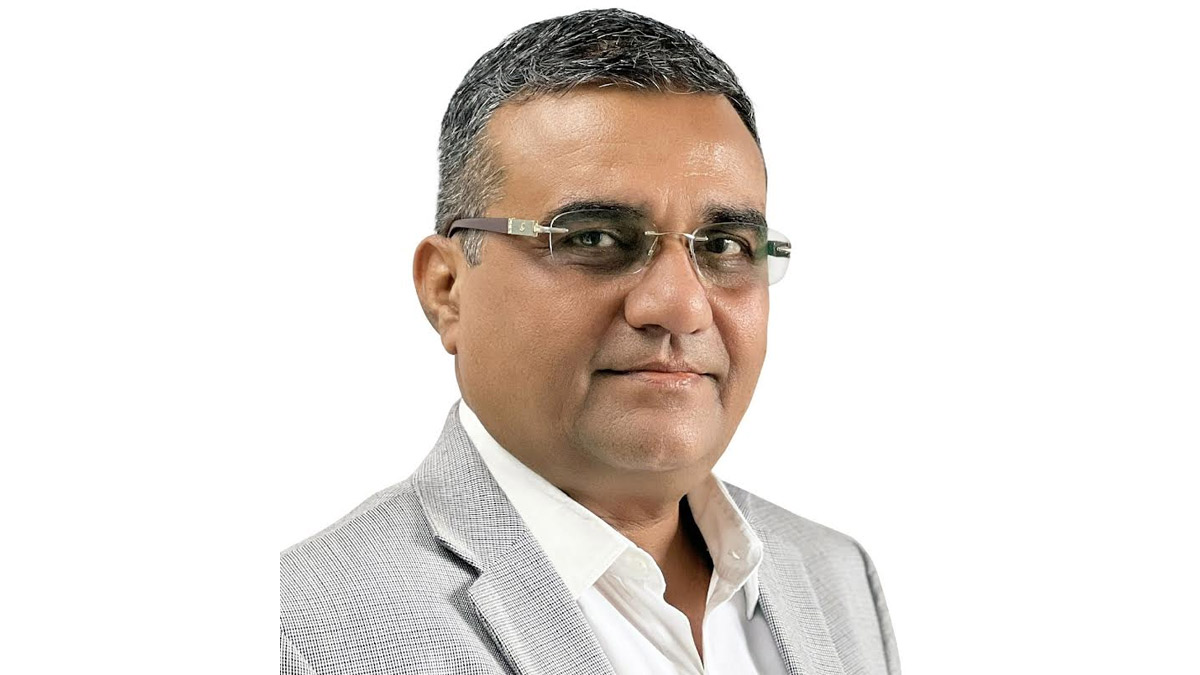
MUMBAI: A new chief, a fresh diagnosis and a sharper prescription for growth. Beacon Group has appointed Dr Rajesh Patel as its Group Chief Executive Officer, effective April 1, 2026, signalling a decisive push to scale its presence in the diagnostics and IVD space. Patel steps into the role with 36 years of experience across the healthcare and diagnostics industry, bringing a career shaped by leadership roles spanning sales, marketing, business development and operational strategy. His mandate is both expansive and precise: to steer the group’s overall strategic direction while tightening coordination across its three core entities Beacon Diagnostics, Vector Biotek and Biogeny Diagnostics.
In practical terms, that means driving cross-company synergies, accelerating market expansion and strengthening organisational capability areas increasingly critical as diagnostic players compete for scale in a fragmented yet rapidly evolving healthcare ecosystem. The group is positioning itself to capture unmet demand across chain laboratories, key accounts and standalone labs, segments that remain underserved despite growing diagnostic needs.
The appointment comes at a time when the In Vitro Diagnostics (IVD) sector in India is entering a more competitive and innovation-led phase, with companies focusing not just on product pipelines but also on service delivery, integration and customer-centric models. Beacon’s leadership appears to be betting that Patel’s execution-focused approach can help translate ambition into operational momentum.
Welcoming the appointment, Chairman Dr D K Joshi described Patel’s induction as a strategic move aligned with the group’s long-term vision, emphasising the role of leadership depth in navigating the next phase of growth.
For Beacon Group, the message is clear, in a sector where precision matters, leadership is the new differentiator—and this appointment is intended to set the tone for what comes next.






