Ad Campaigns
Hotstar’s new campaign taps the regional market

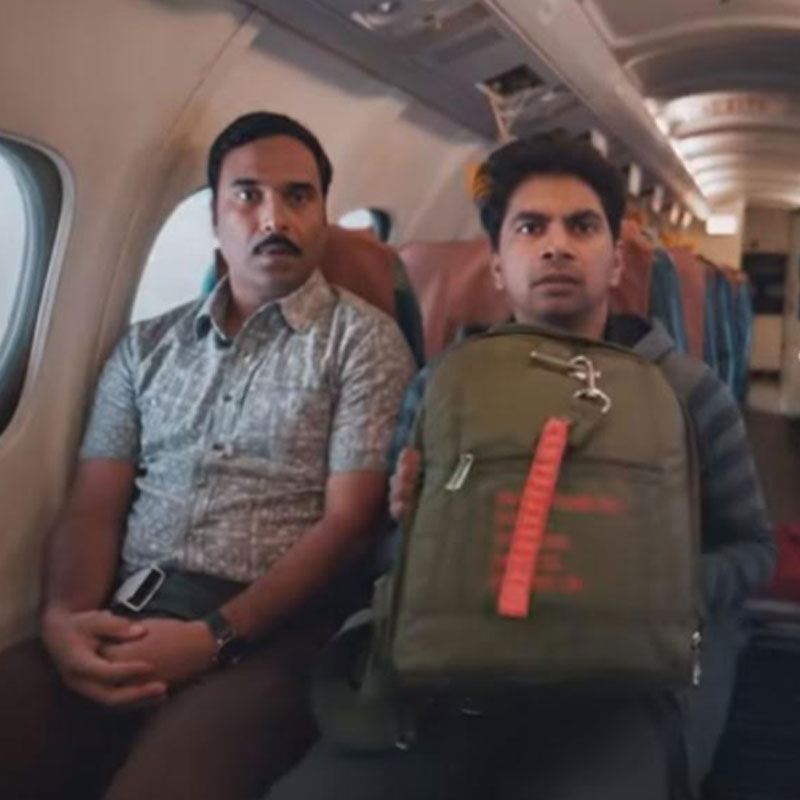
MUMBAI: Hotstar's latest advertising campaign, “Hotstar Ka Vaada, Free Entertainment Sabse Zyada”, is targeted at the Hindi-speaking markets and talks about its high-quality, vast content library which is available for free.
The campaign, conceptualised and crafted by DDB Mudra Group, has multiple legs across TV, outdoor, print, radio and digital. It aims to reach a wider audience, including making inroads into Tier II and III markets, via on-ground consumer activations.
The storyline is about two brothers on a plummeting plane with just one parachute. The younger one offers it to his brother as a gesture of respect, but he declines, saying he’s seen it all. The younger one then pulls out his phone calmly and shows him the content on Hotstar. With so much left to see, the elder one is now worried about crashing. The product window talks about Hotstar’s offering of a wide range of entertainment available for free.

Speaking about the campaign, DDB Mudra West creative head Shagun Seda said, “Catalogue-range films often run the risk of being functional and generic. We had to find an entertaining way to say that Hotstar has the largest library of free entertainment. Its distinctive voice as a brand helped us deliver the message with a droll sense of humour. The idea came from a popular expression – ‘now I’ve seen it all’. In a plane that’s going down, a passenger performs a soliloquy with mock gravitas about having seen it all in life. That’s when his younger brother introduces him to Hotstar – there’s just so much left to see with Hotstar’s vast library of free content.”
According to Hotstar EVP and business head Sidharth Shakdher, "The marketing communications, driven by the sharp insight that a large number of entertainment consumers in Tier II and Tier III cities have no option but to watch reruns of dated shows on TV, highlights the vast library of quality entertainment content available for free on Hotstar. We are excited by the huge opportunity in encouraging trial and building adoption from the non-metro cities, thereby enabling a behavior shift towards online consumption of high-quality entertainment."
The campaign will roll out a unique Out-of-home initiative which will culminate in a billboard spanning 10,000 sq ft, the longest ever set up in India. It will feature the variety and scale of content available on Hotstar. Other high-impact activations are billboards and wall paintings across 80 small towns, along with a branded mobile marketing canter van campaign. The canter will travel across 30 cities for a month, conduct roadshows across 150 congregation points, and showcase Hotstar’s breadth of content. This will be amplified with unique interventions such as Nukkad Natak and on-the-spot engagement activities.
Hotstar has changed the way Indians watch their shows, from their favourite TV series and movies to sporting extravaganza. With the widest range of content in the country, Hotstar offers more than 100,000 hours of TV shows and movies in eight languages, regional and national news, and coverage of every major global sporting event, including the VIVO IPL.







NATIONAL: Amazon Ads has laid out a sharply tech-led vision for the advertising industry in 2026, arguing that artificial intelligence, streaming TV and creator partnerships will combine to turn brand building into a more precise, performance-driven business.
At the heart of the shift, the company says, is the fusion of AI with Amazon’s vast trove of shopping, browsing and streaming signals, allowing advertisers to move beyond blunt reach metrics to campaigns designed around real customer behaviour.
“The future of advertising is not about reaching more people, but the right people with messages that resonate,” said Amazon Ads India head and vice president Girish Prabhu. “By combining AI with deep customer insights, we help brands move from broadcasting campaigns to having meaningful conversations wherever audiences spend their time.”
One of the biggest changes, according to Amazon Ads, will be the collapse of the wall between media planning and creative development. Retail media, powered by first-party data, is increasingly shaping everything from brand discovery to final purchase, pushing marketers to design campaigns around audience insight rather than internal instinct.
AI is also moving from a support tool to a creative engine. Agentic AI, which automates and accelerates production, is expected to make high-quality creative accessible even to small businesses, compressing weeks of work into hours and giving challengers the ability to compete with larger brands on speed and scale.
Behind the scenes, AI-driven analytics will take on a bigger role in campaign optimisation, identifying patterns, spotting opportunities and recommending actions that would previously have required teams of analysts.
Streaming TV is another big battleground. With India’s video streaming audience now above 600 million and connected TV users at 129.2 million in 2025, advertisers are set to treat streaming not just as a branding channel but as a performance engine, measured increasingly by sales, sign-ups and bookings rather than just reach.
Finally, Amazon Ads sees creators and contextual advertising reshaping how brands tell stories. Creators will act less like influencers and more like long-term partners, while scene-aware ads on streaming platforms will allow brands to insert hyper-relevant offers into the flow of what viewers are watching.
Taken together, Amazon Ads argues, these shifts mark a move towards advertising that is both more human and more measurable, where AI handles the complexity, and creativity does the persuading.






