MAM
Hola Media Group revolutionises OOH advertising with performance metrics for Birla Braniacs

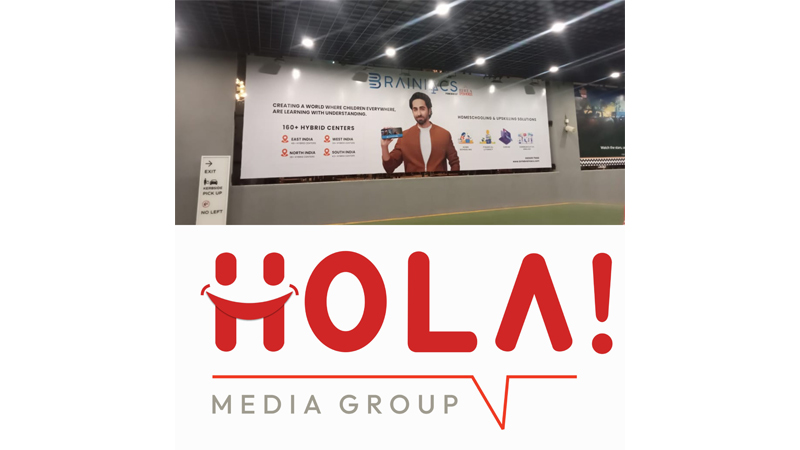
Mumbai: Hola Media Group, a renowned 360-degree marketing and advertising agency in India, conducted an out-of-home (OOH) campaign for Birla Braniacs using performance metrics. It was the first time Birla Braniacs opted for performance metrics, and the campaign resulted in the best outcome for the brand. For this campaign, Hola Media Group partnered with Moving Walls to validate its OOH campaigns through digital analytics and insights and measure the performance. As a part of the partnership, Moving Walls measured the performance of Hola Media’s campaign for Birla Brainiacs, which was run at multiple high-visibility sites in Mumbai and Bengaluru. By introducing digital metrics for an OOH campaign, Hola Media Group has brought measurable data points, a path-breaking achievement for outdoor campaigns in India.
Hola Media’s partner for campaign measurement, Moving Walls, is a leading provider of enterprise software in the ad-tech and media-tech sectors. The company’s patented data and result-driven solutions ensure that brands leveraging the services can engage the right audience at the right time. Moving Walls provided the Digital Out-of-Home data-led verification and post-campaign reporting to Hola Media Group, facilitating in-campaign analytics and campaign performance access for better optimization.
Speaking about this, Hola Media Group founder Dushyant Mehta said, “OOH advertising continues to lose ground to digital marketing mediums due to the lack of accurate campaign performance measurement at par with the online channels. By partnering with Moving Walls, we have overcome this barrier and ushered in a new transformation in the advertising industry in India. The digital monitoring of the 2-month long OOH campaign for Birla Brainiacs generated numerous invaluable insights that can add tremendous value to the advertisers and advertising agencies in the times ahead. It is a matter of great pride for Hola Media Group to have been the first agency in India to strive for such campaign measurement analytics and drive better outcomes. We look forward to many more such accomplishments through this partnership with Moving Walls.”

Birla Brainiacs founder Nirvaan Birla said, “We were able to get the kind of data points that had been exclusive to our digital marketing efforts so far. However, integrating digital measurement with the campaign helped us yield better outcomes from the current campaign and has also unlocked new performance potential for future OOH campaigns.”
Among the key insights generated by the successful performance measurement, it was found that afternoons and evening hours generate maximum reach and visibility for OOH displays, and nights and morning hours witness significantly lower engagement. The data points generated also provided the detailed performance of each OOH site separately and the overall campaign measurement data.
“The education industry has changed dramatically over the last few years alone,” said Moving Walls Group CEO Srikanth Ramachandran. “Technology now defines and determines the shape it will take. The advent of cutting-edge flipped classroom models and self-directed study has evolved so much that technology is essential for education today. Moving Walls is proud to be associated with EdTech changemakers such as Birla Brainiacs through this partnership with Hola Media Group.”
Sharing his thoughts, Birla Brainiacs CEO Muddassar Nazar said, “OOH campaigns play a key role in helping us deliver our message to the target audience. Through this path-breaking approach of digitally measuring the campaign performance in detail, Hola Media Group has given us great insights into the performance and data to help us determine our future advertising strategies.”
The partnership on the Birla Brainiacs campaign yielded various other highly impactful insights, such as the generation of daily and hourly engagement data, which revealed variations in visibility per day, an hour of the day, and audience insights like the audience’s gender, etc.
It was also discovered that the campaign peaked in December, generating a potential viewership of 12,380,888 and a reach of 2,278,237 overall. Such data points will be invaluable for agencies to plan their future campaigns with pinpoint accuracy. It was also identified which locations generated more reach and views for the OOH campaign than others.


Brands
HP launches Smart Champs learning game show with JioStar for students
Sanya Malhotra hosts quiz series blending fun, learning and prizes
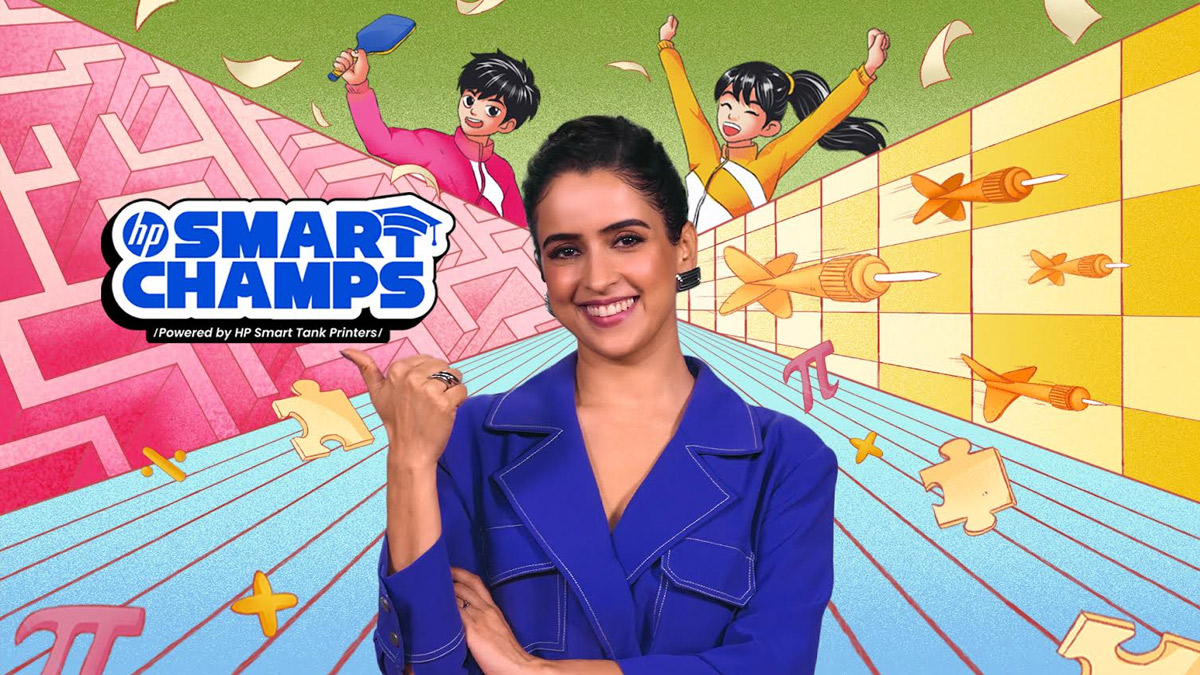
NEW DELHI: HP India has teamed up with JioStar to launch HP Smart Champs, a new learning-based game show designed to make education engaging for school students across the country.
Hosted by Sanya Malhotra, the 10-episode series brings together students from Grades 5 to 9, who compete in teams through quiz and puzzle-based challenges that test knowledge, logic and teamwork. The show will begin streaming on JioHotstar from April 11 and will premiere on Nick on April 18, with weekend episodes airing at 7 PM.
Powered by HP Smart Tank printers, the format integrates print-based learning into the gameplay, using worksheets, clues and visual problem-solving tools to encourage hands-on participation. The idea is to move students beyond rote memorisation and towards more applied, curiosity-led learning.
The competition promises high stakes, with winners set to receive a cash prize of Rs 10 lakh, while runners-up will take home Rs 5 lakh. Additional rewards include HP AI laptops, Smart Tank printers and accessories, while the winning school will be awarded an HP Smart Tech Lab.
Speaking about the initiative, HP India managing director Ipsita Dasgupta said, “At HP, we believe nurturing India’s youth is key to the country’s progress, and technology plays a foundational role in enabling this. With HP Smart Champs, we wanted to create something beyond traditional learning, a fun-filled platform where curiosity, creativity and critical thinking take centre stage.”
On the show’s reach, JioStar head entertainment sales Mahesh Shetty said, “HP Smart Champs reflects how children today learn through exploration and experience. With Nick and JioHotstar, we are creating a multi-screen approach that is both engaging and meaningful.”
Highlighting the role of print, HP India senior director print Satish Kumar said, “The show brings print-based learning to life in an engaging format, helping students develop deeper understanding through hands-on experiences.”
The journey to the finale began with participation from over 1,000 schools across 26 cities, narrowing down to 34 finalists who will compete in a studio showdown in Mumbai.
With its blend of entertainment, education and technology, HP Smart Champs is positioning itself as more than just a quiz show. It is a nationwide push to make learning interactive, accessible and, above all, a lot more fun.







