MAM
Hitachi Payment Services launches financial inclusion initiative


Mumbai: Hitachi Payment Services, a payments and commerce solutions provider launched its financial inclusion business to redefine access to financial services for the underbanked and unbanked sections of society. Through this strategic launch, the company has added a critical extension to its existing bouquet of services and will further drive inclusive growth.
The list of services includes – Aadhaar Enabled Payment Services, Micro ATM Services, Domestic Money Transfers, Mobile & DTH Recharges and Bill Payments
For the initial launch, Hitachi Payment Services has partnered with YES BANK, demonstrating its commitment to collaborative efforts for financial inclusion. The partnership leverages YES BANK’s strong banking expertise and Hitachi Payment Services’ extensive network and technology infrastructure to provide reliable and secure financial services to the underserved.

The financial inclusion business will be operated under the brand ‘Hitachi Money Spot Plus’ through a network of retailers called Hitachi Partners and will have a strong focus in Tier 3 to Tier 6 towns across the country. Driving financial empowerment and innovation, the array of services under the financial inclusion business has been made available through its comprehensive app ‘Hitachi Money Spot Plus’ on the Google Playstore.
The app provides a convenient one-stop platform for financial services and this digital approach complements the Hitachi Partners network, ensuring accessibility and seamless service delivery across the country.
On the launch of the financial inclusion initiative, Hitachi Payment Services, chief executive officer – digital business Anuj Khosla said, “The remarkable growth of internet penetration and financial literacy in India, especially in our rural communities, presents an urgent call for a resilient payment infrastructure that can keep pace with this rapid expansion. Retailers and merchants are the last mile touchpoints, enabling easy access to finance for customers.
Recognizing this, we are extending our services to include financial inclusion initiatives. In essence, we are not just building a payment infrastructure; we are building bridges to financial empowerment and contributing to the nation’s progress.’ he added.
YES BANK chief digital officer Naveen Chaluvadi said, “YES BANK has partnered with Hitachi Payment Services to launch Hitachi Money Spot Plus as part of our commitment to promote financial inclusion. This initiative is aimed at enabling financial transactions at hinterlands, focusing on taking digital benefits to the last mile in an assisted digital mode”.
Hitachi Payment Services business head, financial services & inclusion Anuj Saraswat stated, “At Hitachi Payment Services, innovation and financial empowerment are the guiding principles that drive everything we do. We believe that everyone should have access to the financial tools and resources that they require to progress, and we are committed to using technology to make that a reality.
Our mission is to bridge the financial divide to empower individuals and communities to thrive. With ‘Hitachi Money Spot Plus’ we have embarked on a transformative journey to build a more inclusive financial ecosystem in India.” he added.






Brands
Kwality Wall’s reports standalone losses following strategic HUL demerger
Ice cream major faces Rs 64 crore Ebitda loss amid commodity inflation and muted Q3 sales
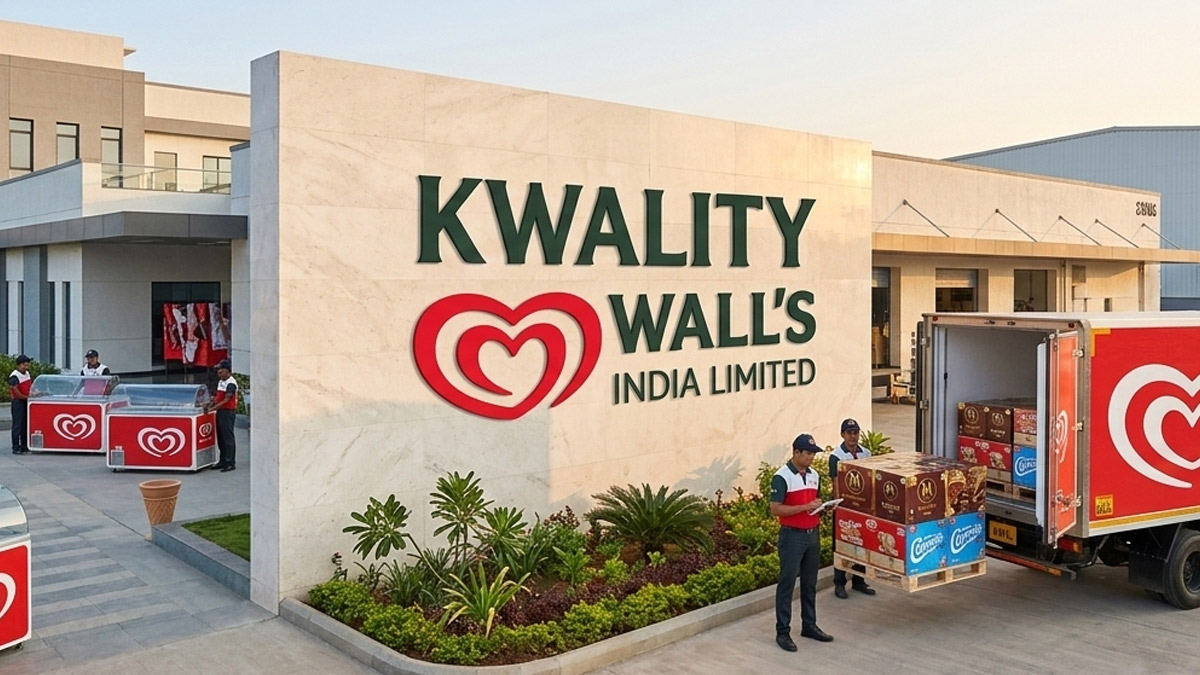
MUMBAI: Kwality Wall’s (India) Limited (KWIL) has released its first set of financial results as a standalone entity, revealing a challenging start to its independent journey. Following its successful demerger from Hindustan Unilever Limited (HUL) on 1st December 2025 and its subsequent listing on 16th February 2026, the company is navigating a transition period marked by structural changes and high input costs.
For the quarter ended 31st December 2025, the company reported revenue of Rs 222 crores. Despite the revenue base, the bottom line was impacted by several factors, resulting in an Ebitda loss of Rs 64.2 crores. When calculated on a Pre-IND AS 116 basis, the Ebitda loss stood at Rs 83.8 crores.
Organic Sales Growth (OSG) declined by 6.5 per cent year-on-year during the quarter. Volume growth, however, saw a marginal increase of 1.2 per cent. The company reported a gross margin of 41.5 per cent. Additionally, exceptional expenses amounting to Rs 94 crores were recorded, primarily linked to non-recurring costs during the transition phase.
Performance across portfolios and channels was mixed. Within the impulse portfolio, brands such as Magnum and Cornetto recorded mid-single digit volume growth, indicating steady demand in on-the-go consumption. However, the in-home portfolio, which includes take-home packs, experienced muted consumption. The company is planning a relaunch of this category with improved offerings ahead of the 2026 season.
Quick commerce (Q-Com) continued to emerge as a strong growth driver, delivering robust double-digit growth during the quarter. Meanwhile, the company also expanded its physical distribution network by increasing the number of company-owned cabinets across markets.
Margin pressure during the quarter was driven by a combination of one-off factors and broader cost inflation. Gross margins were impacted by around 600 basis points due to trade investments made for stock liquidation. Additionally, cocoa price inflation contributed to another 400 basis points of pressure on margins.
Deputy managing director Chitrank Goel attributed the muted performance partly to prolonged monsoons and transitional challenges linked to the GST framework. Operating expenses also increased as the company invested in establishing its standalone supply chain, operational systems and corporate infrastructure following the demerger.
Looking ahead, the management remains focused on a volume-driven growth strategy. To restore profitability, the company has initiated a cost productivity programme aimed at reducing non-consumer-facing costs. It is also working on building regional manufacturing networks to optimise logistics expenses and improve operational efficiency.
The commodity outlook for the near term remains mixed. Dairy prices are expected to remain firm due to tight supply conditions and rising fodder costs. Sugar prices may also move higher following increases in the Minimum Selling Price (MSP). While cocoa prices have moderated recently, currency depreciation has offset some of the potential cost relief for the company.