MAM
Hindi GECs play in tough World Cup turf


MUMBAI: The cricket World Cup is eating into the share of the other popular genres including the Hindi general entertainment channels, reinforcing the mass reach that the sport enjoys in India.
For the three weeks since the World Cup started, the sports genre has seen a boost across the country as Indians have watched Sachin Tendulkar, Virender Sehwag and Yuvraj Singh bat to glory.
While it may be good news for advertisers who have put big monies on the event, it is the executives of the Hindi GECs who have had to face the World Cup googly.
GECs in the Hindi speaking market (HSM), which prior to the World Cup had a genre share of over 40 per cent, have seen a major flight of viewers to the cricket telecast.
The Hindi GEC genre shrinks from 41.22 per cent in week 6 (30 January-5 February) and 40.53 per cent in week 7 (6-12 February) to 35.58 per cent by the end of week 10 (27 February-5 March), according to Tam data. And the fall is consistent. In week 8, Hindi GEC genre had a genre share of 38.46 which fell to 36.65 per cent in week 9.

The sports genre, which was at 1.6 per cent in week 6 and 7, grew from 6.15 per cent (week 8) to 7.45 per cent (week 9) and finally to 9.45 per cent for the week ended 5 March.
In the All India market also, the sports genre has seen a massive jump. It was a mere 1.61 per cent of the whole TV viewing universe in week 6 and 1.59 per cent in week 7. However, it grew consistently to 5.72 per cent in week 8, 6.82 per cent in week 9 and reached a whopping 8.84 per cent by the end of week 10 (27 February-5 March).
Viewers are particularly hooked on to the India matches and the genre has gone up by over 7 per cent.
In the All India market also, the Hindi GEC genre has fallen to 25.91 per cent (week 10) from 29.91 per cent in week 6.
Clearly, when it comes to the pinnacle of cricket when the country‘s glory is at stake, there is no beating it.





Brands
KKR sixes to power EV charger rollout under VIDA campaign
Cricket meets clean mobility as big hits spark India’s charging growth
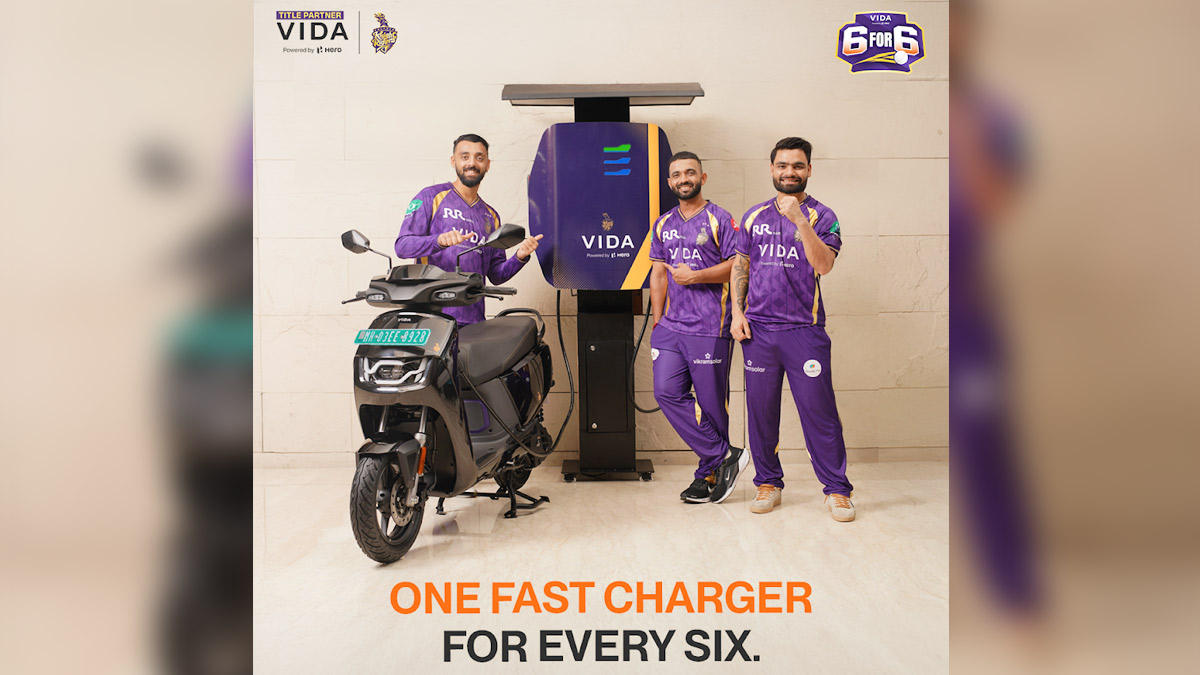
NEW DELHI: VIDA, the electric mobility arm of Hero MotoCorp, has teamed up with Kolkata Knight Riders to launch a campaign that turns cricketing flair into real-world impact.
Titled ‘6 for 6’, the initiative promises to install a 6kW fast EV charger for every six hit by KKR during the ongoing Indian Premier League season. The idea is simple but powerful, as each big hit on the field contributes directly to expanding India’s fast-charging infrastructure.
The campaign builds on VIDA’s growing network, which already spans over 5,300 fast-charging points across more than 430 cities. With EV adoption gaining pace, the brand is using cricket’s mass appeal to accelerate both awareness and infrastructure growth.
Explaining the thinking behind the move, Hero MotoCorp emerging mobility business unit chief business officer Kausalya Nandakumar said, “Cricket has an incredible ability to unite and inspire millions across the country. With the ‘6 for 6’ campaign, we are turning every big hit on the field into a step towards a cleaner and a more accessible mobility future.”
She added that VIDA’s expanding fast-charging network and removable battery technology are designed to make EV ownership more convenient and practical for everyday users.
From the franchise’s side, the campaign is also about giving on-field moments a larger purpose. Kolkata Knight Riders chief executive officer Venky Mysore said, “The ‘6 for 6’ campaign exemplifies the potential of sport as a platform for meaningful, real-world impact. By linking every six to the expansion of EV charging infrastructure, this partnership transforms fan excitement into tangible progress.”
As part of the rollout, VIDA has introduced co-branded charging stations in KKR’s signature colours, with a flagship installation unveiled alongside team players. The chargers are designed for quick top-ups, powering VIDA scooters from zero to 80 percent in about an hour, while also being positioned along key highways to support longer journeys.
The initiative also taps into VIDA’s removable battery system, which allows users to charge using standard household plug points, adding flexibility to the charging ecosystem.
By blending the thrill of cricket with the urgency of clean mobility, VIDA and KKR have found a neat way to make every six count twice, once on the scoreboard and again on India’s road to an electric future.








