MAM
Helix’s ‘Waste Time’ brand message to woo youth

MUMBAI: 150-year-old watch company Timex has launched the latest advertising for its youth brand Helix.
JWT is the creative force behind this campaign. The communication aims as projecting Helix a brand that youth can own, both in attitude and style.
With the youth watch market growing at 15 per cent and limited brands that provide trendy and affordable merchandise, global watch manufacturer Timex decided to launch a sub-brand that specifically targeted the college going segment.

The campaign is built around the concept of time according to the young generation, which is the TG for the brand. It takes inspiration from the insight that ‘from school to college, a new sense of freedom begins to unfold, when the young begin to explore limitless time with limited money in their wallets.’
According to this insight, the youth today sees the present time, i.e. ‘now’ as the only time hang out and just be, make fabulous friends, do spontaneous things and be free spirited and uninhibited. The campaign, thus, tries to reflect the youth’s sentiment — ‘I want to spend time exploring and enjoying the present but I am expected to join the rat race to ensure my future is bright when I am already confident that it will be.’
Since the brand communication is aimed at college going youth, the theme of the campaign is also derived from the different aspects of college life like the summer holidays and the time collegians spent in the canteen having a good time.
The idea was to go against the tradition where everybody keeps advising the youth to ‘do something, this is your time, stop wasting it.’ Instead the camoaign says, “Go Ahead and Waste Time.’ It is a new way of telling the youth that this is the only time they have the luxury to explore their options and have a good time.
The campaign includes a one minute thematic film accompanied by two launch ads that celebrate the philosophy of ‘Waste Time’. Following these, the brand launched followed up ads spanning 20 seconds each that showed innovative ways of ‘wasting’ time. The videos and TVCs were supported by online presence through a Facbook page, print ads and cinema advertising at various theatres. The films have been produced by Flying Pigs Production.
JWT SVP and executive planning director said, “The campaign idea is truly provocative for a watch brand. In a fresh and disruptive way, it blends the truth about youth lives with the category. Young consumers have responded really favourably to the boldness of a liberating brand thought – Waste Time. This campaign sets the tone for Helix – a cool young brand with a distinct attitude and distinct designs.”
Timex India head marketing Vinit Kapahi explains, ‘With an active and growing youth watch market, we wanted to offer trendy and international range of watches at an affordable price point. Designed by internationally acclaimed and Milan based designer, Giorgio Galli, the collection is targeted to the global youth of today, men and women in the age group of 18-24 years. The campaign is clutter breaking, bold and attempts to resonate with the lives of young people in college. The core team at JWT including Account Management, Creative and Planning with their understanding and passion, along with us, believe in the power of – Waste Time, You Will Never Be Young Again’.






Brands
Boeing appoints Barun as head of FP&A for global engineering function
Seasoned finance leader to steer budgets and strategy across global centres
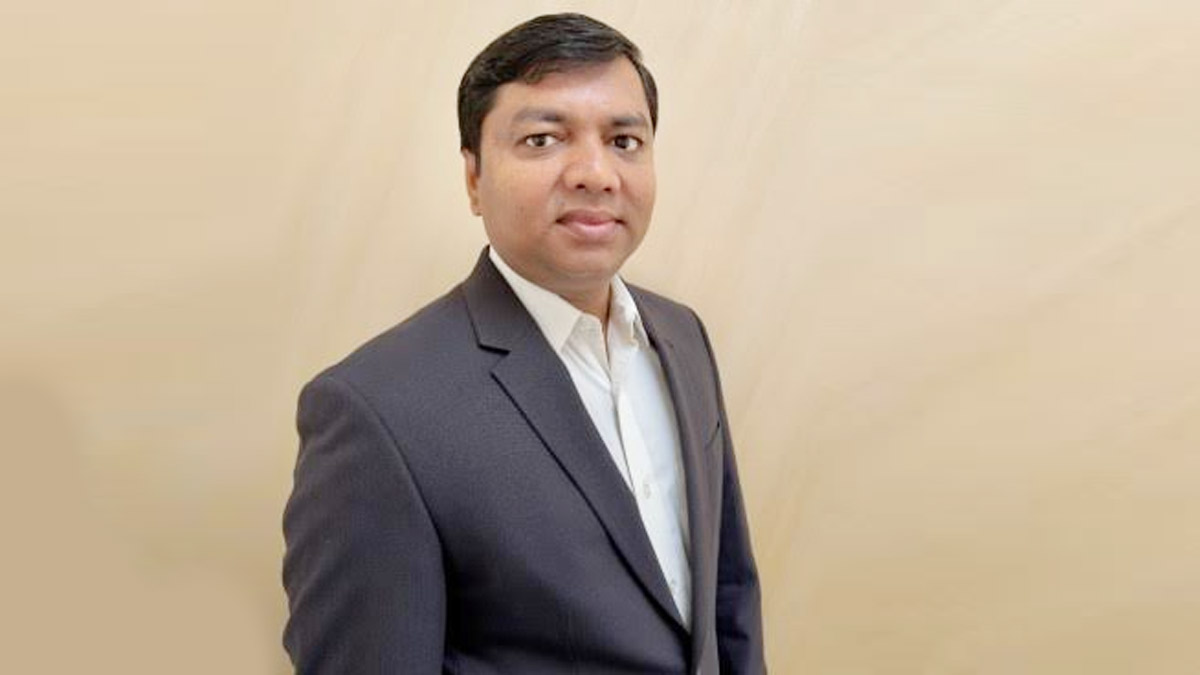
BENGALURU: Boeing’s finance cockpit has a new pilot, and he is no stranger to turbulence or transformation. Boeing has appointed Barun as head of FP&A for global engineering, placing him at the centre of financial strategy for its worldwide engineering and technology operations.
Based in Bengaluru, Barun steps into a role that is as expansive as it is critical. He will serve as the primary finance lead for Boeing’s Engineering and Technology Centers globally, working closely with executive leadership to shape financial decisions, manage complex budgets, and design scalable finance processes that support the company’s growing engineering footprint.
In a note announcing his move Barun said, “I’m excited to share that I’ve joined Boeing Global Engineering. This opportunity is incredibly meaningful to me not just from a professional standpoint, but also for what Boeing represents globally.” He added that he looks forward to contributing to an organisation that continues to shape the future of aerospace and innovation.
Barun’s mandate spans strategic financial leadership, operational oversight, and stakeholder engagement. From directing large-scale budgets and schedules to influencing long-term organisational goals, the role blends financial discipline with business foresight. He will also lead cross-functional teams and partner with finance colleagues worldwide to support engineering programmes across geographies, including India.
The appointment caps a long stint at Juniper Networks, where Barun spent over a decade, most recently as finance senior manager. There, he led FP&A for global product business units and G&A functions, driving budgeting, forecasting, and long-range planning. He also played a key role in enterprise-wide transformation, including spearheading an Oracle to SAP ERP migration and building advanced analytics capabilities using tools such as Tableau and SAP Analytics Cloud.
His earlier career includes finance leadership roles at Sony India Software Centre, Cognizant Technology Solutions, and Mphasis, where he focused on financial planning, governance frameworks, and operational efficiency across global delivery centres.
A chartered accountant from the Institute of Chartered Accountants of India, Barun brings nearly two decades of experience across financial planning, digital transformation, and analytics-led decision making.
His appointment comes at a time when global engineering operations are becoming increasingly complex and distributed, requiring sharper financial oversight and agile planning. With Barun at the helm of FP&A for engineering, Boeing appears to be tightening its financial playbook as it looks to scale innovation with discipline.






