MAM
HDFC Bank signs up Fractal Analytics for marketing programmes

BANGALORE: HDFC Bank has engaged Mumbai based Fractal Analytics (Fractal), a business analytics company, for a period of one year to aid their marketing initiatives in retail banking.
HDFC has chartered an extensive Customer Lifecycle based marketing campaign calendar for this and the forthcoming fiscal. Fractal, which specialises in predicting the behavior of the customers in the areas of risk and marketing, would be partnering HDFC Bank’s marketing team in various initiatives of growing the retail business quickly and cost effectively.
HDFC has been using analytics for taking informed marketing decisions. Fractal will help the bank use information to reach new customers and to build, nurture and maximise lasting customer relationships. Fractal will also help the bank solve the problem of ever-increasing customer acquisition costs and reducing customer loyalty.

The marketing programmes would involve acquisition of customers profitably by reducing campaign costs, cross selling various asset and liability products to the existing customers, thereby, leveraging the existing relationships and proactively retaining existing customers.
Fractal’s analytics-based marketing solutions span which the entire lifecycle of customer relationship right from customer acquisition to customer retention to customer value management, is expected to give HDFC an upper hand in understanding the needs and circumstances of their customers.
Fractal claims to use numerous advanced statistical modeling methodologies backed by strong banking expertise for building predictive models and scorecards that help its clients take business decisions more effectively and efficiently.
The company has worked with HDFC in the past on similar assignments where the bank had benefited with the help of business analytics services.







Brands
Hyundai Motor India rolls out nationwide AC check-up camp from April 10
Limited-period service drive offers discounts, free checks to beat summer heat
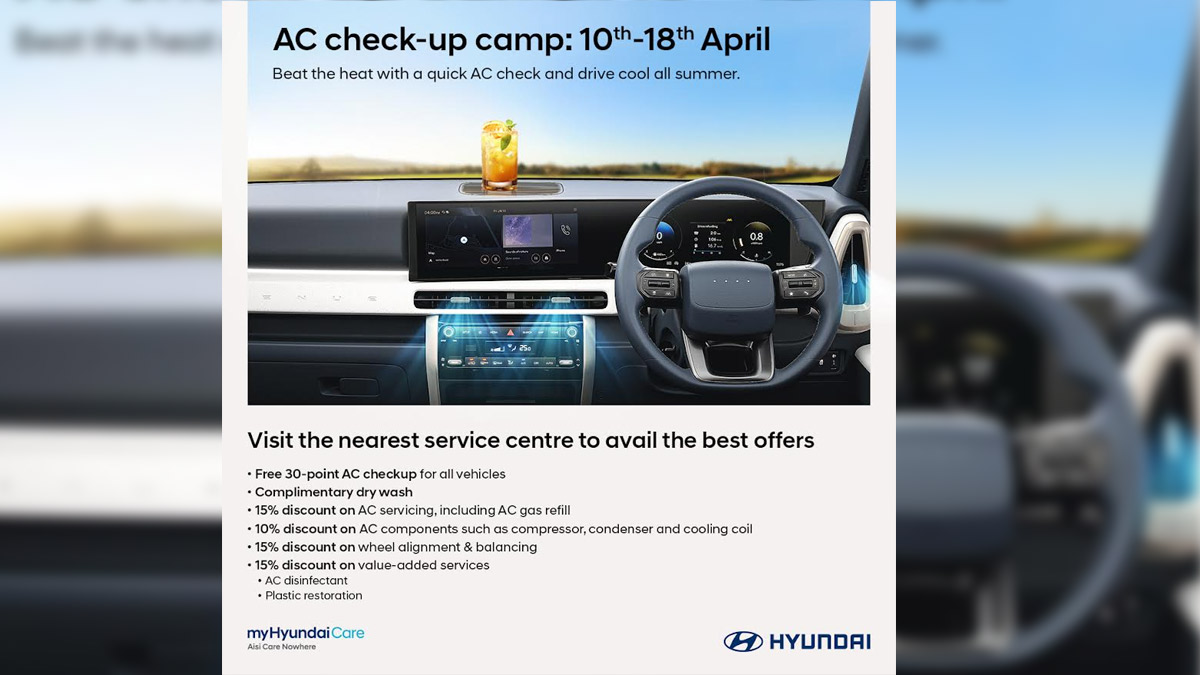
GURUGRAM: Hyundai Motor India Limited has announced a nationwide AC check-up camp, rolling out from April 10 to April 18, as temperatures climb and car cabins begin to feel the heat.
The initiative is designed to keep vehicles cool and customers comfortable, offering a mix of free inspections, discounted services and value-added benefits across Hyundai’s extensive service network in India.
As part of the limited-period campaign, customers can avail a complimentary 30-point vehicle check-up along with a free dry wash. The company is also offering a 15 per cent discount on AC servicing, including gas refills, and similar savings on wheel alignment and balancing. Key AC components such as compressors, condensers and cooling coils will be available at a 10 per cent discount, while value-added services like AC disinfectant treatments and plastic restoration also come with reduced pricing.
The camp will be hosted across authorised Hyundai workshops nationwide, allowing customers easy access to trained technicians, genuine parts and diagnostic support without the usual hassle.
Speaking on the initiative, Hyundai Motor India Limited national service head Nilesh Shah said, “At HMIL, customer satisfaction and convenience remain at the core of our service philosophy. With the onset of summer, we are pleased to introduce our nationwide AC check-up camp to ensure that our customers enjoy a comfortable and hassle-free driving experience. This initiative reflects our commitment to delivering proactive care and enhancing vehicle performance through our strong service network across India.”
With mercury levels on the rise, Hyundai’s timely service push aims to ensure drivers stay cool behind the wheel while also nudging them towards preventive maintenance, a small check today that could save a larger repair tomorrow.






