MAM
Haier India forays into the mobile space

MUMBAI: The home appliance major Haier, touted as the second largest home appliances brand in the world, today unveiled seven GSM state of the art mobile phones officially foraying into the mobile handset segment in India. The range of phones include entry level cost effective phones like Z 100 offering a standby time of 18 days to a handset that comes with FM radio to high end models like the P 7 which is said to be the world’s first pen phone with 300K pixel camera and a dicta phone.
Haier mobile phones are being launched all over India in a span of 15 days. Haier arrived in India in June 2004.
Speaking on the occasion Haier India president and CEO TK Banerjee said, “It is our pleasure to be a part of the rapidly growing Indian cellular industry. We hope to have a significant presence in the Indian mobile telephony segment by the end of year. We hope that our phones with their unique features which have made them popular worldwide will also be widely welcomed by the Indian consumers. Introduction of mobile phones also reflect Haier India’s commitment to provide best and latest technology to Indian consumers.”
Haier India director Pranay Dhabhai added, ” Haier has a vast range of mobile phone models and these seven models are most suited for the Indian market as they cater to the requirement of all segments and user needs. Our entire range of mobile phones comprising over sixty models is designed to meet individual customer requirements.”
The company officials also stated that the aim was to be among the top four players who constitute 90 per cent of the market today. Coming to distribution, Haier has tied up with Trust Telecom who will act as the national distributor for the company’s mobile arm. A nation wide after sales service network has already been set up, which is in the process of expansion.
A full range of CDMA phones will be launched in three months.

The base line for Haier mobile phones is coined as ‘Talk your talk’. The company also enjoys strategic alliances for component sourcing with Intel, Fujitsu and other world leaders.




Brands
Hyundai Motor India rolls out nationwide AC check-up camp from April 10
Limited-period service drive offers discounts, free checks to beat summer heat
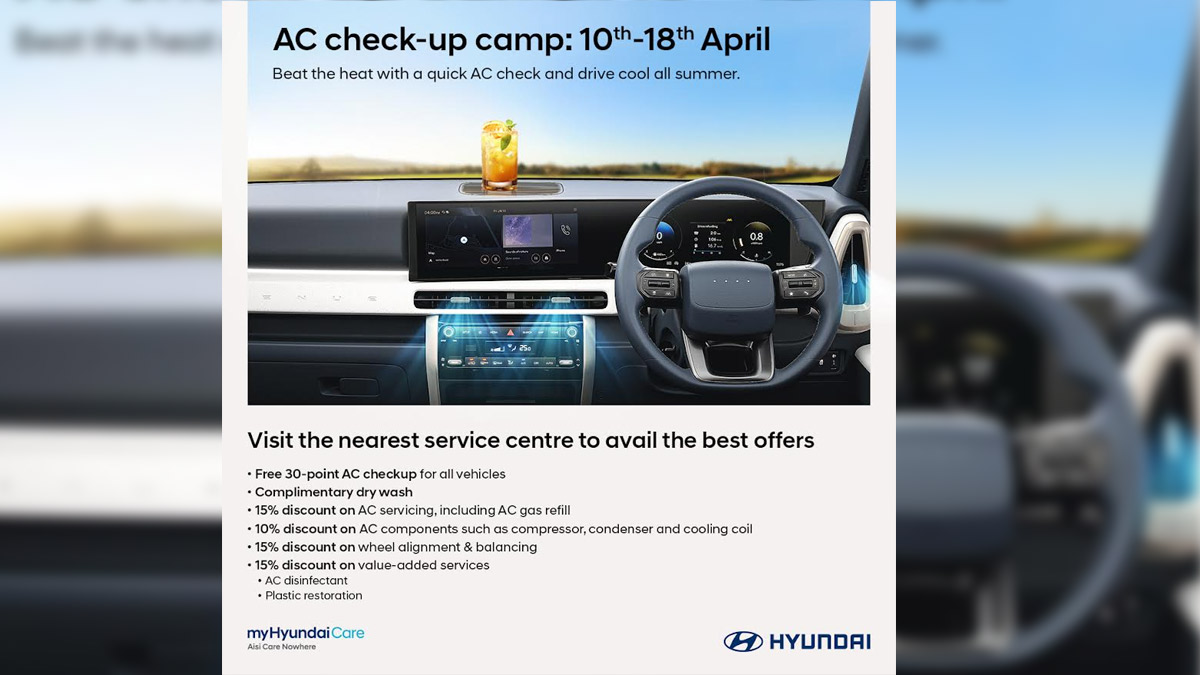
GURUGRAM: Hyundai Motor India Limited has announced a nationwide AC check-up camp, rolling out from April 10 to April 18, as temperatures climb and car cabins begin to feel the heat.
The initiative is designed to keep vehicles cool and customers comfortable, offering a mix of free inspections, discounted services and value-added benefits across Hyundai’s extensive service network in India.
As part of the limited-period campaign, customers can avail a complimentary 30-point vehicle check-up along with a free dry wash. The company is also offering a 15 per cent discount on AC servicing, including gas refills, and similar savings on wheel alignment and balancing. Key AC components such as compressors, condensers and cooling coils will be available at a 10 per cent discount, while value-added services like AC disinfectant treatments and plastic restoration also come with reduced pricing.
The camp will be hosted across authorised Hyundai workshops nationwide, allowing customers easy access to trained technicians, genuine parts and diagnostic support without the usual hassle.
Speaking on the initiative, Hyundai Motor India Limited national service head Nilesh Shah said, “At HMIL, customer satisfaction and convenience remain at the core of our service philosophy. With the onset of summer, we are pleased to introduce our nationwide AC check-up camp to ensure that our customers enjoy a comfortable and hassle-free driving experience. This initiative reflects our commitment to delivering proactive care and enhancing vehicle performance through our strong service network across India.”
With mercury levels on the rise, Hyundai’s timely service push aims to ensure drivers stay cool behind the wheel while also nudging them towards preventive maintenance, a small check today that could save a larger repair tomorrow.






