MAM
“Habits are the foundation of our lives”: Ashdin Doctor

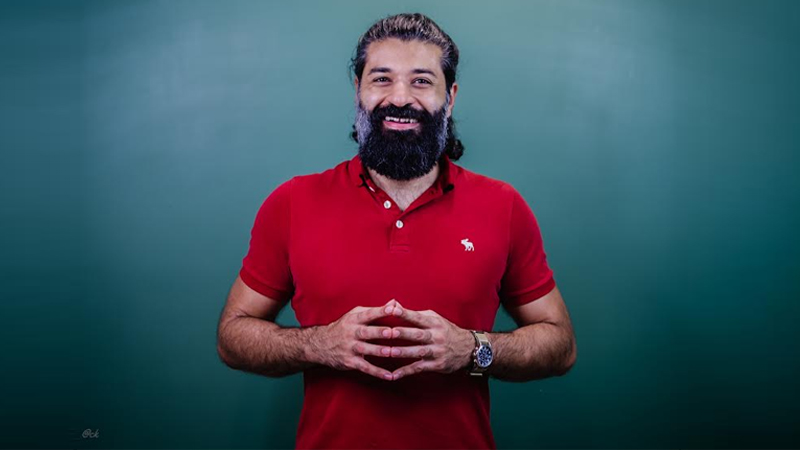
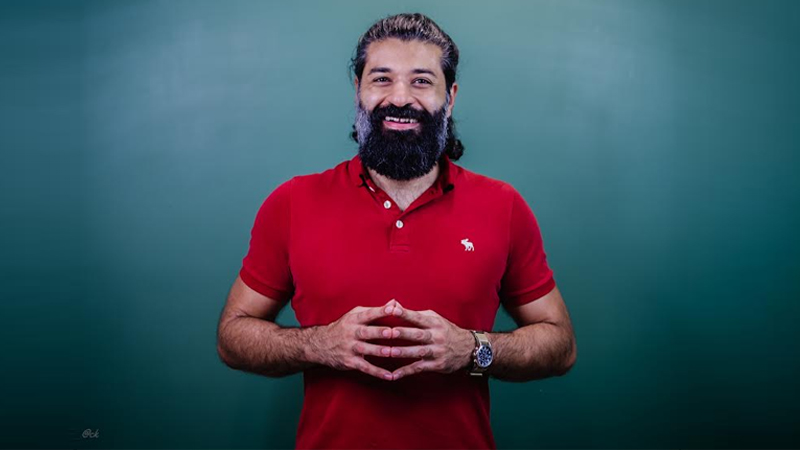
Mumbai: Ashdin Doctor is a versatile entrepreneur, author, Habit Coach™, podcaster, and philanthropist. With a diverse range of experiences and a passion for transforming lives, he has become a leading figure in the field of habit formation and personal development. Ashdin’s journey began with a successful 15-year career at Ormax Consultants Pvt. Ltd., India’s leading qualitative research firm founded by his parents.
The turning point in Ashdin’s life came when he found himself collapsing on the floor, drenched in sweat and unable to move given his hectic personal and professional life and struggles due to ignoring his health. It was at this moment of crisis that he realized the urgent need for change. After trying various workouts and health regimes at a time when little awareness about holistic health and wellness existed and exercising meant only body building, Ashdin managed to lose his pot belly and get a six-pack. People commented on his new avatar and they attributed it to his “motivation”. This was when the germ of his habit coaching business idea was sowed. In his search for solutions, he discovered that relying solely on motivation was a recipe for failure. Determined to make a lasting difference, Ashdin developed an in-depth understanding of sustainable habits, rather than momentary motivation, were the key to long-term success and personal transformation.
Driven by his newfound perspective, Ashdin undertook an informal study of various disciplines, including health, nutrition, fitness, exercise, anatomy, nervous system, habits, motivation, lifestyles, meditation, healing practices, and sleep. Collaborating with thought leaders, doctors, and experts from diverse fields related to health and lifestyle, he gathered a wealth of knowledge and insights. Inspired by his own life-changing experiences, Ashdin began sharing these invaluable lessons with others.

Indiantelevision.com caught with him where shared his journey as “The Habit Coach”
Edited excerpts
On introducing yourself and your work as “The Habit Coach”
My name is Ashdin Doctor and I started the Habit coaching industry about 8 years ago. At the time I had just gone through my own life-altering wellness journey. Which I cover in my book “Change Your Habits Change Your Life”. I was overweight, stressed and burnt out. Culminating in me collapsing on the floor, clutching my chest, at the age of 31. I swore never to be in that state again. I Changed my life by making small changes, instead of large ones that I had tried many times before and failed. This is where the idea of teaching people how to form habits was born. If people realise that the quality of their current lives is nothing but the quality of their current habits, they can change their lives easily!
On the motivation to become a habit coach
After people saw this transformation. They would ask me what I had done. How they could also lose a few kilos or get rid of their stress. And I would patiently tell them all the things I had done to achieve it. However, they would stop me after about 30 seconds and say, “Ashdin I do not have your motivation and self-discipline”. This was my aha moment, if people don’t think they can do it, they will not start! So when I started Habit Coaching my idea was a war on the word “Motivation”.
On the first podcast that was turned into a book
I host The Habit Coach Podcast. Which is one of India’s top podcasts and one of the oldest. We have over 1,200 episodes. Since most of the episodes are scripted, it was very easy to turn 31 scripts into a workbook style of book. The idea was that people could read the chapters and then write them down and begin to implement the change suggested in the chapter. This format has worked very well for us. The book is called “One Habit A Day” and we are getting great feedback for it.
On elaborating on the issues you’ve encountered and any solutions you’ve devised
It all boils down to energy management and NOT time management. Most of us have lots of time left over in the day, but we run out of energy far faster. Energy management includes eating the right food, spending time meditating, Working out, and removing distractions. Once you have surplus energy, create the priorities you need to focus on so that you do not feel overwhelmed. Most importantly do things you love doing and you will never feel like it is work. Have fun and enjoy your work and life, it’s a great habit!
On habits that are important for personal development and well-being
Habits are the foundation of our lives. I like to define habits as “Any conscious or sub-conscious, action or thought that is repeated at a set frequency is a habit. We are used to thinking of habits as brushing teeth or tying shoe laces, these are actions. But our thoughts are also habits! Imagine waking up every day and thinking life sucks. Day after day the same thought is going to ensure that your life does suck. This is why habits are so crucial and most of our habits are not consciously created by us. We need to choose the habits we want carefully.

Digital
Content India 2026 opens with a copro pitch, a spice evangelist and a £10,000 prize for Indian storytelling
Dish TV and C21Media’s three-day summit puts seven ambitious projects before an international jury, and two walk away with serious development money
MUMBAI: India’s content industry gathered in Mumbai this March for Content India 2026, a three-day summit organised by Dish TV in partnership with C21Media, and it wasted no time making a statement. The event opened with a Copro Pitch that put seven scripted and unscripted television concepts before an international panel of judges, and by the end of it, two projects had walked away with £10,000 each in marketing prize money from C21Media to support development and international promotion.
The jury, comprising Frank Spotnitz, Fiona Campbell, Rashmi Bajpai, Bal Samra and Rachel Glaister, evaluated a shortlist that ranged from a dark Mumbai comedy-drama about mental health (Dirty Minds, created by Sundar Aaron) to a Delhi coming-of-age mystery (Djinn Patrol, by Neha Sharma and Kilian Irwin), a techno-thriller about a teenage gaming prodigy (Kanpur X Satori, by Suchita Bhatia), an investigative crime drama blending mythology and modern thriller (The Age of Kali, by Shivani Bhatija), a documentary on India’s spice heritage (The Masala Quest, hosted by Sarina Kamini), a documentary on competitive gaming (Respawn: India’s Esports Revolution, by George Mangala Thomas and Sangram Mawari), and a reality-horror competition merging gaming and immersive fear (Scary Goose, by Samar Iqbal).
The session was hosted by Mayank Shekhar.
The two winners were Djinn Patrol, backed by Miura Kite, formerly of Participant Media and known for Chinatown and Keep Sweet: Pray & Obey, with Jaya Entertainment, producers of Real Kashmir Football Club, also attached; and The Masala Quest, created and hosted by Sarina Kamini, an Indian-Australian cook, author and self-described “spice evangelist.”
The summit also unveiled the Content India Trends Report, whose findings made for bracing reading. Daoud Jackson, senior analyst at OMDIA, set the tone: “By 2030, online video in India will nearly double the revenue of traditional TV, becoming the main driver of growth.” He noted that in 2025, India produced a quarter of all YouTube videos globally, overtaking the United States, while Indians collectively spend 117 years daily on YouTube and 72 years on Instagram. Traditional subscription TV is declining as free TV and connected TV gain ground, forcing broadcasters to innovate. “AI-generated content is just 2 per cent of engagement,” Jackson added, “highlighting the dominance of high-quality human content. The key for Indian media companies is scaling while monetising effectively from day one.”
Hannah Walsh, principal analyst at Ampere Analysis, added hard numbers to the picture. India produced over 24,000 titles in January 2026 alone, with 19,000 available internationally. The country now accounts for 12 per cent of Asia-Pacific content spend, up from 8 per cent in 2021, outpacing both Japan and China. Key exporters include JioStar, Zee Entertainment, Sony India, Amazon and Netflix, delivering over 7,500 Indian-produced titles abroad each year. The top importing markets are Saudi Arabia, the UAE, Egypt, the United States and the Philippines. Scripted content dominates globally at 88 per cent, with crime dramas and children’s and family titles performing particularly strongly.
Manoj Dobhal, chief executive and executive director of Dish TV India, framed the summit’s ambition squarely. “Stories don’t need translation. They need a platform, discovery, and reach, local or global,” he said. “India produces more movies than any country, our streaming platforms compete globally, and our tech and creators win international awards. Yet fragmentation slows growth. Producers, platforms, and tech move in different lanes. We need shared spaces, collaboration, and an ecosystem where ideas, technology, and people meet. That is why we built Content India.”
The data, the pitches and the prize money all pointed to the same conclusion: India is not waiting for the world to discover its stories. It is building the infrastructure to sell them.







