MAM
GUEST COLUMN: When marketing stopped shouting and started working
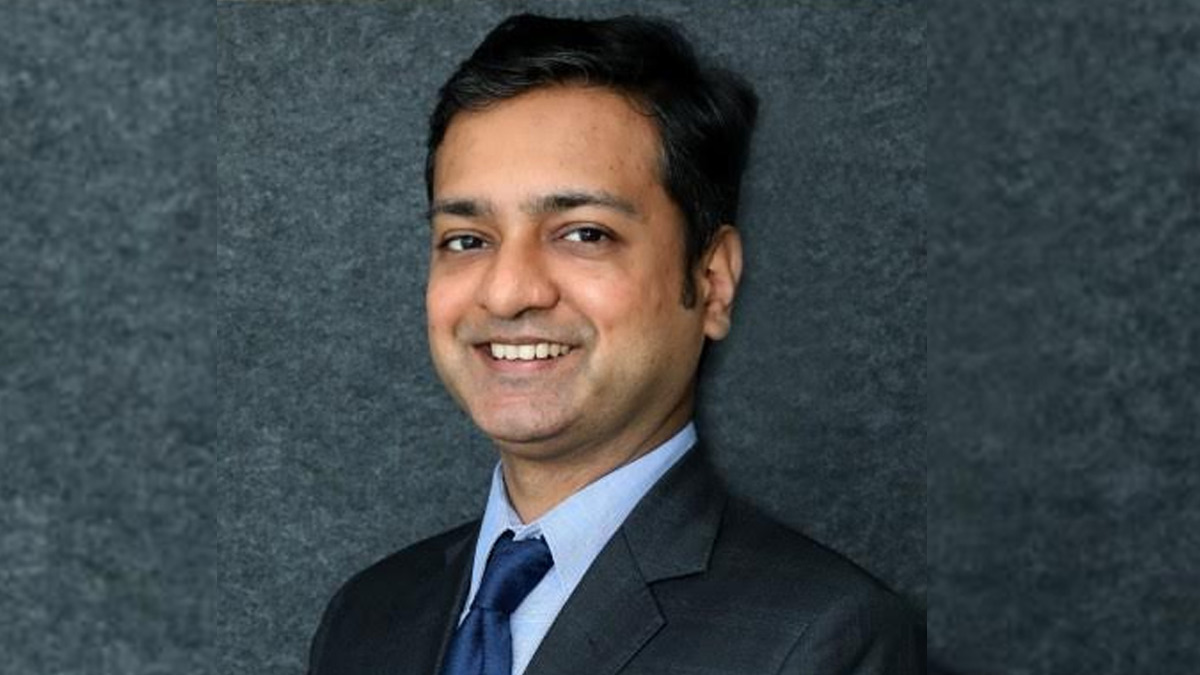
MUMBAI: In this guest column, Sameer Joshi and Anindya Ghosh, founders of brand marketing firm Sam & Andy, bring together their combined experience of over 45+ years to reflect on how 2025 reset the rules of marketing and branding. Drawing from careers that span leading global agencies and corporate roles, the duo examine the industry’s shift away from chasing extremes towards balance, focus and fundamentals. They discuss the rise of micro-influencers and micro-dramas, the reversal of content thinking where short formats lead to big ideas, and why the long-standing divide between brand and performance has finally collapsed. The column also explores marketing’s closer alignment with business outcomes, the emergence of quick commerce as a high-intent media platform, the growing relevance of B2B storytelling, and omnichannel becoming hygiene rather than hype. Anchored in an India-first perspective, Joshi and Ghosh argue that growth today is built through system-led thinking, credibility and clarity, making the case that 2025 was not about louder brands, but about clearer ones.
If 2025 taught the marketing and branding industry anything, it was this: growth no longer comes from chasing extremes. It comes from balance, focus and a return to fundamentals.
This was the year marketers stopped looking for silver bullets and started building systems that actually work.
One of the clearest shifts was the rise of micro-influencers and micro-dramas. Influence is no longer defined by scale alone. Brands increasingly leaned on smaller, credible voices that speak to specific communities with authenticity. Alongside this came micro-dramas. Short, episodic content formats designed for attention-fragmented audiences. These weren’t cut-down versions of larger ideas; they were the idea itself.
This marked a reversal in content thinking. Earlier, brands made long films and edited them into shorter formats. In 2025, the thinking flipped. The six-second or ten-second film became the starting point. If the idea worked, it earned the right to scale up. Even film promotions followed this model. Movies were marketed through hundreds of short reels that gradually pulled audiences into theatres. Everything small now leads to something bigger.
Another long-standing debate finally lost relevance: brand versus performance. The industry realised that these are not opposing forces. Performance without brand hits a ceiling. Brand without performance lacks accountability. The most effective marketers treated them as one system, not two separate mandates. Legacy brands demonstrated this balance well, proving that sustained growth requires both short-term efficiency and long-term meaning.
This shift also moved marketing closer to the business core. Marketing conversations increasingly happened in revenue rooms, not just creative reviews. Banks, startups and large enterprises began expecting solutions, not just campaigns. Marketing was no longer measured by what it said, but by what it delivered.
A major structural shift came from the rise of quick commerce as a media platform. Media budgets didn’t vanish; they migrated. High-intent environments where discovery and transaction coexist became far more valuable than passive reach. Quick commerce platforms evolved from distribution channels into powerful influence points, reshaping how brands think about visibility and timing. B2B marketing also came into its own. It moved beyond relationship-led selling and embraced visibility, storytelling and relevance. Decision-makers are people first, not designations. B2B brands began competing for attention, not just access, recognising that mental availability shortens sales cycles.
On the distribution front, omnichannel stopped being a buzzword and became hygiene. Digital-native brands acknowledged the power of physical presence, while traditional brands strengthened on digital platforms, sometimes offering products unavailable anywhere else. Growth now sits at the intersection of offline trust and online convenience.
At a broader level, India itself underwent a branding shift. The country is no longer content being just a manufacturer or exporter. There is a growing understanding that markets are created through narratives, not just capacity. Indian businesses, from commodities to consumer brands, recognised the need to build brands with global relevance. The industry also witnessed consolidation and fragmentation at the same time. Large agency networks merged and streamlined, while independent agencies thrived by being agile and fearless.
Scale and specialisation now coexist.
Trust became non-negotiable. Brand crises this year showed that audiences expect honesty, speed and accountability. Saying sorry early proved more powerful than explaining later. Authenticity stopped being a value statement and became a survival skill.
Looking ahead, several signals are clear. Media platforms will be judged harder on real business impact. AI-led discovery will reshape search and commerce. Categories like jewellery will see clearer articulation of purpose; natural diamonds, lab-grown diamonds and gold will coexist, each with its own reason to exist rather than competing for the same space.
Politically and economically, change is inevitable. But fundamentals remain unchanged. Brands that win will be those that focus on clarity, consistency and credibility.
One myth, however, needs retiring: the disappearance of the Indian middle class. It hasn’t vanished; it has evolved. The middle class is no longer a single income band, it is a mindset. Writing it off is not insight; it is misreading India.
2025 wasn’t about louder brands. It was about clearer ones.
Note: The views expressed in this article are solely the author’s and do not necessarily reflect our own.

MAM
Never put a ceiling on yourself: Edstead CBO Charu Budhiraja’s bold advice to the next generation of women
Edstead’s CBO on trading the hard sell for human truth, and why ‘let the work do the talking’ is more than just a mantra
MUMBAI: There is a particular kind of storytelling that does not announce itself. It does not interrupt your evening with a jingle, or flash a logo at you every thirty seconds. It simply pulls you in, holds you there, and leaves you thinking long after the screen goes dark. Charu Budhiraja has spent over two decades figuring out how to make that happen, and she will tell you, with the ease of someone who has learned this the hard way, that the secret is disarmingly simple: be real.
As chief business officer at Edstead, a Mumbai-based purpose-first content studio, Budhiraja sits at the intersection of creative instinct and commercial strategy. It is a position she has built towards across a career that winds through Ogilvy, Endemol, and Warner Bros. Discovery, and one that has seen her make films for Unilever and PepsiCo, shepherd long-form documentary partnerships, and watch the entire language of branded content change around her. She has sat in rooms where the brief was to sell, and in rooms where the brief was to mean something. Her life’s work, in a sense, has been making the case that those two rooms are the same room.
Ask Budhiraja what two decades in the industry have actually taught her, and she does not reach for the expected answer about strategy or scale. She reaches for empathy. “Over the last two decades, one thing I’ve learnt clearly is that storytelling works best when it connects with real human insights,” she says. “As a woman leader, I believe empathy naturally becomes a stronger part of the process. It helps you listen more carefully to people, experiences, and emotions behind a story.” This, she argues, is not a personality trait dressed up as a professional skill. It is a craft advantage, one that shapes how you enter a story, what you choose to stay with, and how you decide what a brand should and should not say.
That perspective, she says, is what allows a narrative to feel both authentic and commercially purposeful at once. “When storytelling balances both human insight and brand intent, that’s when it truly resonates.” The balance sounds elegant in theory. Getting there, as anyone who has ever tried to align a marketing department with a documentary filmmaker will know, is rather less tidy in practice. But Budhiraja makes it sound like something you can actually plan for, which is perhaps the most useful thing about the way she thinks.
She sees this same quality reflected in how women leaders more broadly approach the documentary space. There is, she observes, a natural inclination among them to look beyond the surface of a story and into its emotional and social architecture. “This lens helps brands tell stories that are not only strategically relevant but also authentic and impactful,” she explains. “When purpose-led storytelling is rooted in real experiences and voices, the narrative aligns more organically with a brand’s larger values and purpose.” It is not that men cannot do this, she is too careful a thinker to make that argument. It is that women in leadership have often had more practice doing it, and that the results tend to show.
The story of how branded content got to where it is today is one Budhiraja has watched from the inside, and in some stretches helped to write. The early days of the format were campaign-driven and product-led. Films for brands like Unilever and PepsiCo were, by her own account, “creatively exciting” but built around a marketing message and measured in short cycles. The audience, in that model, was a target. The story was a vehicle. The logo was the destination.
That model has not aged well. “Audiences are far more aware and selective about what they watch,” Budhiraja says plainly. “They engage with content that feels meaningful rather than promotional.” The shift is not simply aesthetic. It reflects a deeper change in the relationship between audiences and the media they consume, one accelerated by streaming, by social platforms, and by a general collapse of patience for anything that feels like it is wasting your time. Brands that have not adapted to this are finding out the hard way that money spent on content people skip is not really money spent at all.
What has replaced the old model, at least in the work Edstead does, is something considerably more ambitious. “Research-led, purpose-driven documentaries and series allow brands to participate in larger conversations and tell stories that feel authentic, relevant, and culturally grounded,” Budhiraja explains. The word ‘participate’ is doing a lot of work in that sentence. Not dominate. Not sponsor. Participate. It implies a certain humility about where the brand sits in the story, and a willingness to let the story be bigger than the brand. That is, it turns out, exactly the point.
“It’s less about advertising and more about creating stories people genuinely want to engage with.”
At Edstead, the philosophy takes shape as a very specific way of working. Partnerships are built not around visibility or reach, but around shared purpose, and the process begins not with a client brief but with culture itself. “The process begins with identifying stories that already exist within culture and society, and then collaborating with brands whose values naturally align with those narratives,” Budhiraja explains. The idea is that a brand should never feel grafted onto a story. It should feel like it was always part of the landscape the story is set in.
Long-form storytelling is central to this. A documentary or a branded series gives a brand the room to breathe inside a narrative, to become part of it rather than an interruption of it. “We rely heavily on research and long-form storytelling formats, which allow brands to integrate into the narrative more organically rather than feeling like an add-on,” she says. “When a partnership is genuinely aligned with the story, it creates a far deeper connection with audiences while delivering meaningful value for the brand.”
Edstead’s role in all of this, as Budhiraja frames it, is that of a bridge. On one side sits brand intent, which arrives with commercial objectives, a communications strategy, and a board that wants to see results. On the other sits authentic storytelling, which arrives with a subject, a point of view, and an audience that can smell inauthenticity from the other side of a streaming platform. Bringing those two sides together without either losing its integrity is the studio’s founding proposition. “In many ways, our role is to bridge that gap between brand intent and authentic storytelling, ensuring that the narrative remains culturally relevant and impactful,” she says.
Making meaningful content is, of course, only half the challenge. The other half is making sure it actually reaches people. Edstead approaches this by designing content to travel from the outset, building stories that can move across platforms and formats and find different kinds of audiences along the way. “The idea is to create stories that are culturally relevant and emotionally engaging, so audiences feel invested in them,” Budhiraja says. “When a story connects on that level, it naturally sparks conversation.” That conversation is ultimately what converts emotional engagement into brand value. It cannot be bought. It can only be earned by getting the story right in the first place.
On the question of what authentic narrative does for a brand, Budhiraja is at her most direct, and her answer cuts through a good deal of industry noise in a single breath. Years of watching what sticks and what does not have given her a clear view on the matter, and it has very little to do with production values or the size of the media buy behind a campaign. “I can tell you with certainty that the content that stayed with people was never about the biggest budget or the most perfect execution. It was about truth,” she says. “When a brand has the courage to step back and let an authentic story lead, audiences feel it immediately. That shift from watching to feeling is what no media plan can engineer. It has to be earned. And in my experience, the only way to earn it is to be real.”
“That shift from watching to feeling is what no media plan can engineer. It has to be earned.”
Looking ahead, Budhiraja sees the trajectory of branded storytelling continuing to move away from the world of campaigns and into the world of culture. The most impactful branded content, she argues, is already indistinguishable from meaningful storytelling, and the gap between the two will only narrow further. “Branded storytelling today is moving beyond campaigns and entering the realm of culture,” she says. “The most impactful branded content doesn’t feel like marketing at all, it feels like meaningful storytelling.”
The implication for marketers is significant. The skills that built careers in traditional advertising are not the same skills that will build the next generation of brand stories. Budhiraja is direct about this shift. “Going forward, marketers will need to think more like creators and storytellers rather than traditional advertisers,” she says. “Purpose-led narratives, creative collaborations, and platform-native content will shape the future, especially as audiences expect more personalised and culturally relevant stories.” The industry, she suggests, is not quite there yet. But it is moving, and the direction is clear.
Budhiraja’s own journey through this industry has not been without friction. Across media networks, agencies, and now a purpose-first studio, she has encountered the quiet, persistent scepticism that can follow women into leadership roles, moments where being a woman meant being questioned more than the work warranted. She does not dramatise this, but she does not skip past it either. “There have definitely been moments where you feel questioned more because you are a woman,” she says. “Those experiences are not uncommon in leadership roles across industries.”
Her response has been consistent, and it is, characteristically, a storyteller’s response. Do not get louder. Get better. Let the work make the argument you cannot make in a meeting room. “Over time, I realised that the strongest response is not louder words but stronger work,” she says. “When a story connects and creates impact, it speaks for itself. My approach has always been simple: let the storytelling and your work do the talking.” It is advice she has lived by long enough that it no longer sounds like advice. It sounds like fact.
For the next generation of women trying to build careers at the intersection of creativity, strategy, and business growth in purpose-driven media, Budhiraja has a lot to say, and none of it is soft. She is not interested in offering comfort. She is interested in offering clarity. “Experiment relentlessly, and never let anyone, including yourself, put a ceiling on what you can do,” she begins. “Ask questions, and make sure they’re the right ones. Say yes to learning, say yes to adapting, and always learn beyond the boundaries of your current role, because the moment you stop, you limit yourself.”
The women who thrive at this intersection, she believes, are the ones who understand all three disciplines deeply and are not afraid to move fluidly between them. Specialism has its place, but it is versatility paired with conviction that builds careers with staying power. “The women who thrive at the intersection of creativity, strategy, and partnerships are the ones who understand all three deeply and aren’t afraid to move between them,” she says. Then she adds what is, perhaps, the most personal piece of counsel she offers: “And above everything: trust your instincts, hold your opinions, and own your perspective.”
It sounds simple. It is not. But then, most of the truest things about storytelling are like that. They look obvious from the outside and turn out, on closer inspection, to be the product of a great deal of practice, patience, and a willingness to keep asking whether the story you are telling is the one that actually needs to be told. Budhiraja has been asking that question for over two decades. The industry, catching up slowly but surely, is beginning to understand why it matters.