MAM
Guest column: Trends that will rule consumer durables industry in the ‘new normal’


NEW DELHI: 2020 will leave its mark in history as the year that altered lives and reshaped the business landscape across industries. The consumer durables industry has come a long way since the beginning of the pandemic. Companies have tapped into changing consumer sentiments by being more responsive and providing innovative solutions to address expectations.
Over the last decade, the consumer durables sector has grown at a steady rate, marking the scope of future prospects. This provides the industry with a great opportunity to build sustainable markets and tap into both urban and rural markets in the country. Last year saw a significant increase in e-commerce demand from tier-2 and tier-3 towns, in light of the pandemic. Brands are also moving toward a more customer-centric approach like never before. The ability to identify a customer’s emotional need, understand the reasons behind that need, and respond to it effectively goes a long way in building successful brands.
Keeping these factors in mind, we can anticipate certain trends in the consumer durables industry in the ‘new normal’:

Enhanced focus on health and eco-friendly products
Consumers are likely to prioritise health going forward and products that offer superior features protecting or enhancing health will become the popular choice. The outbreak of the virus has led to widespread health awareness with a direct correlation to safety, health and hygiene, making products like water purifiers and water heaters even more important. Also, with increased awareness around the environment, there is a greater focus on more energy-efficient and eco-friendly products to help reduce the carbon footprint.
Digital integration will be key
The need to ensure social distancing has given significant rise to online transactions. Consumers will continue to use digital means to learn more about products. The emergence of more ecommerce channels has also provided convenience with quick delivery, more offerings and the ability for price comparison. Mapping the customer digital journey to create personalised experiences will be key.
Tech products help shape the future
Consumers are looking for products that are more technologically advanced, simple to use and easily accessible. We're privileged to be living in a time where science and technology can assist us, make our lives easier and help reshape the ways we go about our lives. The emergence of AI and IoT driven products has upped the scale and quality of communication between devices and humans with intelligent technology. This year, we will see technologies, such as robotics, AI, IoT and AR-VR moving to the forefront. The technology we're already accustomed to has paved the way for us to further innovate; and future technologies will have the potential to change our lives even more.
Agility will be fundamental to success
Life as we know it is constantly changing, driving the need for businesses to become more agile and adapt to change across functions – production, supply chain, marketing, sales, etc. There is growing recognition of its transformational benefits and its ability to bring flexibility to business quickly. The ongoing pandemic has highlighted the need for companies to be more agile. For example, a supply chain strategy that made sense before Covid2019 may no longer be applicable. Disruption to the supply chain brought several businesses in the country to a grinding halt. The need to be flexible, create the right business culture, and put customers first, while remaining profitable, will be the key to success. The important lesson is to deploy a combination of strategy and agility to weather strong currents.
Customers are keen to purchase products that support hygiene and health. The exposure to global technologies and lifestyle has created a perception shift, and consumer durables are no longer viewed as utility products, but rather an extension of one’s personality. Consumers today are aware and equipped with information that helps them understand how opting for more efficient technologies can result in better usability. They seek products that enable both comfort and convenience and don’t hesitate to purchase at a higher cost if it adds value to their lives. Increasing electrification of rural areas and wide usability of online sales are also aiding this growing demand.
Every crisis is an opportunity for unexpected growth and learning, and the pandemic has encouraged more companies to reinvent and evolve.
(The author is managing director, A. O. Smith India. The views expressed here are his own and indiantelevision.com may not subscribe to them.)




MAM
Tanishq launches ‘Lekhinis’ campaign celebrating modern Telugu woman
Olympic medallist P.V. Sindhu features in new film honouring women who author their own stories.
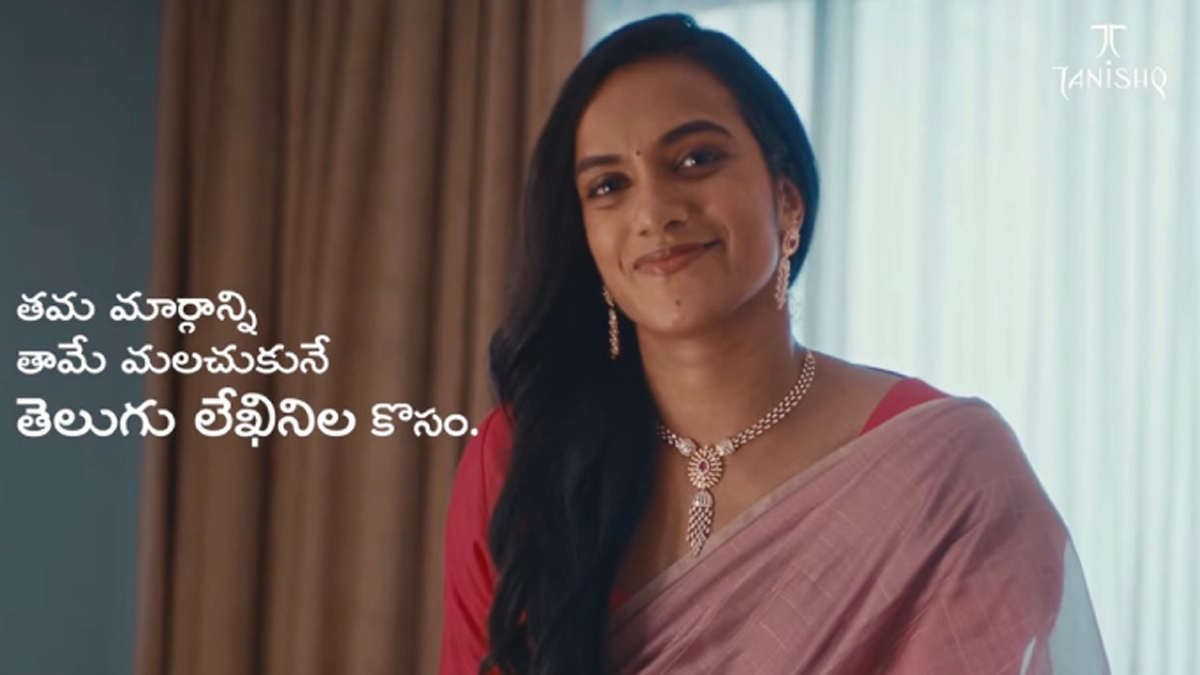
MUMBAI: Tanishq has found the perfect way to sparkle this season by letting the modern Telugu woman write her own glittering chapter. The Titan Company jewellery brand has unveiled its latest campaign, centred on the idea of ‘Lekhinis’ women who are the authors of their own stories. Featuring Olympic medallist P.V. Sindhu as the narrator, the campaign celebrates the evolving identity of women in Telangana and Andhra Pradesh, where modern aspirations blend seamlessly with deep-rooted traditions.
The film captures everyday moments that reflect quiet strength and confident individuality. It portrays women who embrace change while staying grounded in their heritage, reimagining traditions with sensitivity rather than rebellion. Conceptualised by Lowe Lintas, the campaign aims to strengthen Tanishq’s emotional connection with regional audiences by honouring women who shape their identities with authenticity.
Titan Company Limited chief marketing officer of Tanishq Pelki Tshering said the campaign is a tribute to women who remain rooted yet redefine their journeys every day. “She has always been at the heart of everything we do our muse, our inspiration,” she noted. “Through our designs and storytelling, we strive to be a lifelong companion in her journey.”
P.V. Sindhu shared that the campaign resonated with her own life. “What drew me to this campaign with Tanishq is its honest celebration of the modern Telugu woman. The story reminded me of my own journey working hard at what I love, with the support of my family and coaches, and growing stronger every step of the way.”
Akshay Sundher, Director at Lowe Lintas, described the making of the film as a beautiful experience, highlighting the emotional hospital scene, Sindhu’s warmth, and strong teamwork behind the project. The music by Madley Blues forms the soul of the film.
Through this initiative, Tanishq continues its tradition of crafting jewellery that mirrors a woman’s identity, celebrates her milestones, and reflects her cultural pride.
In a world of fast-changing roles and traditions, Tanishq has delivered a campaign that shines not through loud statements, but through quiet, confident storytelling much like the women it celebrates.






