MAM
GUEST COLUMN: Responsible advertising during times of a national crisis


New Delhi: The second wave of COVID-19 brought us back into a jarring reality that we in some fluke had disregarded as a battle won. We thought that we could be back to being what we were living before, in wanton abandonment.
As we learn to adapt to the new world order and start living with health & global crises, there is a lot of recalibration to be done. As lockdowns keep customers away from stores and logistical issues continue to affect e-commerce, health is taking priority & not lifestyle and need-based expenditure is taking precedence in the face of economic & financial uncertainties. All this has compelled marketeers, advertisers, and businesses to re-evaluate their strategies.
As brands seek to strike the right tone during a global health emergency, the future is staring at market alteration, increased competition, and rising demand for aggressive, yet conscious marketing practices. Especially in the age of the internet, the race to prove a brand more “humane” than the other would be quite challenging.

Values Matter
Honesty, integrity, transparency are values that are all the more important now. Brands may send “humane” messages, yet if there is a disgruntled employee who has been given the pink slip could be highly detrimental to the brand. The brand needs to be seen as an entity that has shown support to employees, communities as much as they are showing it to its customers or stakeholders
Being genuine
Being genuine is better than being “more humane”. The latter could be just mere lip service and the consumer will see-through. The consumer is another human with a life, a personality, with her own stories. Brands need to connect to that person and be genuine in doing so. Accepting mistakes or vulnerabilities would be better than trying to cover up, thereby engaging with that person would be ten times better.
Timely planning and not scheduling
Media plans or in the digital parlance – “ad scheduling”, two weeks old could be redundant in the ever-dynamic times that we are living in. Is it inappropriate given the current scenario? Chuck it! Asking the consumer what they would like to see or hear is a good thing to do and it can be quickly done through the social media/digital empowering tools. Observe, listen and then only respond. A “feel-good” promo could be seen as a ‘milking opportunity’ by consumers and brands need to be very careful about that.
Paid Promotion
It is critical to understand how the consumer would observe your paid promotions. Some campaigns may need to be paused or stopped. As a brand, you are increasingly communicating on walls, feeds, timelines and you will need to evaluate whether you are being awkward, inappropriate, a useful resource, or a happy break. And most importantly, is your target audience, even paying attention to you?
Ease of use and supportive
If you are viewed as a brand that is using a marketing opportunity to capitalize upon, you will be banned. It is ‘help’ that your consumer needs and the brand needs to be positioned as just that. A case in point is the SII’s Covishield! Despite its life-saving use, as soon as the Serum Institute of India declared its pricing strategy, there was a huge consumer backlash. Ideally, this could have been managed better and though a need, the announcement of the pricing strategy could have been avoided.
Brands that reach out and not just being accessed would make a difference. While people are running helter-skelter in these emergencies, brands that make life simpler would be most remembered.
As brands adapt and figure out how to promote products and services during this pandemic, government agencies have become all the more vigilant and are closely monitoring unfair and deceptive business practices. In India, financial products, especially, are under the scanner by the regulatory bodies and the IRDA has very recently made its policies much stricter to ensure fair, honest, and transparent practices, while issuing advertisements and including best practices.
Brands like SBI General Insurance have been always responsible in their communications and one of their campaigns #MissionZimmedari was a case in point. A series of films with an emotional connection citing protection as a responsibility and using key occasions as triggers drove the message. Another investor education campaign #AdviceZarooriHai by Edelweiss Mutual Fund should get a special mention here for its appreciatory work in a series of films that connected various life stories to the importance of sound financial advice. All these within the precincts of responsible and best practices norms.
Defining events such as the COVID-19 crisis, are forcing brands to be mindful yet tactful in a competitive and uncertain environment. Brands must acknowledge this and constantly reflect upon positive values that would keep consumers wanting to engage more with the brand.
(Arun Fernandes is the founder & CEO of Hotstuff Media Group. He has worked with India’s leading financial brands on various national and International campaigns over the last 30 years. The views expressed in the column are personal and Indiantelevision.com may not subscribe to them.)


Digital
Content India 2026 opens with a copro pitch, a spice evangelist and a £10,000 prize for Indian storytelling
Dish TV and C21Media’s three-day summit puts seven ambitious projects before an international jury, and two walk away with serious development money
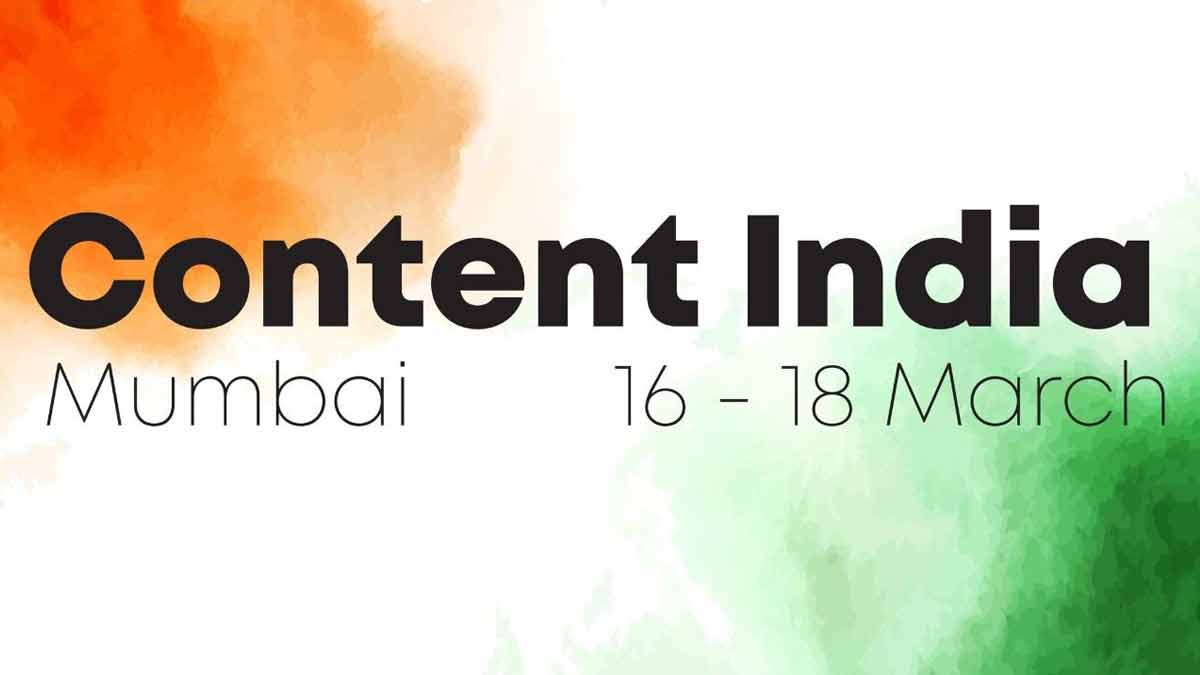
MUMBAI: India’s content industry gathered in Mumbai this March for Content India 2026, a three-day summit organised by Dish TV in partnership with C21Media, and it wasted no time making a statement. The event opened with a Copro Pitch that put seven scripted and unscripted television concepts before an international panel of judges, and by the end of it, two projects had walked away with £10,000 each in marketing prize money from C21Media to support development and international promotion.
The jury, comprising Frank Spotnitz, Fiona Campbell, Rashmi Bajpai, Bal Samra and Rachel Glaister, evaluated a shortlist that ranged from a dark Mumbai comedy-drama about mental health (Dirty Minds, created by Sundar Aaron) to a Delhi coming-of-age mystery (Djinn Patrol, by Neha Sharma and Kilian Irwin), a techno-thriller about a teenage gaming prodigy (Kanpur X Satori, by Suchita Bhatia), an investigative crime drama blending mythology and modern thriller (The Age of Kali, by Shivani Bhatija), a documentary on India’s spice heritage (The Masala Quest, hosted by Sarina Kamini), a documentary on competitive gaming (Respawn: India’s Esports Revolution, by George Mangala Thomas and Sangram Mawari), and a reality-horror competition merging gaming and immersive fear (Scary Goose, by Samar Iqbal).
The session was hosted by Mayank Shekhar.
The two winners were Djinn Patrol, backed by Miura Kite, formerly of Participant Media and known for Chinatown and Keep Sweet: Pray & Obey, with Jaya Entertainment, producers of Real Kashmir Football Club, also attached; and The Masala Quest, created and hosted by Sarina Kamini, an Indian-Australian cook, author and self-described “spice evangelist.”
The summit also unveiled the Content India Trends Report, whose findings made for bracing reading. Daoud Jackson, senior analyst at OMDIA, set the tone: “By 2030, online video in India will nearly double the revenue of traditional TV, becoming the main driver of growth.” He noted that in 2025, India produced a quarter of all YouTube videos globally, overtaking the United States, while Indians collectively spend 117 years daily on YouTube and 72 years on Instagram. Traditional subscription TV is declining as free TV and connected TV gain ground, forcing broadcasters to innovate. “AI-generated content is just 2 per cent of engagement,” Jackson added, “highlighting the dominance of high-quality human content. The key for Indian media companies is scaling while monetising effectively from day one.”
Hannah Walsh, principal analyst at Ampere Analysis, added hard numbers to the picture. India produced over 24,000 titles in January 2026 alone, with 19,000 available internationally. The country now accounts for 12 per cent of Asia-Pacific content spend, up from 8 per cent in 2021, outpacing both Japan and China. Key exporters include JioStar, Zee Entertainment, Sony India, Amazon and Netflix, delivering over 7,500 Indian-produced titles abroad each year. The top importing markets are Saudi Arabia, the UAE, Egypt, the United States and the Philippines. Scripted content dominates globally at 88 per cent, with crime dramas and children’s and family titles performing particularly strongly.
Manoj Dobhal, chief executive and executive director of Dish TV India, framed the summit’s ambition squarely. “Stories don’t need translation. They need a platform, discovery, and reach, local or global,” he said. “India produces more movies than any country, our streaming platforms compete globally, and our tech and creators win international awards. Yet fragmentation slows growth. Producers, platforms, and tech move in different lanes. We need shared spaces, collaboration, and an ecosystem where ideas, technology, and people meet. That is why we built Content India.”
The data, the pitches and the prize money all pointed to the same conclusion: India is not waiting for the world to discover its stories. It is building the infrastructure to sell them.







