MAM
Guest Column: ASCI to form new ad regulations to avoid misleading content


NEW DELHI: Advertising has evolved into an enormously complex form of communication, with literally thousands of different ways for a business to get a message to the consumer. Today's advertisers have a vast array of choices at their disposal. The internet alone provides many of these, with the advent of branded viral videos, banners, advertorials, sponsored websites, branded chat rooms and so much more. A successful advertising campaign will spread the word about your products and services attract customers and generate sales. Whether you are trying to encourage new customers to buy an existing product or launching a new service, there are many options to choose from.
The most suitable advertising option for your business will depend on your target audience and what is the most cost effective way to reach as many of them as possible. The advertising option chosen should also reflect the right environment for your product or service. For example, if you know that your target market reads a particular magazine, you should advertise in that particular publication only or if the target market is online, then it’s better to have a firm grip on the online platform to reach the correct target audience.
Ads can majorly vary into categories and further gets divided into sub- categories:

1. Online Advertising – If you see an advertisement via the internet, then it is classified as online advertising. In fact, there are ads on various pages, and most other websites you visit, as they are the primary revenue driver for the internet. There are many digital marketing strategies including placing ads on popular websites and social media sites like LinkedIn, Twitter, Instagram, Snapchat Facebook and on websites through Adword and Adsense.
- Google Adwords- AdWords from Google allows companies to bid on the placement of an ad on Google's search engine results page. By using keywords or common search terms, searches that are related to the business and their products. It works when a business pays google as per the number of times an ad is clicked on, which is why it's called a cost per click.
- Google AdSense- It allows a company to host ads on their website from Google to generate revenue for the site. For businesses looking to advertise, they can enroll in Adsense and Google, which will then match the ad to various websites with related content or search parameters. As a result, companies can reach larger audiences through Google's placement of advertisements and will help gain website, the required traffic through it.
2. Mobile Advertising- A dominating force in digital advertising is through mobile devices such as cell phones, iPads, kindles, and other portable electronic devices with internet connectivity. Current trends in mobile advertising involve major use of social media. Mobile advertising is similar to online advertising and is increasingly gaining importance as a method of reaching new customers.
3. Print Advertising- Print, a huge driver of sales, it is taking a back seat to the many digital forms of advertising now available to marketers. However, if there is one thing that's certain about advertising, it's that being different is good. Typically, print can be split into three subcategories:
- Newspapers/ Magazines
- Brochures, Leaflets, Flyers, Handouts, and Point-of-Sale Advertising
- Direct Mail Advertising
4. Broadcast Advertising- A mass-market form of communication including television and radio, broadcast advertising has, been the most dominant way to reach a large number of consumers.
Challenges faced by the industry
The industry is progressing and everyone thinks they can be a marketer these days even after having little or no experience at all.It is becoming a very difficult industry for new companies to navigate. The online advertising industry is facing a number of serious challenges right now. One of the major issues being faced is the lack of transparency. Transparency has long been an issue in advertising, largely due to the complex nature of contracts signed between media companies and their clients, as well as the subject of uncertain bonuses or benefits that have come from media producers.
Advertising Standards Council of India (ASCI) to form new ad regulations to avoid misleading content- In order to curb these challenges, the government is recently working on a code to curb misleading advertisements, which will force companies to substantiate statements made while promoting products. Additionally, since there are no specific regulations for advertisers on OTT platforms for example, products like liquor ads do not have a gateway to advertise themselves on general DTH platforms, but due to no fixed regulation assigned on OTT platforms, brands have now started to advertise themselves on platforms like Netflix, Amazon, Hotstar, AltBalaji, Voot, Zee5 etc. Such an activity from advertisers can be a bane for children under the age of 18 and can badly influence the target audience. There is a need to have a code for the benefit of consumers and also to help identify quickly which fall under misleading category, otherwise there will be a sea of complaints about misleading advertisements.
(The author is Makani Creatives co-founder and managing director Sameer Makani. The views are personal and Indiantelevision.com may not subscribe to them.)



Brands
Kingfisher signs three-year IPL partnership
Packaged water brand signs on as ‘good times partner’ for 2026–28 cycle
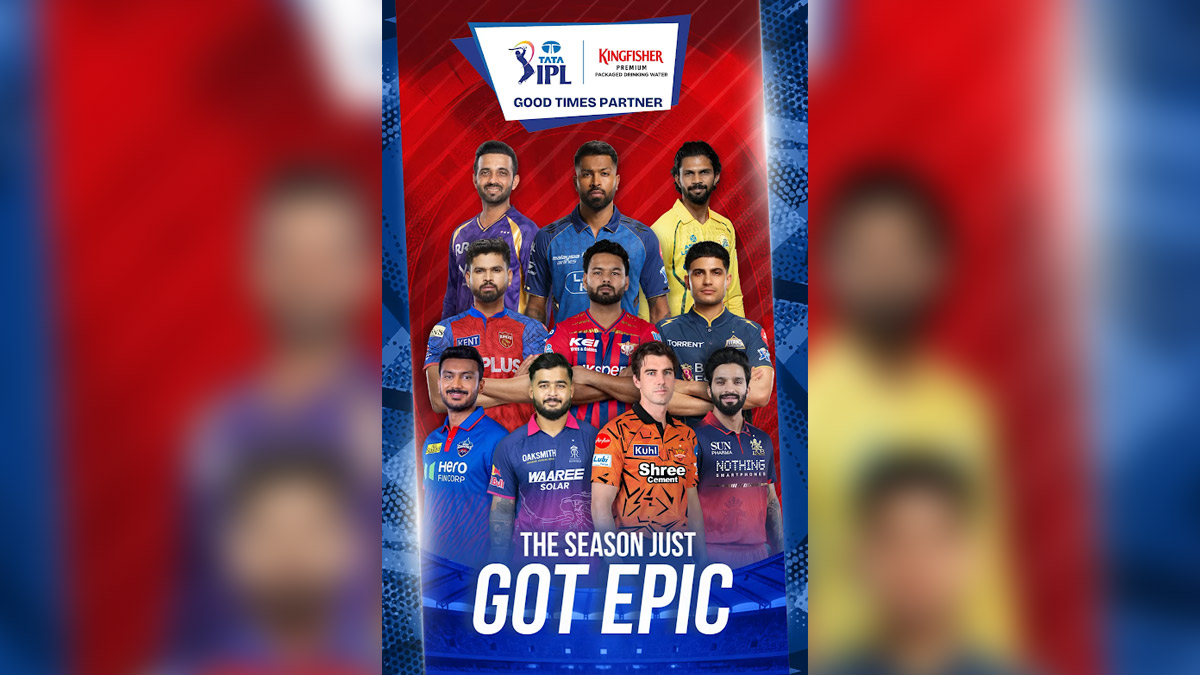
MUMBAI: Kingfisher Premium Packaged Drinking Water is betting big on cricket’s biggest stage, sealing a three-year partnership with the Board of Control for Cricket in India to sharpen fan engagement at the TATA Indian Premier League.
The brand, owned by United Breweries, will serve as the official “good times partner” for the men’s IPL from 2026 to 2028, extending a relationship that began with the Women’s Premier League. The move signals a broader push to embed itself deeper into live sport, with a focus on immersive, consumer-led experiences rather than conventional sponsorship visibility.
At the heart of the tie-up is a suite of fan-first activations spanning broadcast, stadiums and digital channels. These include the “Kingfisher Bird Cam”, offering a branded spider-cam perspective during live matches, and the “Good Times Zone”, an in-stadium entertainment hub during play-offs aimed at amplifying match-day buzz. The brand will also back IPL fan parks, elevate public screening experiences and run digital contests tied to key moments through the season.
Vikram Bahl, chief marketing officer, United Breweries, said cricket in India “is more than a sport, it is a shared cultural moment”, adding that the IPL brings that energy alive at scale. “For Kingfisher Premium Packaged Drinking Water, being present at the heart of these moments, in partnership with the BCCI, is a natural extension of what we stand for. Through this association, we aim to enrich how fans experience the game… making every match more immersive, social and memorable,” Bahl said.
Devajit Saikia, honorary secretary, BCCI, said the IPL “has always been at the forefront of redefining sports entertainment and fan engagement”. He added that the collaboration would fuse cricket fandom with “innovative fan experiences that extend beyond the stadium”, helping create memorable moments for audiences nationwide.
For United Breweries, part of the HEINEKEN group, the play is clear: move from passive branding to active participation in the fan journey—on screens, in stands and across social spaces. With millions tuning in and turning up each season, the IPL remains the country’s most potent marketing theatre. The question now is whether “good times” can translate into lasting brand recall in a market where visibility is easy, but engagement is hard-won.








