MAM
Guest article: What to know about the modern marketing playbook in the era of web 3.0 and AI


Mumbai: For quite a while now, two terms have been making very speedy rounds in marketing circles-web3.0 and artificial intelligence. This new wave of the internet is set to disrupt the way marketing is done globally, commanding quick and agile systems. The reason: this is where the consumers of the future are. As marketing tactics change along with the advent of the digital revolution, new standards will be established at the same time, drastically altering modern marketing.
What is web 3.0, and what are the new trends it brings to the table
The third generation of the internet, or web 3.0, integrates data in a decentralised manner to provide a quicker and more individualised user experience. Constructed with the help of artificial intelligence, machine learning, and the semantic web, it uses the blockchain security system to improve privacy and provide an immersive experience with a marketing opportunity. So, businesses stand to benefit from an online presence here, and marketers will get a stronger opportunity to connect with their target customers.

Web 3.0’s degree of functionality has been attained in the previous two web generations. Its technical ancestor, known as web 1.0, was born in 1989 and reached its prime in the 1990s and early 2000s. Then came web 2.0, which reached its maturity in the middle of the 2000s and introduced the novelty of collaborating and communicating online.
A rich and interactive marketing experience
A marketing challenge today is delivering a hyper-personalised experience at a time when users are expected to have more control over their data. And it indicates that reaching out to both present and future consumers will soon become more difficult. Users now create information on the internet as well as consume it, which is helpful for marketing. Here is where web 3.0 components such as AI help make sense of the massive creator data.
Web 3.0 marketing uses the rapidly changing internet to improve results. For instance, marketers can examine customer chats using natural language processing technologies. AI has also been utilised to further personalisation, particularly in the areas of online content rendering and presentation, the delivery of e-commerce goods, and automated customer assistance. A greater symbiotic link between humans and machines will lead to more web 3.0 features having a significant impact on marketing. Besides this, the other brilliant arms of web 3.0 are NFTs and the metaverse, which is an all-consuming version of the internet that uses tools like virtual reality (VR) and augmented reality (AR) to work, play, and amuse others in a 3D environment.
How to market effectively on Web 3.0
Any kind of creative work can be represented by NFTs, giving advertisers the opportunity to reach consumers with a range of interests. They can be implemented into customer loyalty programmes where participants are given the chance to acquire exclusive products. This is being done to perfection by brands like Taco Bell, Macy’s, and Budweiser.
Immersive surroundings, virtual user identities, and a working virtual economy are all distinctive aspects of the Metaverse. Its objective is to mirror physical environments and lives in digital form, thus enhancing human potential. The metaverse offers marketers the chance to connect with consumers in a brand-new setting where they are fully engaged. Businesses will have the ability to increase their reputation by highlighting the assured security of blockchain transactions.
Web 3.0/AR & VR are being touted as game-changers in modern marketing. Given its immersive and ‘phygital’ nature, interoperability, and collaboration capabilities, however, an ongoing commitment to the platform is key. Many web 3.0 principles are still up for dispute.
Web 3.0 is still being defined as a whole since there isn’t a single, agreed definition of what it exactly is. In other words, we are creating the aircraft while we fly. Despite this, there is no denying that web 3.0 is changing the way that the modern corporation interacts with its clients. In addition to the numerous potential advantages for early adopters, marketers should be actively involved in the process of establishing this next phase of the internet because they have a duty to future generations. Numerous companies have begun experimenting in this realm, including brands like Airtel, MakeMyTrip, Amazon and Swiggy.
In one classic example Alpenliebe brand house which comprises candies, pop & Eclair collaborated with Nickelodeon’s annual awards property – Kid’s Choice Awards which screened in the metaverse. Hosted at Decentraland which is one of the biggest metaverse platforms globally, the brand organized a quirky entry for its participants where they were asked to form their own ‘’Avatars’’ upon registrations. A slime pool, a blimp pool, slime fountains & fun slides also appealed to the kids. The metaverse event was mobile friendly which delivered an immersive user experience and created good brand value.
Again, for companies like Starbucks, technology need not alienate us. To quote Tata Starbucks director of marketing, category, loyalty and digital Deepa Krishnan, who is also a jury member at MMA India Smarties 2022, the future will be all about marrying technology with purpose, experiences, and value by getting to know consumers, their interests, and preferences and making their lives simpler through deep analytics, harnessing multi-point data and insights.
Five years ago, marketers were beginning to shift more spends online through advertising and digitisation, notes Krishnan, adding that the pandemic hastened that significantly. “The future will be about bringing the offline experience online. It is going to be about humanising the digital. People realise and appreciate the power of human connections and are increasingly craving community-driven engagements. How a brand connects with its consumers is still very much significant and will always remain paramount,” she adds.
Revolutionising the marketing and advertising industry
The future customer won’t be susceptible to today’s issues, such as obtrusive marketing and inadequate data protection, thanks to a solid foundation. But for businesses looking for success in the new era of the internet, AI and the metaverse-based research technology will not only introduce them to the developing web 3.0 marketing but will also give them access to the consumer and market intelligence necessary to grow a company.
The author of this article is MMA India country head Moneka Khurana.






Brands
RR Kabel expands FMEG portfolio with kitchen appliances and air coolers
Company forays into mixers, cooktops and hand blenders under RR Signature brand.
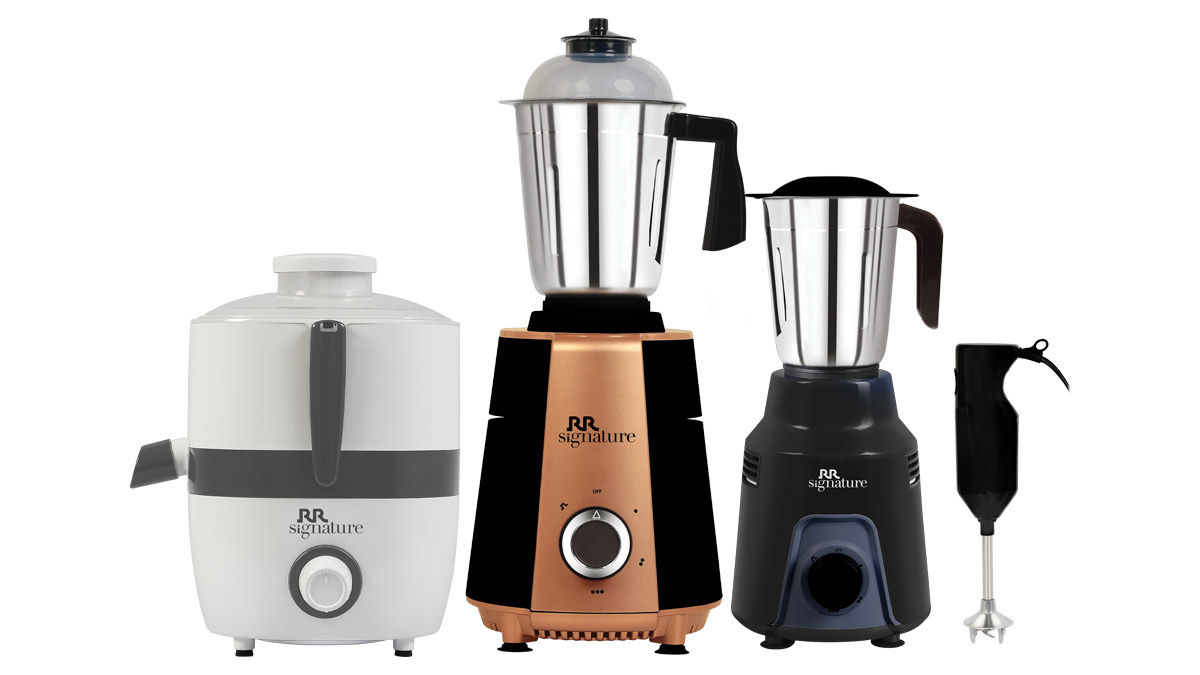
MUMBAI: RR Kabel has just cooked up something new and it’s not just another wire. The leading wires and cables manufacturer has announced a significant expansion of its Fast-Moving Electrical Goods (FMEG) portfolio by entering the kitchen appliances segment and strengthening its air coolers range under the premium RR Signature brand. The company has introduced Mixer Grinders, Electric Cooktops (both Induction and Infra-Red variants), and Hand Blenders. These products mark RR Kabel’s strategic foray into everyday kitchen essentials, allowing it to reach deeper into Indian households beyond traditional electrical categories.
The Induction and Infra-Red Cooktops are seeing particularly strong demand amid global developments affecting LPG pricing and supply. Consumers are increasingly shifting to electric cooking for its energy efficiency, precise control, and safety features. RR Signature is reinforcing its ‘Aapke Kaam Ki Baat’ promise with best-in-class warranties across the range.
The company also plans to introduce additional kitchen appliance categories in FY26-27. In parallel, it has expanded its Air Cooler portfolio with new Industrial (Semi-Commercial) models featuring higher tank capacities and superior air throw, catering to both commercial users and households seeking powerful cooling during intensifying summers.
RR Kabel executive director Mahhesh Kabra said, “Our expansion into kitchen appliances allows us to connect with consumers at more touchpoints in their daily lives, while our expanded air cooler range addresses the rising need for effective cooling solutions. These launches reflect our continued focus on quality, innovation, and market relevance.”
By stepping into kitchen appliances and enhancing its cooling solutions, RR Kabel is wiring itself more deeply into Indian homes proving that even a cables company knows how to heat things up in the kitchen and keep things cool elsewhere. The move positions the brand for broader growth as it evolves from wires to a more complete home solutions player.







