MAM
GUEST ARTICLE: Is Google’s pilot project on fantasy sports likely to alter the course of online gaming?

Mumbai: Fantasy sports began in 1962 with a football fantasy league. Since then, its popularity has skyrocketed, mainly due to superior connectivity, dynamic needs for social interaction, the availability of avant-garde smartphones, enhanced demographics, a spike in disposable income, and an expansion in the youth population base. The global fantasy sports market is anticipated to reach $34.66 billion by 2027, rising at a CAGR of 11.47 per cent.
However, the Indian fantasy sports market gained popularity around two decades back in 2001, when ESPN Star Sports launched the ‘Super Selector Fantasy Game.’ The game’s popularity grew exponentially and garnered over 5,00,000 participants in 2003. The game was the brainchild of the current Fantasy Sports (FIFS) director general Joy Bhattacharjya.
Fantasy sports participation has surged by 2,500 per cent over the last decade. The number alone demonstrates the enormous fan base of the niche domain in India. Fantasy sports are undoubtedly becoming a forum for crafting gaming strategies and boosting virtual sportsmanship. By the end of 2022, India will have over 829 million smartphone users, increasing the number of sports enthusiasts participating in fantasy sports. The present count of mobile gamers in India is 430 million. It is anticipated to grow to 650 million by 2025.

With the advent of television, digital, and online gaming models leading to an increase in online gaming sites over the last several years, the gaming sector has undergone a radical transformation. According to an EY report, online gaming is the leading category in the entertainment sector, with a penetration rate of 55 per cent.
What are Fantasy Sports?
Fantasy sports are digital sports engagement platforms enabling users to strategically build virtual teams with proxies of actual sports players participating in a forthcoming match (or match-day). The competition in these DFS (Daily Fantasy Sports) platforms is based on the real-world statistical performances of these players in one full, officially sanctioned sports match. The users act as the coach or manager, possessing the authority to drop, recruit, or trade a player they desire.
Proper knowledge of the sport, an adept understanding of the weather and ground conditions, and a cognisance of the real-life sports person’s strengths and weaknesses are crucial to selecting the fantasy squad.
“Games Of Skill” vs “Games Of Chance”
The gaming industry in India is segmented into the offline gaming sector (gaming clubs & casinos) and the online gaming sector (gaming websites). Business entities constitute almost the entire chunk of operators in the abovementioned segments. These entities are registered as private limited companies in India.
Furthermore, the Indian legislation has bifurcated the gaming industry into two broad divisions, viz., “games of skill” and “games of chance,” to regulate the industry’s monetary offerings.
A skill-based game is one wherein the outcome primarily depends on the players’ skills and not on a chance event. They are, hence, considered legal in social settings, clubs, casinos, and online. The popular online games in India that are recognised as games of skill include horse racing, rummy, and fantasy sports.
On the contrary, “Games of Chance” depend on luck and advocate gambling. Thus, they are prohibited, and the practise can lead to legal repercussions.
But Google has now decided to run a “limited-time application-only pilot programme permitting real-money games (RMG) like DFS (Daily Fantasy Sports) and rummy apps by developers incorporated in India to be distributed to users on the Google Play Store in India. The pilot run will start on 28 September 2022, and through 28 September 2023.
All applicants must complete the application process successfully to be accepted to participate in the pilot programme and will be eligible to distribute their apps on Google Play for the duration mentioned earlier.
The reason Google cited for making this significant move is to keep in mind the rapid evolution of the fantasy gaming sector and gather sufficient data about any potential user damage and the security of such apps. The unpredictable nature of the regulatory landscape in the online gaming industry has been very evident in the past. Several states, including Telangana, Andhra Pradesh, and Odisha, among others, have outlawed fantasy gaming apps despite favourable rulings by the Supreme Court and other high courts that they are games of skill and are, therefore, legitimate.
Developers must ensure that users dwelling in jurisdictions where DFS and rummy apps are not allowed and are refrained from accessing their apps.
Will Google’s temporary nod to RMG games on Play Store be a game changer?
The introduction of fantasy games on Google Play could be a revolutionary move impacting app developers and users. It would definitely help the industry grow much faster, increasing awareness of these games and consequently boosting user participation. The move would also expand the Play Store’s user base by reaching out to gamers who were previously unable to access these games on the store.
However, it will be an arduous task for Google to retain its user base and developers and simultaneously adhere to government and other internal policies.
The developers chosen for the test programme won’t be able to leverage Google’s in-app payment system; instead, they will need to provide substitute third-party billing options within their apps. Google will adhere to its service fee policy for similar apps globally and will not add a commission to transactions done on these apps.
Earlier this week, Google released a statement mentioning that, as part of a pilot initiative, it will permit developers of non-gaming Android apps from several nations, including India, to provide third-party payment choices, reducing the service fee of 15–30 per cent by four per cent.
Current scenario and the way forward
With a user base of 13 crores, India is the fastest-growing FS market, with a CAGR of 32 per cent expected in the coming years. In other words, the industry is projected to grow from Rs 34,600 crore in FY21 to an estimated Rs 1,65,000 crore by FY25, per FIFS estimates. 50 per cent of transactions on FS platforms are initiated from tier two and three cities.
Cricket, with a whopping 85 percent market share, captured the most significant chunk of the fantasy gaming universe, followed by soccer, hockey, and others. Cricket is anticipated to generate Rs 73,000 crore of CEA for FSPs by FY25, up from Rs 25,000 crore in FY21. The critical user demographic falls into the 25–40-year bracket (59 per cent of the total user base). One of the key findings is that 80 per cent of fantasy sports users participate in free contests.
Skill-gaming operators must adopt and enforce a high degree of governance and self-regulation in light of the current regulatory environment. The industry has taken or proposed several steps, such as interacting with stakeholders and users to get a clear picture of the needs and expectations after identifying the necessity for self-regulation.
The trailblazing growth of fantasy sports with every passing day has attracted investments of over $112 million in the past five years. The industry has garnered foreign direct investment of Rs 10,000 crore so far and is expected to attract over Rs 15,000 crore over the next three years.
The introduction of 5G would alleviate technical disruptions and eliminate latency and low concurrency problems, enabling a broader user base to participate in a tighter-knit gaming community. The transition to 5G, alongside the incorporation of AR and VR into sports and cloud gaming, will pave the way for the next big wave.
Additionally, the sector has significantly contributed to generating employment in the nation. By 2023, it is anticipated that the potential for growth in creating jobs will increase to more than 5,000 in direct employment and more than 7,000 in ancillary jobs.
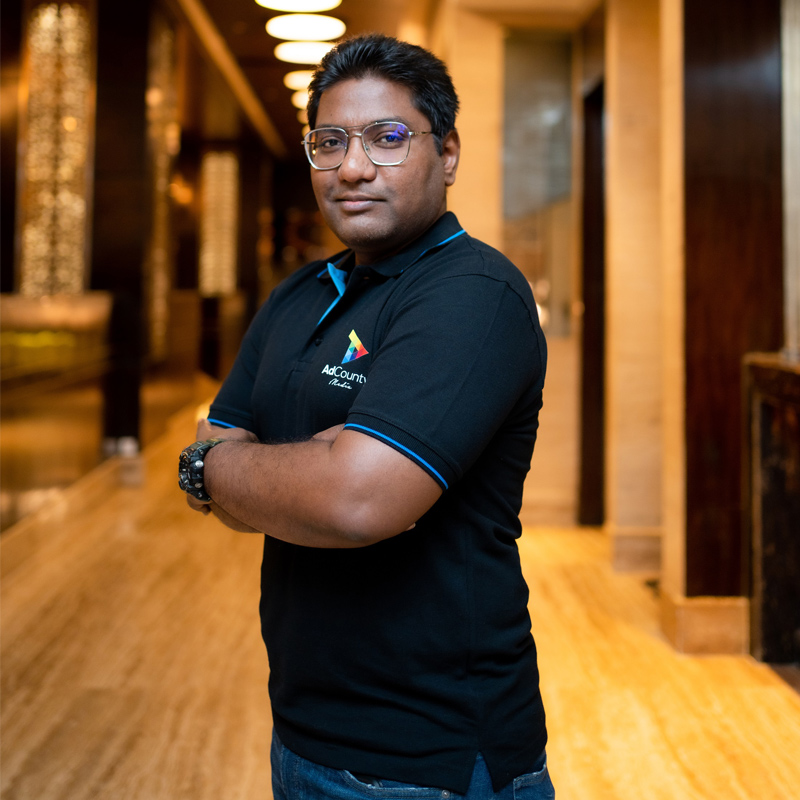
The author of this article is AdCounty Media global mobile business head Kumar Saurav.







MAM
The Best AEO Agencies in the USA for 2026
We ranked the 10 best AEO agencies in the USA for B2B brands in 2026 based on our selected criteria like AI visibility and clients results.

10 Best Answer Engine Optimization (AEO) Agencies in the USA for 2026
AI is changing how buyers discover vendors. Nearly half of US B2B buyers now use platforms like ChatGPT and Perplexity before visiting a single website. If your brand isn’t showing up in those answers, you’re invisible before the conversation starts. This list covers the 10 best AEO agencies in the USA for 2026, ranked independently with no paid placements.
How We Evaluated the Best AEO Agencies in This List
Here is the list of criteria we looked at while evaluating the top AEO agencies in the list
- AI Visibility: How consistently the agency’s clients appear in AI-generated answers across ChatGPT, Perplexity, and Google AI Overviews.
- Client Results: Documented pipeline and revenue outcomes from verified case studies and published client testimonials.
- Technical Depth: The strength of each agency’s AEO methodology, including schema implementation, entity optimization, and LLM content structuring.
- Independent Reviews: Cross-referenced against third-party agency roundups including Discovered Labs and Minuttia’s 2026 rankings.
The 10 Best AEO Agencies in the USA for 2026
1. WebFX
WebFX is a full-service US digital marketing agency with nearly 30 years of history and over 500 employees. Their proprietary MarketingCloudFX technology powers reporting and analytics across AEO, SEO, paid advertising, and web design, making them the most process-stable and enterprise-ready agency on this list for large-scale US brands.
Expertise:
- Answer Engine Optimization
- Search Engine Optimization
- Paid Advertising
- Analytics & Reporting
2. PipeRocket Digital
PipeRocket Digital is a US-focusedB2B SaaS and tech agency that runs AEO, GEO, and SEO as one connected pipeline system. Every program is measured against demos, pipeline, and MRR and not traffic or impressions. They are the only full-spectrum agency on this list serving clients from pre-revenue startups through to enterprise scale.
Expertise:
- AEO & GEO Strategy
- Full-Funnel B2B Content
- Technical SEO
- Pipeline & MRR Attribution
3. First Page Sage
First Page Sage coined the term Generative Engine Optimization in 2024 and remains the most credentialed US agency in the space. Their authority content architecture builds deep thought leadership content engineered to earn citations in ChatGPT, Perplexity, and Google AI Overviews, tracked back to qualified leads and pipeline and not vanity traffic metrics.
Expertise:
- GEO & AEO Content Strategy
- Thought Leadership SEO
- AI Visibility Reporting
- Lead Generation
4. Single Grain
Single Grain, led by CEO Eric Siu, positions itself as a Search Everywhere Optimization agency, a framing built directly for multi-platform AI visibility. Their stack combines dedicated AEO, LLMO, paid advertising, CRO, and content marketing, making them one of the few US agencies where AEO is fully integrated into a performance marketing program.
Expertise:
- AEO & LLMO
- Paid Search & Social
- Content Marketing
- Conversion Rate Optimization
5. Omniscient Digital
Omniscient Digital is an Austin-based B2B SaaS-exclusive agency founded by alumni from HubSpot, Shopify, and Workato. Their proprietary Surround Sound SEO methodology builds content ecosystems that establish brand presence across every top resource in a given category. This is the exact citation pattern that trains LLMs to associate a brand with specific buyer problems.
Expertise:
- GEO Strategy
- Editorial Content & AEO
- Surround Sound SEO
- Link Building & Digital PR
6. RevenueZen
RevenueZen is a Portland-based full-funnel organic growth agency combining GEO content, SEO, and landing page optimization under one retainer. They stand out for publishing their pricing openly, a level of transparency rare in the US AEO market, and offering month-to-month contracts with no long-term commitment required for B2B teams.
Expertise:
- GEO & AEO Content
- Full-Funnel SEO
- Landing Page Optimization
- Pipeline Attribution
7. Siege Media
Siege Media is a San Diego-based content-driven agency that has evolved from linkable assets and manual outreach into a full organic growth agency offering AEO and LLMO. Their core view is that AI models determine trust through web-wide consensus, so they engineer content to earn citations from .edu, .gov, and authoritative publisher domains that LLMs weight most heavily.
Expertise:
- Content-Led SEO & AEO
- LLMO
- Link Building & Digital PR
- Content Design
8. NoGood
NoGood is the most cross-referenced US agency in both Minuttia and Discovered Labs’ 2026 AEO roundups. For each client they form a tailored growth squad from their team of 70+ experts, delivering AEO, SEO, paid, and CRO in one data-driven system with real-time AI citation monitoring across ChatGPT, Gemini, Claude, and Perplexity.
Expertise:
- AEO Strategy
- AI Citation Monitoring
- Paid Search & Social
- Analytics & Reporting
9. KlientBoost
KlientBoost addresses the conversion gap that AEO alone creates: AI visibility drives attention but only generates pipeline if the landing experience converts it. They combine PPC management, landing page optimization, and CRO in a unified system, and have one of the highest volumes of publicly listed client reviews of any US digital agency.
Expertise:
- PPC Management
- Landing Page Optimization
- Conversion Rate Optimization
- AEO Content
10. SimpleTiger
SimpleTiger has focused exclusively on SaaS since 2006, giving them the longest SaaS-only track record on this list. The CEO and COO consult directly with every client, making this a genuinely high-touch engagement at accessible pricing — rare for a specialized US agency. Their most notable result: a 597% increase in JotForm’s organic traffic in two months.
Expertise:
- SaaS SEO & AEO
- Keyword Research
- On-Page SEO
- Technical SEO
Conclusion
Finding the right AEO agency in 2026 comes down to where you are in your growth journey and what you need AI search to do for your pipeline. Whether you’re a pre-revenue founder or an enterprise scaling across multiple markets, the agencies on this list represent the strongest options available in the US today. Start by auditing your current AI visibility, then match your needs to the agency built for your stage.
FAQs
1. What is an AEO agency?
An AEO agency (Answer Engine Optimization agency) is a specialized digital marketing firm that helps brands structure their content and online presence so AI platforms like ChatGPT, Perplexity, and Google AI Overviews can surface them as a direct answer to user queries.
Unlike traditional SEO agencies focused on search engine rankings, AEO agencies optimize for retrieval by large language models, using semantic clarity, structured formatting, entity signals, and conversational content architecture to ensure a brand appears in AI-generated responses.
2. What is the difference between AEO and SEO?
SEO (Search Engine Optimization) focuses on getting your web pages to rank highly on Google and other search engines so users click through to your site. AEO (Answer Engine Optimization) goes a step further by structuring that same content so AI platforms can extract and cite it directly in AI-generated answers, without the user needing to click at all.
In practice, AEO and SEO are complementary rather than competing disciplines. AI platforms primarily cite pages that already rank well on Google, which means strong SEO forms the foundation that AEO builds on. Cutting one weakens the other.
3. What are the best AEO agencies in 2026?
Based on AI visibility performance, verified client results, and independent third-party rankings, the strongest AEO agencies in the USA for 2026 include WebFX for enterprise brands needing a proven full-service vendor, PipeRocket Digital for B2B SaaS and tech companies at any growth stage, First Page Sage for thought leadership-driven GEO, Single Grain for integrated multi-channel AI search growth, and Omniscient Digital for editorial-first category authority.
Other notable agencies on this list include RevenueZen, Siege Media, NoGood, KlientBoost, and SimpleTiger, each suited to different budget levels, ARR stages, and growth priorities.






