MAM
GUEST ARTICLE: Everything marketers need to know about optimising mobile OEM user acquisition campaigns


Mumbai: Mobile original equipment manufacturer (OEM) inventory is rapidly increasing, with a year-over-year growth of 3.8 per cent, and with shipments expected to reach 1.43 billion by the end of 2022. Within this space, brands such as Vivo, Samsung, Huawei, Xiaomi, and Oppo (which includes Realme and OnePlus) occupied 52 per cent of the global smartphone market share as of Q1 2022.
The user inventory generated by these mobile OEMs provides a tremendous competitive advantage for budget holders, as it continues to scale for as long as smartphones dominate the telecommunications industry. In parallel, these giant companies have been developing new and better proprietary platforms and systems that support specific targeting and ongoing optimisation of their intrinsic user traffic.
As a result, mobile OEMs are becoming one (if not the most) successful channels for mobile marketers to add to their marketing mix plans to achieve scalable and targeted user acquisition.

Marketers should not miss the diversity and effectiveness of ad campaign optimisation capabilities provided by mobile OEMs.
When mobile advertisers don’t see the right results for their campaigns, their first instinct is to pause the ad channels that are not meeting their expectations. However, as new inventory sources (such as mobile OEMs) provide a very granular range of optimisation options towards specific targets, learning and taking advantage of such features is crucial for the campaign’s success.
From this perspective, to get better outcomes and higher engagements, mobile marketers should consider three layers of optimisation for their user acquisition (UA) advertising (ad) campaigns:
1. Advertisement placement optimisation: Not all placements will drive the same level of quality. Advertisers need to look at which ad placements are driving quality users compared to others, and increase the bid for those placements so they can leverage more traffic. In addition, there are advertising placements that drive volumes but not quality, and those can be optimised by calculating the return on ad spend (ROAS) for a particular ad placement so they can decrease the bid and still get a positive ROAS result and retain volumes.
2. Creative optimisation: When mobile advertisers are buying media, they need to prevent “advertising fatigue” and ensure that their users aren’t seeing the same ad multiple times, as it leads to them eventually not interacting with it. Therefore, an advertiser should always have three creatives running for A/B testing and constantly come up with new concepts. Hence, the engagement of the ad remains constant as users get to see something new each time the ad is displayed. The higher the engagement of the ad, the better the conversion rate and effective cost per install (ECPI) for the advertiser.
3. Targeting optimisation: Some app stores also offer appographic targeting that helps app advertisers promote their apps to new users based on their unique app interests. It allows the advertiser to target over 200 appographic segments based on app interests and leverages audience insights beyond category and ownership, and all of this is user privacy compliant.
Understanding how advertisers can optimise their advertising spend based on upcoming special promotions
Timing, timing, timing!
Advertisers looking to place their ads on mobile OEMs during the special promotions season need to start by planning way ahead. For example, if there is a shopping app that wants to run a campaign for promotional offers in a specific time period, they need to work closely and plan with their partner agency in order to leverage the right mobile OEM inventory mix.
When the shopping app is featured within alternative app stores on any of these promotional days, then not only does the conversion rate go up, but overall conversion volumes also become higher, and this is when an optimisation strategy is key to achieving maximum success.
Furthermore, if the shopping app has also been promoted through offline media and other networks such as TV and third-party ad networks, the effective cost per acquisition per user becomes much lower.
Key takeaways for mobile marketers to consider for UA campaign optimisation
Optimising efforts for app marketing can be challenging, but mobile marketers can certainly tackle such situations by focusing on a few things:
First of all, they need to look at pricing based on quality. They should never remove an entire mobile OEM ecosystem because of quality. They need to be careful that app discoverability decreases if they pause the campaigns on a specific smartphone OEM. Therefore, they can always choose to negotiate price deals based on quality.
Secondly, they should measure mobile OEM performance. Every mobile OEM has different levels of offering placements and inventories to get apps launched in their respective app stores since each is at a different maturity level in its offerings. Analysing which mobile OEM works best is the key to placing and winning bids for advertising user acquisition campaigns.
Last but certainly not least, mobile marketers often tend to cannibalise when bidding for multiple inventories from their agency partners. They should choose one agency partner that acts as a single source of truth, specialises in mobile OEM inventory, and has close partnerships with those mobile OEMs. They need the know-how to deal with the individual platforms from launch to running user acquisition campaigns and optimisation.
Adopting these success mantras can change the course of mobile marketers’ user acquisition goals ahead of this year’s festive season.
The author of the article is AVOW co-founder Ashwin Shekhar.







MAM
Sleepwell unveils nationwide sleep study on World Sleep Day
79 per cent use screens before bed, 36 per cent of 18–25-year-olds sleep ≤5 hours.
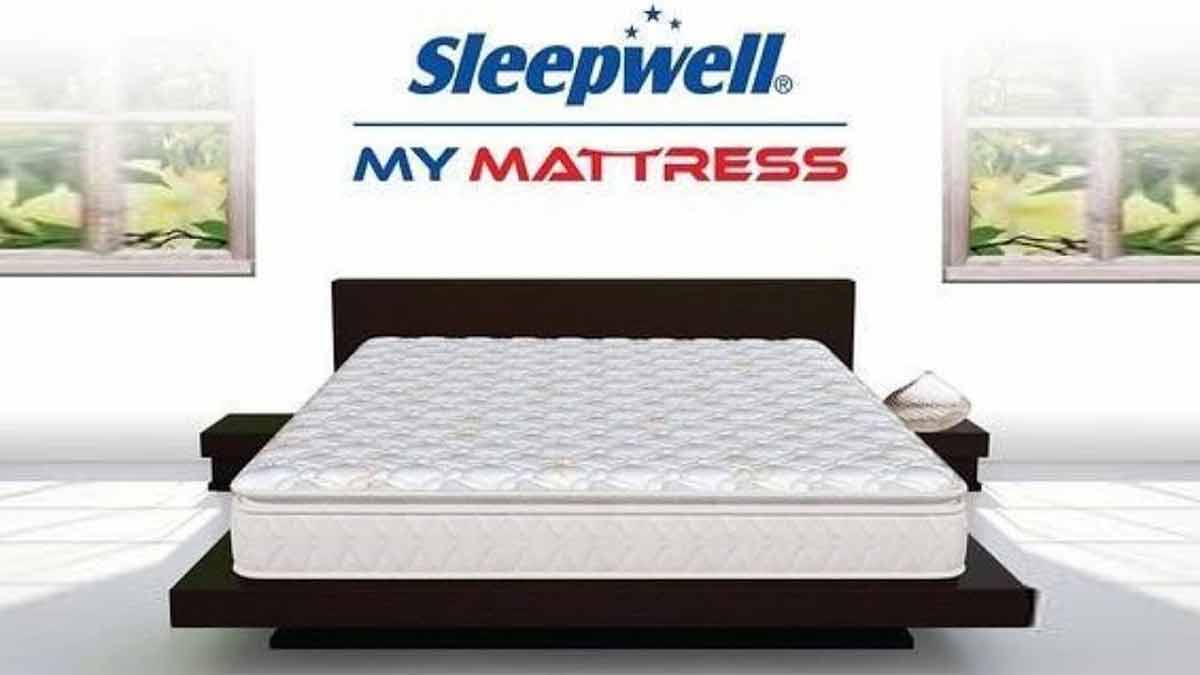
MUMBAI: Sleepwell just dropped the pillow truth bomb because when India’s sleeping less and scrolling more, even the mattress wants to stage an intervention. On World Sleep Day 2026, Sleepwell released its nationwide Sleep Study, painting a stark picture of India’s escalating sleep crisis. The findings show that 79% of Indians use screens right before bed, fuelling restless nights and drowsy days. Alarmingly, 36% of young adults aged 18–25 sleep five hours or less making them the country’s most sleep-deprived group.
The study also busts the myth of “catch-up sleep”, 65% of respondents actually sleep even later on weekends, pointing to increasingly irregular patterns that spill fatigue into the working week. Mattress discomfort emerged as a frequently overlooked culprit behind late-night wake-ups and constant leak-anxiety checks.
To drive the message home, Sleepwell’s CMO Puneet Gulati appeared on Zee Business, stressing that quality sleep isn’t a luxury, it’s foundational health. He highlighted how the right mattress can transform restless nights into restorative ones.
The brand doubled down with clever late-night activations, partnering with a quick-commerce platform to serve contextual ads between 11 pm and 3 am, gently nudging bleary-eyed scrollers to consider mattress discomfort as the reason they’re still awake and pointing them to the nearest Sleepwell store. Digital influencers and creators also shared relatable stories of how poor sleep fuels impulsive late-night behaviour.
In a nation that celebrates hustle but quietly pays for it in lost rest, Sleepwell isn’t just selling mattresses, it’s selling the radical idea that sometimes the bravest thing you can do is close your eyes and actually sleep well.







