MAM
Google taking steps to boost advertisement revenue from mobile phones


NEW DELHI: In an attempt to boost its online advertisement revenue, Google will enable faster online search capability for mobile phones with slower network connections in India.
Indians, according to a Google blog post, are accessing the Internet through mobile devices such as their smartphones. However, not all of these devices come with fast, cheap Internet connections.

Google said this is just another step the online search engine is taking to organise the world’s information and make it accessible to everyone, including those who do not have fast mobile connections.
Google second quarter revenue increased 22 per cent to $15.96 billion.
The average cost-per-click, which includes clicks related to ads served on Google sites and the sites of network members, decreased 6 per cent. Cost-per-click for Google sites decreased 7 per cent. Network cost-per-click decreased 13 per cent.
However, sites revenues rose 23 per cent to $10.94 billion, while network revenues increased 7 per cent. Aggregate paid clicks increased approximately 25 per cent.
ITU in a report released in September has ranked India at 125 for fixed broadband, 113 for mobile Internet, 75 for household Internet penetration and 142 for Internet user penetration in 2013.
Google, which recently launched Android One operating system for emerging telecom markets, said it is adding a new streamlined version of search results page in India.
Google will automatically check to see if a user has a slow wireless connection and deliver a fast loading version of search.
Bharat Mediratta, software engineer of Google, in a blog post on 3 October, said: “The Internet is a global gathering space of infinite opportunity, where people from around the world can exchange ideas and access humanity’s knowledge. Everyone should have equal access to the Internet’s information to improve their everyday lives, regardless of who they are or where they live.”
“Fewer bytes means you get your answer faster and cheaper. Google’s results will remain the same, but elements such as images and maps will only show up when they are an essential part of the result,” Mediratta added.
ITU says mobile broadband subscriptions will reach 2.3 billion globally in 2014 with 55 per cent in developing world.
Global mobile broadband penetration will reach 32 per cent in 2014 with 84 per cent penetration in developed countries and 21 per cent in developing countries.
ITU says 44 per cent of the world’s households will have Internet access by end 2014. 31 per cent households in developing countries will be connected to the Internet against 78 per cent in developed countries. ITU does not share India specific Internet access details.







MAM
Beacon Group appoints Dr Rajesh Patel as Group CEO
36-year healthcare veteran to lead Beacon Diagnostics, Vector Biotek, Biogeny.
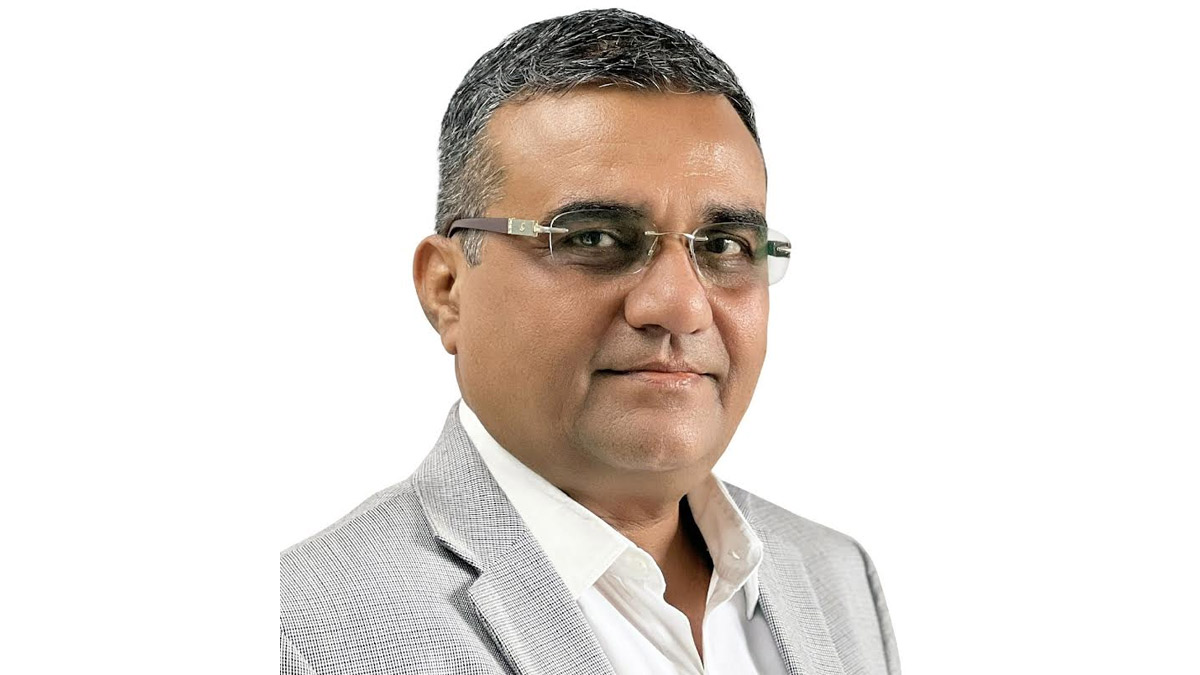
MUMBAI: A new chief, a fresh diagnosis and a sharper prescription for growth. Beacon Group has appointed Dr Rajesh Patel as its Group Chief Executive Officer, effective April 1, 2026, signalling a decisive push to scale its presence in the diagnostics and IVD space. Patel steps into the role with 36 years of experience across the healthcare and diagnostics industry, bringing a career shaped by leadership roles spanning sales, marketing, business development and operational strategy. His mandate is both expansive and precise: to steer the group’s overall strategic direction while tightening coordination across its three core entities Beacon Diagnostics, Vector Biotek and Biogeny Diagnostics.
In practical terms, that means driving cross-company synergies, accelerating market expansion and strengthening organisational capability areas increasingly critical as diagnostic players compete for scale in a fragmented yet rapidly evolving healthcare ecosystem. The group is positioning itself to capture unmet demand across chain laboratories, key accounts and standalone labs, segments that remain underserved despite growing diagnostic needs.
The appointment comes at a time when the In Vitro Diagnostics (IVD) sector in India is entering a more competitive and innovation-led phase, with companies focusing not just on product pipelines but also on service delivery, integration and customer-centric models. Beacon’s leadership appears to be betting that Patel’s execution-focused approach can help translate ambition into operational momentum.
Welcoming the appointment, Chairman Dr D K Joshi described Patel’s induction as a strategic move aligned with the group’s long-term vision, emphasising the role of leadership depth in navigating the next phase of growth.
For Beacon Group, the message is clear, in a sector where precision matters, leadership is the new differentiator—and this appointment is intended to set the tone for what comes next.






