MAM
Going hyperlocal: The next big thing for India’s automotive industry

Learning from modern consumer behaviour and market dynamics, India’s automotive industry has evolved by adopting hyperlocal marketing techniques to reveal a compelling strategy. Hyperlocal marketing, which focuses on targeting consumers within specific geographic areas and aligning promotions with their immediate needs and preferences, has shown the automotive industry a way to a significant opportunity that awaits us. It has opened the doors for the Indian automotive sector to enhance customer engagement and drive sales.
One of the most prominent advantages that hyperlocal marketing offers is making the delivery of highly localised advertising and promotions a possibility. By customising of online and offline advertisements based on local preferences, automotive companies have now effectively managed to reach potential customers within specific regions.
Such a localised approach has ensured that marketing efforts resonate with the cultural and economic conditions of the target area, thereby improving the effectiveness of promotional campaigns. For instance, understanding that consumers prefer to purchase tyres locally due to convenience can guide manufacturers to tailor their marketing strategies accordingly.

The benefits of hyperlocal strategies extend beyond marketing to operational efficiencies. By leveraging digital tools and methods, the automotive industry can streamline its manufacturing processes, reduce labour costs, and reshape traditional business approaches. This digital transformation allows for more efficient resource allocation, enabling manufacturers to focus on high-demand regions and fine-tune their return on investment. Additionally, by aligning inventory stocking and restocking with regional consumer demand, companies can significantly enhance their supply chain management.
Hyperlocal technology also facilitates a seamless last-mile digital transformation for retail locations, ultimately boosting lead-to-sales conversions. By automating listing administration, catalogue management, online reputation management, and tailoring landing pages, automotive businesses can deliver a personalised and engaging customer experience. This hyperlocal tech stack helps build a sustainable digital strategy that strengthens the brand’s product and service offerings.
Adoption of hyperlocal techniques further enables the building of tailored landing pages with contextual content, hence enhancing engagement and lead-to-sales conversion capability. Available technologies guarantee that consumers get correct and relevant information by allowing the cleaning, updating, and publishing of location data across main platforms including Google, Meta, Bing, Apple Safari, and Maps. Quick update product information, images, inventory, prices, promotions, and local discounts across all physical shops better’s consumer shopping experience and increases the likelihood of purchase.
In addition, AI-powered online reputation management tools provide an added layer of customer interaction, enabling businesses to respond promptly to inquiries and feedback, thus fostering positive relationships with potential customers. Also, hyperlocal technology helps create organic first-party data, which comes in handy while targeting suitable customers at a lower cost compared to traditional advertising methods.
By moving to a hyperlocal platform, automotive brands find it simpler to distribute contextual content, manage their online reputation in real time, and maintain updated product information. This multi-pronged approach not only supports the creation of a product-as-a-service brand vision but also enhances the overall consumer experience by providing timely and relevant information.
Therefore, as the Indian automotive industry continues to evolve, the adoption of hyperlocal marketing strategies is poised to be the next big thing. By leveraging the power of localised advertising, digital transformation, and advanced technological tools, automotive companies can achieve greater customer engagement, optimised resource allocation, and improved lead-to-sales conversions. The shift towards hyperlocal marketing represents a strategic move that aligns with contemporary consumer behaviour and market trends, positioning the automotive industry for sustained growth and success in the digital age.
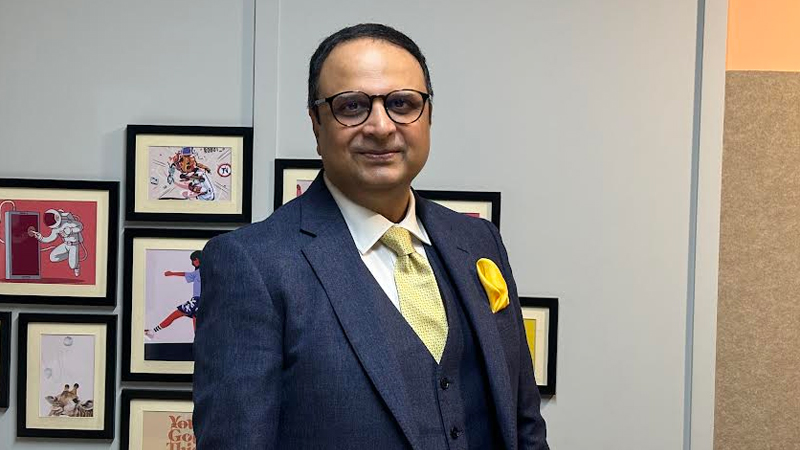
The article has been authored by Sekel Tech founder and CEO Rakesh Raghuvanshi.


Brands
Beep App launches Gen-Z career platform, clocks 30,000 plus placements
Pune startup turns scrolling into career action with learn-explore-earn model

PUNE: Beep App has rolled out its newly positioned career-focused app aimed at Gen-Z users, as it looks to bridge what it calls a growing gap between exposure and employability among young Indians.
Formerly known as EventBeep, the platform is built around a simple but timely idea: turning everyday scrolling into meaningful career action. The app targets students and early professionals, offering a unified space to explore career options, learn relevant skills and access internships and job opportunities.
At a time when short-form content dominates screen time, Beep is attempting to flip the script by embedding structured, career-oriented insights within a familiar scroll-based interface. The idea is not to disrupt user behaviour, but to redirect it.
The platform spans a wide range of fields, including artificial intelligence, product management, design and data analytics. It provides users with insights into role expectations, required skills and step-by-step career pathways, supported by inputs from industry practitioners.
At the heart of the offering is a “learn, explore, earn” model that integrates discovery, skill-building and hiring into one ecosystem. The company says this closed-loop approach is already gaining traction, with over 30,000 placements facilitated so far.
“Gen-Z does not lack ambition; what they often lack is structured direction,” said Beep App founder and CEO Saurabh Mangrulkar. “The Beep App is designed to organise that exposure into actionable pathways so users can move from intent to execution with greater confidence.”
The launch comes amid a broader shift in India’s job market towards skills-first hiring, where practical experience and demonstrable capabilities are increasingly valued alongside academic qualifications.
Founded in 2021, Beep App has grown steadily within the student ecosystem, connecting over 6.5 million users with opportunities across more than 1,500 colleges and 7,800 hiring companies.
Looking ahead, the company plans to deepen its content across emerging sectors, expand its hiring network and build more personalised career pathways tailored to user behaviour.
As Gen-Z continues to navigate a complex and fast-evolving job market, platforms that can turn curiosity into clarity may well shape the next wave of career discovery.






