MAM
Going from clicks to bricks

MUMBAI: Nothing beats the feeling of being served at your doorstep and this convenience is what has thrust e-commerce to pole position among shoppers worldwide. Add to it the ease of picking, cross-checking prices across sites and the frequent discounts are the cherries on the cake.
The growth of e-commerce became evident since 1994, with the first sales of Sting album in the United States. Soon, products like wine, chocolates and flowers became the pioneering retail categories which further fuelled the growth of online shopping. Before long, researchers dug out that some products are more appropriate for e-commerce buying than others – most of them turned out to be generic items which didn’t need physical touch validity. Nothing isn’t online today, you name a product and it’s up for purchase.
India officially went online publicly in 1995; before that, it was only for research and educational institutes. It was in the early 2000s when India was introduced to a novel way of purchasing – teleshopping. With the advent of the internet age here, this hopped onto the web with Flipkart being one of the earliest entrants. Starting with books, the Softbank-backed company is now giving a tough fight to America’s Amazon.

Old teleshopping TVC:
Today, India has an internet user base of over 450 million, which accounts for 40 per cent of the country’s population. NASSCOM has projected the country’s e-commerce market to be worth Rs 2 lakh crore this year. As per Google, there were 100 million online shoppers in India in 2016. Online apparel is one of the most popular verticals, which along with computers and consumer electronics, makes up 42 per cent of the total retail e-commerce sales. According to various media reports, India’s online retail market grew at about 25 per cent in 2017 and is projected to touch $20 billion by the year 2020. It won’t be incorrect to say that it has been a joyride for online websites and e-commerce platforms in India.
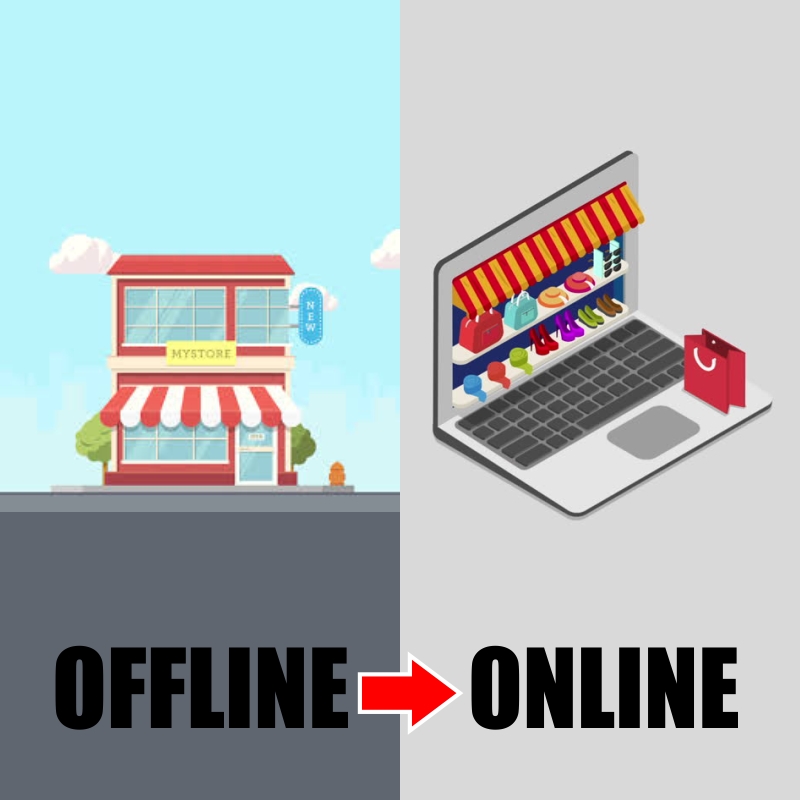
But things seem to be changing now. Following a successful run in the online world, e-commerce companies are now venturing into a space they once thought would soon see the same fate as dinosaurs— brick and mortar stores.
Globally, this phenomenon has taken the industry by a storm. Large organisations that were leaders in online have taken the route of opening physical stores or pop up shops. E-commerce marketplace Amazon is one such example. The global giant has teamed up with Calvin Klein to open holiday-themed pop-up stores in New York City and Los Angeles. Chinese e-commerce titan Alibaba is all set to steal a page from Amazon’s playbook by opening its first store in Shanghai.
In India, lifestyle and fashion company Myntra, beauty and cosmetics website Nykaa, eyewear company Lenskart, housing and furniture websites Pepperfry and Urban Ladder and lingerie website Zivame are a few of those who have taken the online-to-offline route.
Lenskart has established its strong presence in the offline space and is targeting to take its total brick and mortar count to over 900 in the next two years. Its current 400 offline stores contribute 50-60 per cent of its business. Online furniture website Pepperfry currently has over 23 physical stores which contribute 20 per cent to its overall sales.
Flipkart owned online fashion marketplace, Myntra is considering launching its own multi-brand offline stores where customers can walk in and shop for all the collection that is also available on its online platform. Earlier in March 2017, Myntra launched its first offline store in Bengaluru for its homegrown brand – Roadster. The decision is in line with the company’s effort to aid profitability.
Pepperfry, Lenskart and Urban Ladder are aiming to come up with their Initial Public Offering (IPO) in the next two to three years.
Chinese mobile handset manufacturer Xiaomi, which was only available in India via Flipkart and Amazon in 2016, decided to open up stores here to boost sales and boy, did that work for the company!
Xiaomi, which currently has 13 Mi Homes in top six metro cities, plans to increase the count to 100 by the end of next year. The Chinese manufacturer clocked revenue of about Rs 7000 crore in 2016 but doubled it in 2017 posting Rs 14,000 crore.
Online leaders are investing heavily in setting up physical stores to fuel their next phase of growth. The move aids them in getting more customers and the hybrid strategy helps in gaining double-digit growth figure while expanding the business.
Setting up offline stores also helps brands in balancing the high cost of acquisition that the online store demands. Although this is an emerging trend which will play an important role for online retailers in the days to come, brands have begun to embrace this omnichannel approach.
Having said that, it is also a gamble that not every brand might have an appetite for. Setting up physical stores means investing heavy money into infrastructure and land acquisition while also running the risk of the store being an utter dud! It is a win-win situation for brands that are willing to embrace the step back.
Also read:
A year after demonetisation: E-payment services emerged winners
BFSI’s changing communication in the digital era
E-commerce ad wars are the result of marketing myopia: experts








When you plan to buy medical insurance for your family, the first question is often about savings. You may assume that buying online automatically means paying less, but that is only part of the picture. The real issue is not just whether the premium looks lower, but whether the policy gives you suitable family health insurance without adding avoidable costs later.
Buying online can sometimes appear more budget-friendly because you can compare plans, review features, and complete the process without depending entirely on offline assistance.
Still, a lower visible price does not always mean better value. To understand whether you can truly save more, you need to look at the full buying experience and the policy terms together.
Why Online Purchase Can Look More Economical
When you explore family health insurance online, you usually get access to plan details in a more direct and organised way. This can make the buying journey feel simpler and more transparent.
A few reasons online purchases may seem cost-effective include:
● Easier comparison of policy features
● Direct access to premium details
● The ability to review inclusions and exclusions at your own pace
● Fewer chances of making a rushed decision
● More control over the plan selection process
This does not mean every online option is automatically cheaper. It simply means the online route may help you assess choices more carefully, and that itself can influence how much value you get from the policy you choose.
Saving Money is Not Only About a Lower Premium
A lower premium often catches your attention first, but that should not be the only measure of savings. If you buy medical insurance based only on what looks affordable at the start, you may overlook conditions that matter later.
A family health insurance policy should be judged on overall value, including:
● The scope of cover
● Waiting period terms
● Exclusions
● Room eligibility conditions
● Sub-limits, if any
● Claim-related terms
● Renewal conditions
If the premium is lower but the policy has stricter internal conditions, the apparent saving may not feel meaningful when you actually need hospitalisation support.
So, the better question is not only whether online purchase costs less, but whether it helps you select a plan that remains financially sensible over time.
Comparing Plans Online Can Prevent Overspending
One clear advantage of the online route is that it allows you to compare different options without pressure. This can help you avoid paying for features you may not need or missing features that matter for your family.
Before you buy medical insurance online, look closely at:
● Who can be covered under the plan
● How the sum insured works for the family
● Whether day care procedures are included
● How pre-existing illness rules are explained
● Whether add-ons are optional or built in
● How clearly the policy wording is presented
This level of comparison can support better decision-making. In many cases, savings come not only from the premium itself but from choosing a policy with fewer surprises.
Online Discounts Should be Viewed Carefully
Online discounts can make a plan look attractive, but they should always be read alongside the policy details. A discount may reduce the upfront cost, yet the true worth of the policy depends on what it covers and how it responds during a claim.
When reviewing discounted online plans, check whether the policy has:
● Treatment-specific limits
● Room rent restrictions
● Co-payment clauses
● Disease-wise waiting periods
● Claim deductions linked to the hospital category
● Limited cover for selected benefits
These points are important because a policy that looks cheaper at purchase may involve more out-of-pocket spending later. That is why discount-led buying should be replaced with detail-led buying.
Final Thoughts
Yes, buying online can sometimes help you save more when choosing family health insurance, but only if you look beyond the headline price. The online route may give you better visibility, easier comparison, and more time to review the policy terms.
That can support smarter choices and may reduce the chances of paying for a plan that does not suit your family well.
If you want to buy medical insurance online, treat savings as more than a discount. The real advantage lies in choosing family health insurance that balances affordability, clarity, and meaningful coverage for your household.