MAM
GenY Medium wins digital mandate for Doceree


MUMBAI: GenY Medium, a leading full-service digital marketing agency has won the digital mandate for New York based company, Doceree. The company provides the world’s first programmatic ad exchange for marketing to healthcare professionals focusing on the US and India.
Doceree brings healthcare publishers, advertisers and media buying professionals together by adding genuine and long-term value to them through targeted and precise advertising, and therefore improving healthcare delivery and outcomes. Doceree’s platform is powered by the Espyian A.I. engine, which understands doctors' behavior and enables advertisers to engage with them in an enhanced way.
As part of this mandate, GenY Medium will handle the digital advertising, performance and content marketing for the company.

GenY Medium co-founder & CEO Yashwant Kumar said, “We are excited for getting the opportunity to work with Doceree as this will help strengthen our presence in the rapidly evolving ad tech space. Our performance-driven approach and emphasis on leveraging the right set of technologies will certainly deliver the desired business results for Doceree.”
Doceree founder and CEO, Dr. Harshit Jain said, “We are looking forward to our association with GenY Medium as our performance marketing partner. Their expertise in the digital space will help us in achieving our goals.”
GenY Medium is a full-service digital marketing agency that enhances the digital presence of leading businesses by combining the art of marketing with the science of digital.

MAM
One Hand Clap acquires Agenseed to enter distribution space
Creative agency expands into full-stack services with strategic buyout.
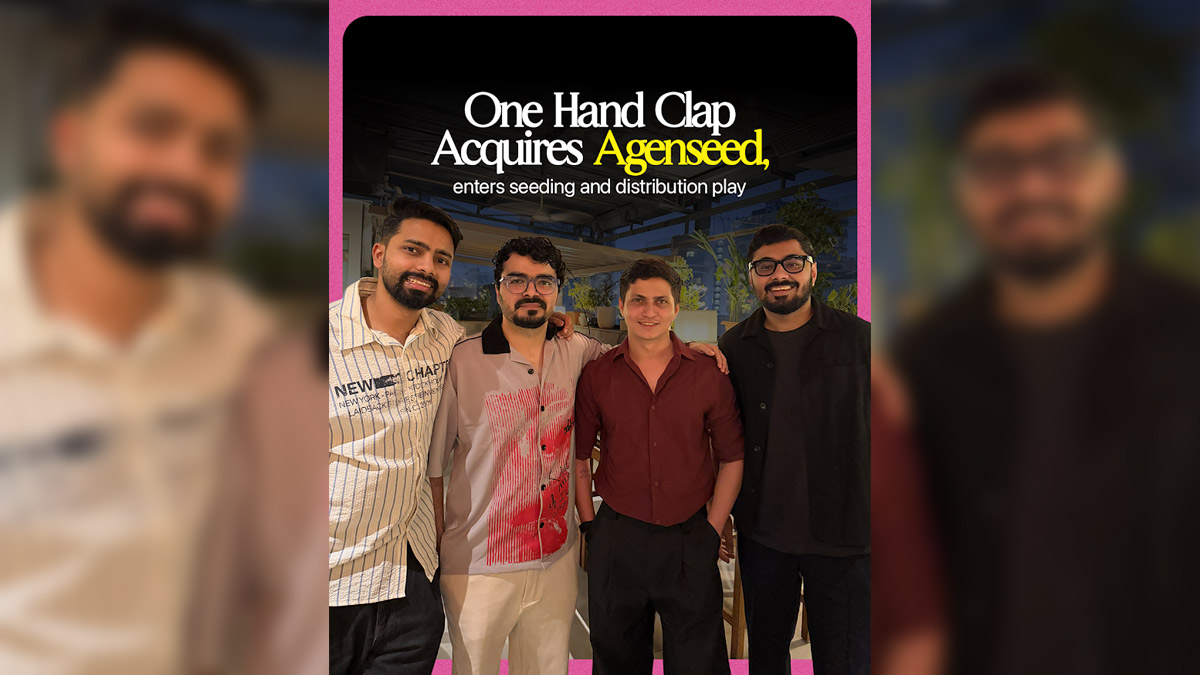
MUMBAI: One Hand Clap has decided to stop just clapping for great ideas now it wants to make sure they actually travel. The leading new-age creative agency and production house has acquired Agenseed, a seeding and distribution firm, marking its formal entry into the distribution segment. The move is aimed at expanding its role across the entire marketing value chain and unlocking new growth opportunities.
One Hand Clap expects the new distribution vertical to contribute up to 15 per cent of its overall revenues over the next 12–18 months, signalling a clear strategic shift beyond pure creative services.
Agenseed, founded by Monish Hardasani and Akram Malik, will function as the agency’s dedicated distribution arm. This acquisition strengthens One Hand Clap’s position as it aims to become a full-stack creative and distribution company in India’s rapidly growing digital advertising market.
With over 90 million posts shared daily on Instagram and brands allocating 25–35 per cent of their digital budgets to distribution and creator-led reach, amplification has become critical to campaign success. By integrating distribution early into the creative process, the agency hopes to help campaigns gain stronger cultural traction and momentum.
One Hand Clap founder Aakash Shah said, “The future of advertising is not just about executing great ideas, but about placing them intelligently. By owning both storytelling and distribution, we can drive greater impact for brands while opening up new revenue streams.”
Agenseed co-founder Monish Hardasani added, “The future belongs to ideas designed to travel. This partnership allows us to integrate distribution thinking at the source.”
Founded in 2019 by former AIB leaders Aakash Shah and Naveed Manakkodan, One Hand Clap has worked with major brands including Swiggy, Google, Netflix India, Crocs, Duolingo, CRED, Bumble, BGMI and Chetak. The agency also secured investment from Zerodha co-founder Nikhil Kamath last year.
In an increasingly fragmented attention economy, this acquisition reflects a broader industry shift where agencies are building end-to-end capabilities to stay competitive. One Hand Clap is clearly clapping louder and ensuring its ideas now reach much further.






