MAM
Genius Steals, an agency on the move


Five years ago, Rosie Yakob, an advertising industry specialist, decided to pack her bags and set off on the road along with her husband Faris Yakob. The duo decided to find a new type of business, one that would allow them to travel all over the world consulting for brands, agencies and start-ups. A company without a permanent office base and thus Genius Steals was born, a consulting firm for agencies and brands across the globe.
They named the agency so because they believed that ideas were new combinations and the best way to innovate was to pick the best of that which came before and combine those elements into new solutions.
Although the company is registered in Tennessee in the US, their collaborators are all over the world. Being nomads allows them to go wherever clients need them to be and to be inspired by the world in between.

Genius Steals managing director Rosie Yakob calls herself an accidental entrepreneur. Right out of school, she worked for music moguls Jay Z and Steve Stoute at their entertainment branding company. Before founding Genius Steals with her husband Faris, Yakob was a teacher at Miami Ad School and a senior strategist at 360i, an award-winning digital marketing agency. She worked on brands such as Oreo, Bravo, Dentyne and NBC, from creative ideation through to activation. Her work has been awarded by Cannes, CLIO, Facebook and the Addy’s. But, eventually, the constant busyness of life in NYC became overbearing.
Indiantelevision.com sat down with Yakob to discuss her nomadic lifestyle and the industry’s most pressing concerns today.
How did you decide on living the nomadic lifestyle?
It was an accident because Faris and I were getting asked to speak publicly in Germany, Sydney and other places. So, we thought that instead of flying back to New York every time, we can just fly from one place to another. That way, we don’t have to unnecessarily pay for flights and we will do this only for six months and then we will pick up and we will live there. But once we started travelling, we realised that clients would give us a call anywhere and were fine brainstorming while we were at a beach in Bali or any other remote location. There are times when we have to be someplace in person but a lot of the work can be done via Skype and mail.
Will you eventually consider settling down at some place?
We have no plans of settling down. Right now, we are living our dream and we feel fortunate. If someone gave me a better opportunity, I would consider stopping. We work 20 hours a week and that flexibility isn’t often affordable during full time jobs.
Since you are always on the move, how do you ensure that clients keep coming in?
We got really lucky by working in New York and got exposed to so many clients and brands. But honestly, being nice is underrated. If you work in a cool place on a cool brand with a s*@t team, you are going to have a bad time. If you work on a s*@t campaign in a crazy company but with a cool team, you might still be saved. I believe the goodwill has afforded us the opportunity along with word of mouth. Our clients refer our work to other people and we’ve been fortunate to always have good clients who are willing to work with us knowing that our work culture is different.
You got lucky, but is the industry, in general, accepting? How set in their ways are agencies? Are they adapting to the new reality?
When I was at 360i, they always valued productivity over presence and that value has helped me. I have also worked in places that had stringent rules about time and physical presence in the office. I believe at the end of the day, what matters is the kind of work that you put out and not where you are doing it from. There is a slight barrier in the industry and that is because there is a generation gap where people put in a lot of time. The old generation wants to see people doing the same thing at their desk in office.
I think there are pockets of clients that are accepting and there are some who don’t. We have some clients who we have never met in person but we also have clients who have called us to set up a meeting and sent flight tickets. Some clients have reservations about our model, but it doesn’t bother us.
How many countries have you travelled so far for work?
A lot! I guess we have travelled to maybe 40 countries together so far in the last five years.
Which work would you consider to be your best work?
My life! It has been my best work. I left the ad world and that’s when I realised that you either work to live or live to work. Today, I work to live, to make money and pay bills but that doesn’t mean that I don’t like my work. I love my work but I like living my life on my terms a little more.
Speaking about the creative work, I think you are always going to have great clients and s*@# clients. And a great work may not necessarily depend on your creativity. Who decides whether the work was bad because of the agency or the client?
You have a strong opinion on gender pay in the industry. How do you think can we address the issue?
The creative industry used to be for weirdos who need not necessarily wear a suit. I thought the ad world would consider women as equals, however, I haven’t seen that as the actual case. When I talked to people in the industry, I realised that we do have a problem with women not getting equal pay. I was looking through the CCOs in India and there are very few female creative directors here, and it is not only the case in India but around the world.
Do you think femvertising is getting out of hand today? We see brands gender stereotype women to sell their products.
Absolutely, and maybe that’s happening because a lot of the decisions in this industry are made by men. Women have always been objectified and stereotyped and the people who do it or make those creative decisions are all men. And I don’t mean it in a malicious way but it’s just deeply rooted within their brain. What we need is more female creative directors and women in leadership positions to change the situation and create gender neutral ads.
Also Read :
Adolescent – the company by the youth, for the youth
Ideation to execution is shorter today: Forsman & Bodenfors’ Akesson
Scarecrow enters into 50:50 partnership with M&C Saatchi



Brands
Tessolve lands a semiconductor veteran to drive its next big push
Ravi Kumar Chirugudu, who started his career at ISRO and has spent 35 years building chips and companies, joins the Bengaluru-based firm as president and chief operating officer
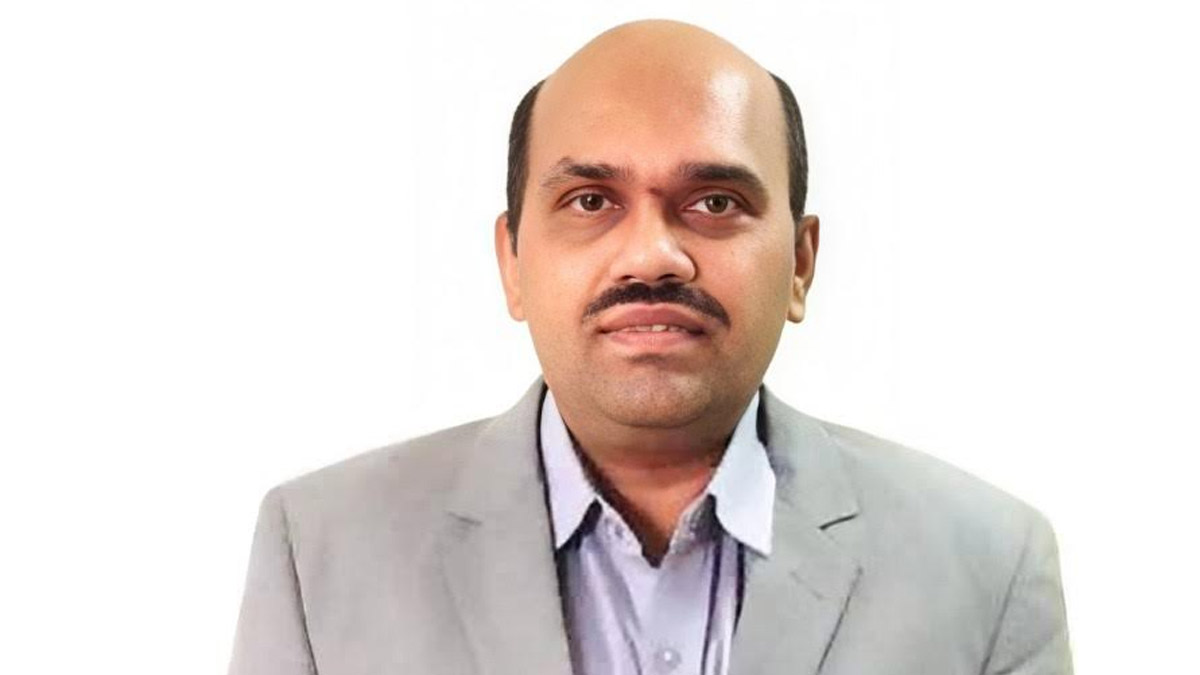
BENGALURU: Tessolve has never been shy about its ambitions. The Bengaluru-based engineering services firm already counts 18 of the world’s top 20 semiconductor companies among its clients, employs more than 3,500 engineers across 12 countries, and last year pocketed a $150m investment from TPG. Now it has hired the executive it believes can turn those assets into something bigger. Ravi Kumar Chirugudu, a 35-year semiconductor veteran who once built satellite payloads for ISRO and has since scaled engineering organisations across three continents, joins as president and chief operating officer, effective immediately.
THE MAN AND THE MANDATE
The appointment is, by any measure, a serious hire. Ravi Kumar Chirugudu comes to Tessolve after senior leadership stints at HCL Technologies, Altran and Wipro, where he managed large profit-and-loss portfolios and oversaw cross-regional teams. Over the course of his career, he has been instrumental in bringing more than 1,000 new products to market across the high-tech, energy and manufacturing verticals. Before the private sector claimed him, he began his working life as a scientist at the Indian Space Research Organisation, contributing to research and development in charge-coupled device technology and satellite payloads, a foundation that shaped everything that followed.
In his new role, he will lead Tessolve’s global growth strategy: expanding its engineering capabilities, deepening customer relationships and accelerating innovation across semiconductor and high-performance computing domains. The brief is broad, but the context is specific. Tessolve operates in the $550 billion global semiconductor market, and its recent moves, the acquisition of Germany’s Dream Chip Technologies and the TPG funding round, have sharpened both its reach and its expectations.
Srini Chinamilli, co-founder and chief executive of Tessolve, is characteristically direct about why Ravi Kumar Chirugudu was the choice:
“As we scale our global semiconductor and system engineering capabilities, Ravi’s appointment marks an important step forward. As global semiconductor demand continues to accelerate across industries, it is creating significant opportunities across the semiconductor lifecycle, from design, packaging, validation and systems integration. Ravi’s deep knowledge and leadership in this ecosystem brings the right mix of industry expertise, customer connect and execution capability, which will play a key role in strengthening our position as a trusted global engineering partner and reinforcing our market leadership.”
THE NEW ARRIVAL SPEAKS
Ravi Kumar Chirugudu, for his part, frames the move in terms of timing and culture, two factors that veteran executives tend to weigh as heavily as title or compensation:
“I am happy to join Tessolve at a time when the industry is rapidly evolving towards more complex, AI-driven systems. What stands out to me is its strong people-first culture and its commitment to bringing value to its customers. The strength of its global team, combined with its deep expertise in semiconductor innovation and next-generation product engineering, creates a solid foundation to build differentiated, scalable solutions. I look forward to working closely with the team to drive strategic growth and strengthen its role in shaping the global semiconductor ecosystem.”
The reference to AI-driven systems is not incidental. The semiconductor industry is in the midst of a structural reshaping, driven by the insatiable compute demands of artificial intelligence. For engineering services firms like Tessolve, which offers end-to-end capabilities from silicon design to packaged parts and invests in high-performance computing, high-speed interfaces, photonics and 5G, the moment is both an opportunity and a test. The company says it is well positioned to capture the next wave of industry growth. Ravi Kumar Chirugudu is now the person who has to prove it.
He came in from outer space, literally, and spent three decades learning how the semiconductor industry works from the inside out. Now Tessolve is betting that accumulated knowledge can help it cross the next frontier. In the $550 billion global chip market, the gap between ambition and execution is measured in engineering hours and leadership quality. Tessolve has just gone shopping for both.






