MAM
Gaurs Group acquires Gorakhpur Lions in BCCI-backed T20 league

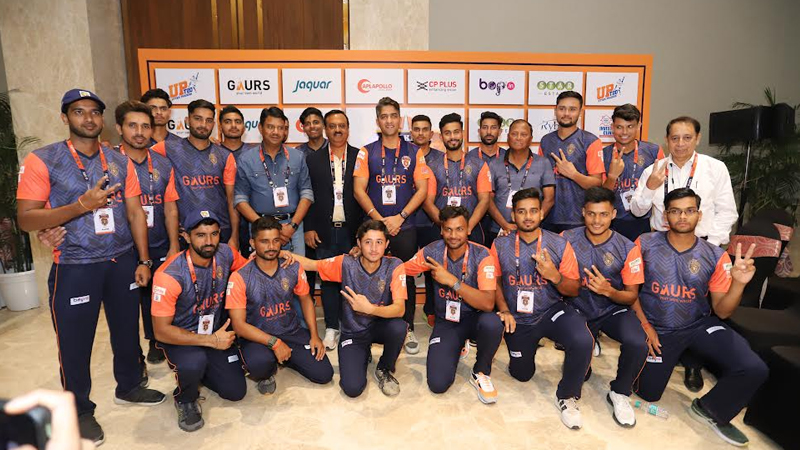
Mumbai: The Gaurs Group, a leading real estate major of the country headquartered in the Delhi-NCR region, has proudly announced its ownership of the Gorakhpur Lions franchise in the highly anticipated UP T20 League. This strategic move cements Gaurs Group’s commitment to fostering sports and community development in the region.
Sports isn’t an unknown territory for the Delhi-NCR-based group, as they’ve been known to develop various infrastructures to support and uplift sport in one form or the other, including the majestic Gaur City Sports Complex. The Complex spread across a sprawling 18 acres of land, is widely loved and revered by the residents of Gaur City. The Gorakhpur team is one of the six teams that’ll be participating in the UP T20 League, joining the likes of Noida, Kanpur, Lucknow, Varanasi & Meerut in the upcoming league.
In a significant development unveiled during the Uttar Pradesh Cricket Association’s press conference on 20 August 2023, the UP T20 League is all set to kick off its inaugural season on 30 August 2023, with finals and the closing ceremony scheduled to be held on 16 September 2023. The league promises to be a spectacular showcase of cricketing talent, with some of the most prominent youngsters from Uttar Pradesh participating in the league.

Gaurs Group chairman and MD Shri. Manoj Gaur while addressing the media — extended his gratitude towards Shri Ravi Kishan who graced the ceremony as the Guest of Honour. Mr. Kishan who is not only a veteran actor but also a Member of Parliament, Lok Sabha from Gorakhpur extended his best wishes to the Gorakhpur Lions cricket team as they storm into the exhilarating arena of UP T20. His cheers resonate with the team’s spirit, echoing the passion and dedication that fuels their journey towards victory.
Gaurs Group chairman & managing director Shri. Manoj Gaur expressed his gratitude, stating, “Acquiring ownership of the Gorakhpur Lions in the UP T20 League is an important step for the Gaurs Group. We see this as an opportunity to not only engage with cricket enthusiasts
but also to give back to the community. Our aim is to create a team that embodies the fierce spirit of Gorakhpur, and with #DahadegaGorakhpur and team anthem ‘Jeet Ke Jayenge’ as our rallying cry, we are determined to play fearless and aggressive cricket, and celebrate every bit like it a win-for all.”
The official unveiling of the Gorakhpur Lions’ Team Jersey, Logo, The Anthem ‘Jeet Ke Jayenge’, and the introduction of the 20-member squad took place on Thursday, August 24, 2023, at the prestigious Hotel The Gaur Sarovar Premiere – Gaur City, Greater Noida. The team is all set to make a mark in the UP T20 League with its exciting set of players. The roster includes marquee players, Dhruv Chand Jurel and Mohsin Khan, who have already earned accolades in the IPL and domestic cricket.
Dhruv Chand Jurel, recognized for his explosive batting and magnetic fielding, is poised to lead the charge as the marquee batsman for the Gorakhpur Lions. Meanwhile, Mohsin Khan, renowned for his blistering fast bowling, adds firepower to the team’s bowling arsenal. Both players have represented Uttar Pradesh in domestic cricket, contributing to the team’s local flavour and connection with the community.
“Today marks a significant moment for the Gaurs Group as we step onto the cricketing field with the Gorakhpur Lions in the UP T20 League. This venture symbolizes our deep-rooted commitment to embracing new horizons. It’s not just about owning a team; it’s about fostering unity, passion, and community spirit. With Gorakhpur’s fervour coursing through our veins, we embark on this journey, determined to bring cricket closer to every heart.”, said Gaursons Sports Ventures director Veshesh Gaur expressing his excitement as Gorakhpur Lions looking to step into the high-octane cricket arena.
The 20-player squad of Gorakhpur Lions is as follows:
Dhruv Chand Jurel, Mohsin Khan, Sameer Choudhary, Shivam Sharma, Abhishek Goswami, Siddharth Yadav, Yashovardhan Singh, Vijay Kumar, Karan Chaudhary, Ankit Chaudhary, Sunit Kumar, Rishabh Bansal, Devansh Chaturvedi, Kaartikaya Singh, Abdul Rehman, Anshuman Pandey, Ankit Rathi, Rishav Rai, Vivek Kumar, Puneet Gupta.
The Gorakhpur Lions’ squad boasts a perfect blend of emerging talent, youth, and seasoned experience, making them formidable contenders in the UP T20 League. CP Plus, BOP, Investors clinic, Jaquar, Gold Line, Star Estate, Rybo Bathware, and APL APOLLO are proud to sponsor the Gaurs Group’s acquisition of the Gorakhpur Lions cricket team in the BCCI-backed T20 league in association with the UPCA.





Digital
GUEST COLUMN: How AI is restructuring distributor and retailer motivation models
From incentives to intelligence, AI is redefining how brands engage channel partners
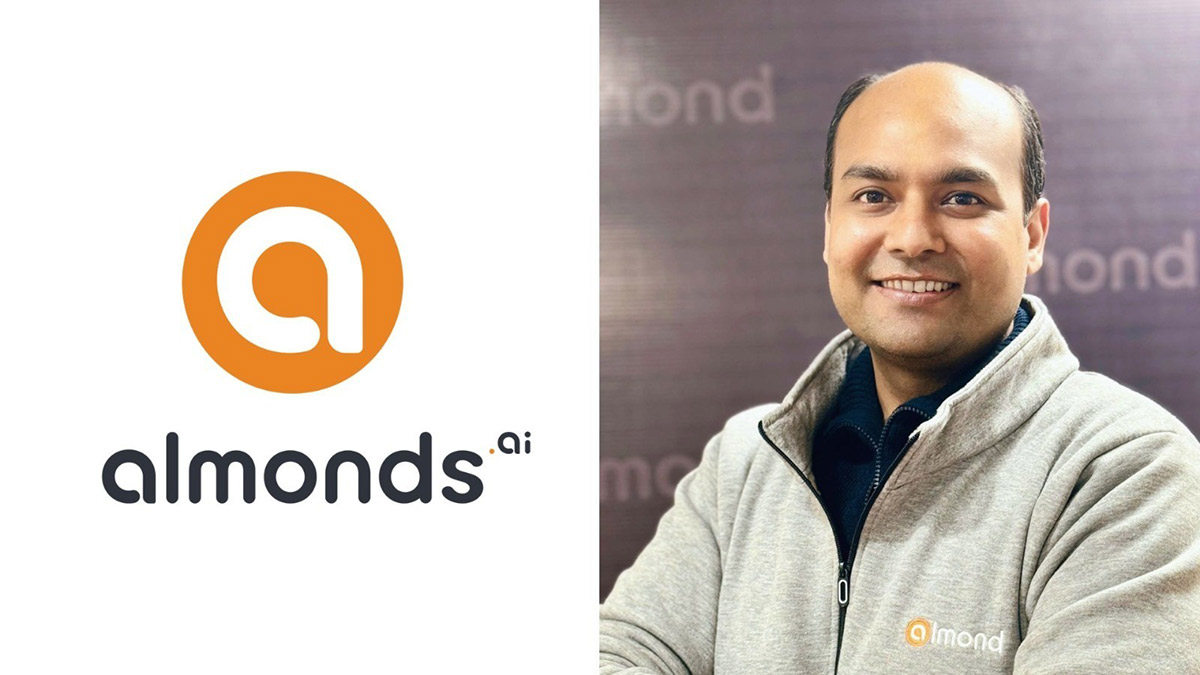
MUMBAI: Artificial intelligence is rapidly transforming how brands engage with their most critical yet often overlooked stakeholders: distributors, retailers, and last-mile influencers. For Abhinav Jain, co-founder and CEO of Almonds Ai, this shift marks a fundamental departure from traditional, transaction-led incentive models toward behaviour-driven, data-intelligent ecosystems. In this piece, Jain examines how AI is enabling brands to decode partner motivations, predict engagement patterns, and deliver personalised, scalable experiences—ultimately redefining channel relationships from transactional exchanges to long-term growth partnerships.
Across many sectors, there is increasing recognition that motivating those who bring products to market (distributors, retailers, last-mile influencers) poses a growing challenge.
Brands continue to invest significant marketing and digital resources to consumers, yet in many countries and the vast majority of emerging economies, these types of consumer-focused investment areas have had little impact on ultimate product delivery. Rather, it is still the case that traditional retail continues to make up most products sold.
So why is it that the systems built around motivating these channels have yet to evolve?
For decades, distributor and retailer engagement revolved around static schemes – quarterly targets, volume-based rewards, and occasional trade promotions. These programs were designed around transactions, not behaviour. The assumption was simple: if incentives increase, performance will follow.
Now, with the advent of artificial intelligence, the definition of performance is being challenged.
With the development of artificial intelligence, businesses can move beyond simply creating loyalty based on transactional-based models and toward models built on behaviours, the behaviours of channel partners that are intrinsic to their motivations in engaging with particular brands. As a result, the means by which businesses develop relationships within their distribution network are starting to evolve; thus, ultimately changing how brands interact with those within their distribution network.
Assessing engagement: Transitioning from transactional- to behavioural intelligence
Traditional loyalty systems refer to transactional activity (sales data). Although this data is valuable and important, it only provides a partial view of engagement across the channel partner.
For example, a retailer may have a high frequency of sales of a product, but their lack of engagement with the manufacturer would not reflect that they have true loyalty toward that brand. Conversely, a retailer who actively participates in training programmes, acts as brand advocates, and is engaged in learning with the supplier would exhibit more profound levels of loyalty but would have been invisible based on historical incentive programmes.
Artificial intelligence allows for the identification of behaviours that help to address this gap. Brands are able to use a variety of engagement data points, participate in learning programs, respond to communications, redeem behaviour and track platform use behaviour in order to identify motivation through behaviour.
McKinsey has stated that companies that leverage advanced analytics for their sales and distribution functions can achieve as much as a 15-20 per cent increase in productivity due to increased awareness of their behavioural trends throughout their networks.
This visibility of behavioural patterns within channel ecosystems can be transformational to brands as they can now view how partners engage on their path to purchasing products, instead of just measuring the sales revenue generated by those purchases.
Predicting motivations, not just measuring performance
Possibly, the largest contribution of Artificial Intelligence (AI) to helping brands engage with partners via channel ecosystems is its ability to predict future engagement versus simply measuring past performance.
Traditionally, brands only realised that a partner was disengaged (not likely to purchase products) once their sales performance had already declined. By then, the brand would have to use significant amounts of incentives or aggressive promotional activities to recovery their partner’s engagement level.
AI models can help organisations to detect early signs that a partner is becoming disengaged, such as declining participation in learning modules, declining interaction via the platform, or slower reward redemption rates. These indicators can help organisations to proactively engage with their partners before their sales performance begins to decline.
The practical application of AI and predictive analytics gives brands the ability to re-engage with their partners prior to their sales performance declines. For example, instead of developing and implementing broad-reaching incentive programs that provide a “one size fits all” incentive to all partners in an ecosystem, brands are able to develop targeted, engaging re-engagement programmes. This is how personalisation can be done on a large scale, such as across global distribution and retail networks.
The vast majority of distributor and retailer channels have thousands, if not millions, of individual channel partners. Historically, providing personalisation to such a large number of businesses has not been feasible.
However, with the advent of AI, personalisation at scale is becoming a reality.
Brands can now create tailored engagement journeys for all their partners, based on their partner profiles, through some combination of machine learning models and behavioural segmentation. For example, high-performing distributors might receive higher levels of leadership-based recognition and greater incentives to continue to grow. Emerging retailers, on the other hand, might be supported with training, onboarding rewards, and measurable performance milestones.
The shift towards personalisation of partner engagement echoes the direction that consumer marketing is already moving towards.
According to Salesforce’s report, over 70 per cent of customers expect personalisation in the way that brands engage with them. As such, there is a growing expectation for B2B ecosystems to have these same types of expectations from their channel partners.
Gamification and continuous engagement
AI is also radically changing how brands will engage with their channel partners through the use of gamification.
Many traditional incentive-based contests and leaderboards would spark temporary engagement among their participants, but they struggled to sustain engagement over time. With the use of AI, gamification mechanics are evolving dynamically based on historical and evolving participation patterns by their channel partners.
Challenges, rewards, and recognition structures can be modified continuously in order to sustain engagement with all of a brand’s partner segments. This will provide a greater opportunity to move away from episodic campaigns towards ongoing, continuous engagement experiences.
When channel partners receive motivation as part of their daily business activities through recognition, learning, and tracking their performance, long-term loyalty will be achieved.
Aligning motivation to broader impact
There is a growing trend within the channel ecosystem to integrate sustainability and socially responsible behaviours into the channel partner programmes of brands.
Increasingly, brands are motivating their partners to use sustainable practices in their operations, participate in sustainable practices like sustainability-related knowledge programmes, or promote products that are in line with their sustainability objectives.
Brands can use AI to monitor and measure these types of behaviours and incorporate them into their incentive frameworks so that brands can align their commercial objectives with broader social and environmental outcomes.
A shift in the way brands view their channel partners
AI is having the most significant impact on the way that brands are now viewing their channel partners, as it relates to the underlying philosophy of those fundamental relationships.
For the past several decades, many brands have viewed their channel partners as intermediaries in the supply chain. More and more brands are now beginning to view their channel partners as key ‘partners-in-growth,’ and their actions can have a direct impact on market performance.
In fact, all the channel ecosystems are using behavioural engagement platforms to design new models that reward not just transactional behaviour, but also create continuous engagement journeys for their partners, where their partners can receive recognition for their participation, learning, and continued engagement, thereby reinforcing long-term loyalty to the brand.
The future: Intelligent channel ecosystems
As we consider what the next phase of channel engagement may look like, many believe that it will be based on intelligent ecosystems, using AI to continuously monitor and adjust the engagement strategies used to engage their channel partners, in real time and based on the behaviours of those partners.
For brands operating in complex distribution networks, the ability to perform well will be determined both by whether products are available to their customers, as well as by the enthusiasm, expertise, and loyalty shown from each channel partner that represents the brand each and every day that they are working on behalf of the brand.
While AI clearly does not eliminate the human aspect of a brand’s relationship with its channel partners, it does allow brands to better understand and nurture that relationship.
In markets where the last mile will determine whether a sale is made, how one leverages the intelligence gained by using AI will ultimately be the difference between gaining a new, sustainable competitive advantage versus losing one.






