MAM
From Chai Breaks to AI Breaks: How Indian Marketers Are Letting Robots Handle the Hustle

MUMBAI: There is a huge change happening in India’s digital marketing scene. 73 per cent of marketing teams worldwide now use AI tools for jobs that used to take up 40 per cent of their workday. However, Indian marketers are at a crucial point right now. Most people are not using AI solutions appropriately; therefore, they miss out on smart automation’s life-changing power.
The Task Delegation Revolution: A Chance Worth Rs 4 Lakh Crore
The Indian digital marketing business, worth more than Rs 4 lakh crore, is experiencing what experts call “the productivity revolution.” AI tools are no longer just ideas for the future; they are real tools that are changing the way marketing teams work at advertising agencies in Mumbai, IT startups in Bengaluru, and e-commerce giants in Delhi.

What AI Tools Do Best for Digital Marketers
Content Scheduling and Localisation: The fashion store Myntra has successfully used AI tools to manage content scheduling in 12 Indian languages. These agents automatically change campaign messages for regional festivals like Durga Puja in Bengal and Onam in Kerala. Their AI systems currently take care of 80 per cent of social media scheduling, allowing creative teams to concentrate on campaign planning.
Lead Scoring and Customer Segmentation: Bengaluru’s B2B SaaS business Freshworks used AI tools for lead scoring, which led to a 45 per cent increase in conversion rates. The system looks at how Indian businesses act during certain times, such as when they get budget clearances at the end of the fiscal year and when they buy things during festivals.
A/B Testing at Scale: Paytm, a Delhi-based finance firm, employs AI tools to conduct large-scale A/B tests across diverse demographics. They evaluate everything from colour preferences (green vs. saffron themes around Independence Day) to messages that work for people with different income levels. Their AI-based testing method has increased click-through rates by 35 per cent and cut campaign setup time by 60 per cent.
Real Numbers of Impact: During the 2024 holiday season, a well-known e-commerce firm based in Mumbai that sells ethnic clothing cut campaign management time by 40 per cent and increased Return on Ad Spend (ROAS) by 25 per cent. The AI tool changed how much to bid on Google Ads and Facebook campaigns on its own, based on changes in demand in real time during the busiest buying times of Diwali.

The Human-AI Partnership Model: Changing the Roles of Marketers
The best Indian marketing teams aren’t using AI instead of people; they’re making strong partnerships that use AI’s speed and human inventiveness.
What People Are Still Best At
Cultural Intelligence: AI can digest data, but human marketers are better at identifying cultural differences. A Chennai-based agency’s human team recently stopped a big cultural mistake when its AI proposed utilising beef images in a campaign aimed at South Indian vegetarians.
Strategic Interpretation: AI tools give information, and people give it meaning. During COVID-19, Flipkart’s AI algorithms showed strange purchase habits. Human strategists saw this as a sign that people wanted more home exercise equipment and kitchen appliances, which led to successful pivot campaigns.
Crisis Management: During the farmer demonstrations in 2024, human marketers at different companies made quick judgments to stop or change advertisements. AI tools couldn’t do this without human help.

What AI tools Are Good At
AI tools monitor social media sentiment in regional languages 24 hours a day, seven days a week, and inform human teams about possible problems before they get worse.
Predictive Analytics: Zomato’s AI tools can predict when people will want more food during cricket matches and immediately change marketing budgets and inventory suggestions.
Personalisation at Scale: Hotstar, a streaming service, employs AI tools to make content recommendations for 400 million customers, making it feasible to create unique marketing experiences that would be difficult for human teams to handle.
A 3-Step Process That Works for Implementation Reality Check
Step 1: Start small and learn quickly
Start with easy automated chores, such as scheduling social media posts or sending out basic email marketing. Urbanclap, an Indian startup now called Urban Company, started by automating appointment confirmations and then added more complicated customer journey mapping. Many Indian businesses rush through this phase, making AI work poorly, and teams do not want to work.
Step 2: Smart Scaling
Add increasingly difficult duties, such as assessing leads and personalising basic content. Nykaa, an e-commerce site, grew by focusing on one group of customers (urban women aged 25–35) before branching out to other groups. Ensure AI knows how Indians shop, like the importance of wedding and festival seasons and regional preferences.
Step 3: Strategic Integration
Use AI tools for strategic tasks like optimising campaigns and performing predictive analytics. Swiggy, a big food delivery company, reached this point by adding AI tools to all of its marketing tools, from acquiring new customers to keeping them.

How to Avoid Common Mistakes
The Problem: AI tools often have trouble maintaining a consistent brand voice across Indian languages and cultural settings.
The Answer: Ogilvy India, an advertising agency located in Mumbai, produced thorough brand voice standards in Hindi, English, and regional languages, with examples for distinct cultural settings.
Worries About Data Privacy
The Truth: Marketers need to be extra careful about how they use data now that India has a Personal Data Protection Act.
Best Practice: Use AI solutions that put privacy first and follow local rules while still being useful.

Risks of Too Much Automation
Warning Signs: Customer satisfaction generally goes down when all human touchpoints go away.
Example from India: A luxury firm based in Delhi first automated all of its customer care responses, which led to complaints about how impersonal they were. They were able to employ AI for early responses while making sure that humans handled more complicated questions.
Important Success Metrics
Effect on Revenue: There is a direct link between using AI and sales growth.
Customer Satisfaction: Keeping high NPS scores even while more work is being done by machines
Market Share Growth: Having better AI implementation gives you a competitive edge.
Cultural Relevance Score: How well AI keeps a brand relevant in different Indian marketplaces
Role Change vs. Role Loss
Changing Roles:
Digital Marketing Managers → AI Marketing Strategists
Content Creators → AI Content Managers
Performance Marketers → AI Performance Boosters
New Roles:
Trainers for AI Marketing
Experts in Cultural AI
Managers of Human-AI Collaboration
The Competitive Edge of Being First
Indian businesses that employ AI tools early are realising big benefits:
. Cost Efficiency: Marketing operations costs go down by 30 per cent to 50 per cent
. Market Responsiveness: the ability to quickly adjust to changes in how customers act
. Scalability: the ability to grow more quickly in India’s many markets
Looking Ahead: The Future of AI Marketing in India
AI tools will be very important for marketers in India as the country progresses toward becoming a 5 trillion dollars economy. India has the most varied market in the world. In the next ten years of Indian digital marketing, the organisations that can find the right mix between AI efficiency and human innovation will be the most successful.
The transformation isn’t about replacing marketers with AI; it’s about giving Indian marketers the tools they need to make ads that are more culturally relevant, effective, and impactful. It’s not a question of whether to use AI tools; it’s a question of how quickly and effectively you can do it while still keeping the personal touch that Indian customers love.
The future of Indian marketers belongs to those who can successfully use artificial intelligence and human understanding to create marketing experiences that appeal to a wide range of people and achieve measurable business goals.
The writer is a digital marketing specialist with extensive experience using AI in Indian markets. His company, C Com Digital, has worked with top companies to successfully add AI tools to their marketing operations while still remaining culturally relevant and connecting with people. By Chandan Bagwe – Founder/Director of C Com Digital






MAM
Tanishq launches ‘Lekhinis’ campaign celebrating modern Telugu woman
Olympic medallist P.V. Sindhu features in new film honouring women who author their own stories.
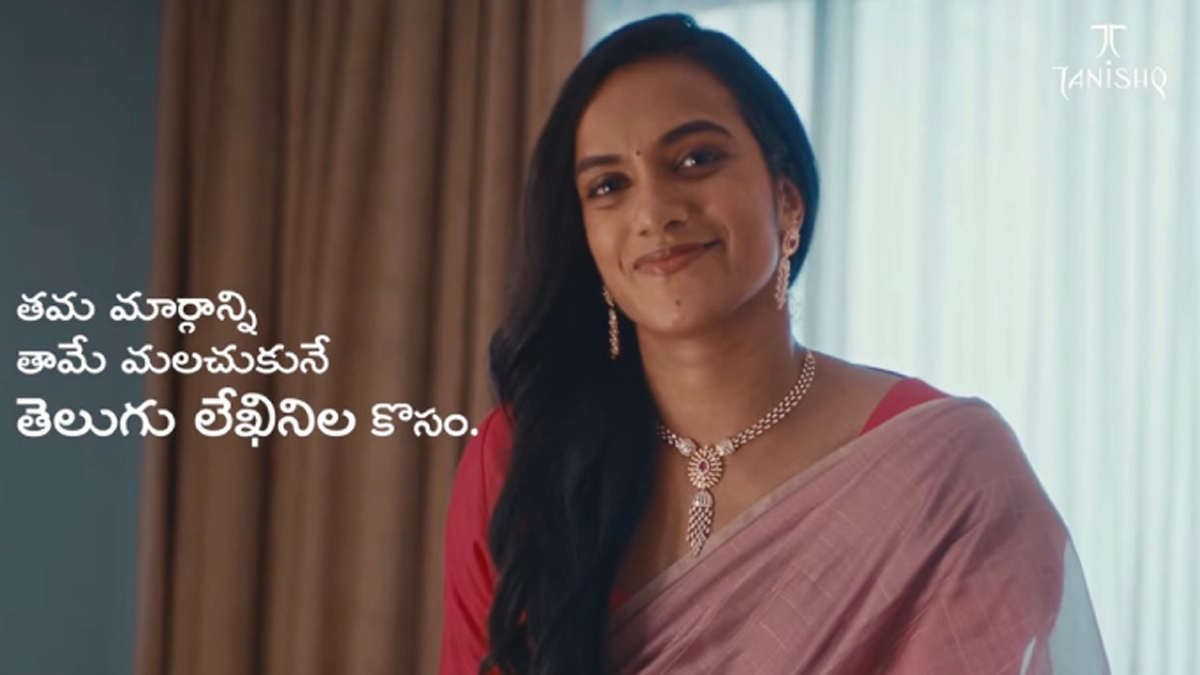
MUMBAI: Tanishq has found the perfect way to sparkle this season by letting the modern Telugu woman write her own glittering chapter. The Titan Company jewellery brand has unveiled its latest campaign, centred on the idea of ‘Lekhinis’ women who are the authors of their own stories. Featuring Olympic medallist P.V. Sindhu as the narrator, the campaign celebrates the evolving identity of women in Telangana and Andhra Pradesh, where modern aspirations blend seamlessly with deep-rooted traditions.
The film captures everyday moments that reflect quiet strength and confident individuality. It portrays women who embrace change while staying grounded in their heritage, reimagining traditions with sensitivity rather than rebellion. Conceptualised by Lowe Lintas, the campaign aims to strengthen Tanishq’s emotional connection with regional audiences by honouring women who shape their identities with authenticity.
Titan Company Limited chief marketing officer of Tanishq Pelki Tshering said the campaign is a tribute to women who remain rooted yet redefine their journeys every day. “She has always been at the heart of everything we do our muse, our inspiration,” she noted. “Through our designs and storytelling, we strive to be a lifelong companion in her journey.”
P.V. Sindhu shared that the campaign resonated with her own life. “What drew me to this campaign with Tanishq is its honest celebration of the modern Telugu woman. The story reminded me of my own journey working hard at what I love, with the support of my family and coaches, and growing stronger every step of the way.”
Akshay Sundher, Director at Lowe Lintas, described the making of the film as a beautiful experience, highlighting the emotional hospital scene, Sindhu’s warmth, and strong teamwork behind the project. The music by Madley Blues forms the soul of the film.
Through this initiative, Tanishq continues its tradition of crafting jewellery that mirrors a woman’s identity, celebrates her milestones, and reflects her cultural pride.
In a world of fast-changing roles and traditions, Tanishq has delivered a campaign that shines not through loud statements, but through quiet, confident storytelling much like the women it celebrates.






