MAM
Fox beat analyst expectations in fiscal Q2 earning


MUMBAI– Fox Corporation reported financial results for the three months ended December 31, 2019.
The Company reported total quarterly revenues of $3.78 bn, a 5 per cent increase from the $3.58 bn of revenues in the prior year quarter. This increase includes affiliate revenue growth of 7 per cent, reflecting growth at both the Television and Cable Network Programming segments, and advertising revenue growth of 1%, which was achieved despite the comparative effect of record political advertising revenues from the mid-term elections at the Company’s owned and operated television stations in the prior year quarter.
The Company also reported a 32 per cent increase in other revenues, led by growth at the Cable Network Programming segment and higher revenues at the Other, Corporate and Eliminations segment attributable to the operation of the FOX Studios Lot for third parties and the consolidation of Credible Labs Inc.

Quarterly net income increased to $314 million from the $24 million in the prior year quarter, primarily due to unrealized gains recognized in other, net related to changes in the fair values of the Company’s investments in Roku, Inc. and The Stars Group Inc., partially offset by higher operating, selling, general and administrative and net interest expenses. The increases in selling, general and administrative and net interest expenses primarily reflect higher costs related to FOX operating as a standalone public company following the Distribution.
Quarterly net income attributable to Fox Corporation stockholders increased to $300 million ($0.48 per share) compared to $8 million ($0.01 per share) in the prior year quarter. Quarterly Adjusted EBITDA2 of $261 million was lower than the prior year quarter, primarily due to lower contributions at the Television segment. Adjusted net income attributable to Fox Corporation stockholders3 was $64 million ($0.10 per share), lower than the $268 million ($0.43 per share) adjusted result in the prior year quarter.
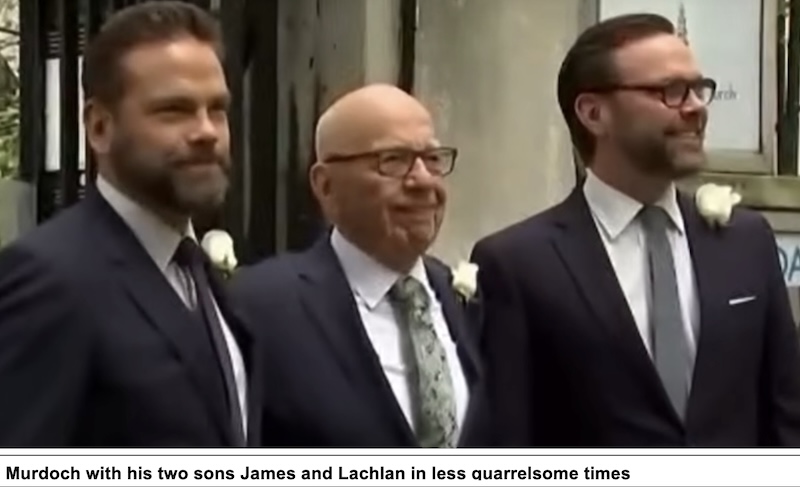
Commenting on the results, Executive Chairman and Chief Executive Officer Lachlan Murdoch said: “Our results reaffirm that Fox Corporation is delivering on the operational and financial objectives that we established less than twelve months ago. Our brands are exhibiting strength in a competitive marketplace and delivering healthy top-line growth as we continue to invest strategically to expand the reach of our portfolio and further diversify our revenue streams. Meanwhile, we are taking a balanced approach to capital allocation, including the return of $500 million to shareholders in the form of share repurchases since our last earnings release. Coming off an incredibly successful Super Bowl LIV and with the buildup to the November Presidential Election ahead of us, we look forward to continuing our momentum through calendar 2020.”



MAM
Lego brings Messi, Ronaldo, Mbappé, Vinicius together
Campaign clocks 314 million views ahead of FIFA World Cup 2026 buzz.
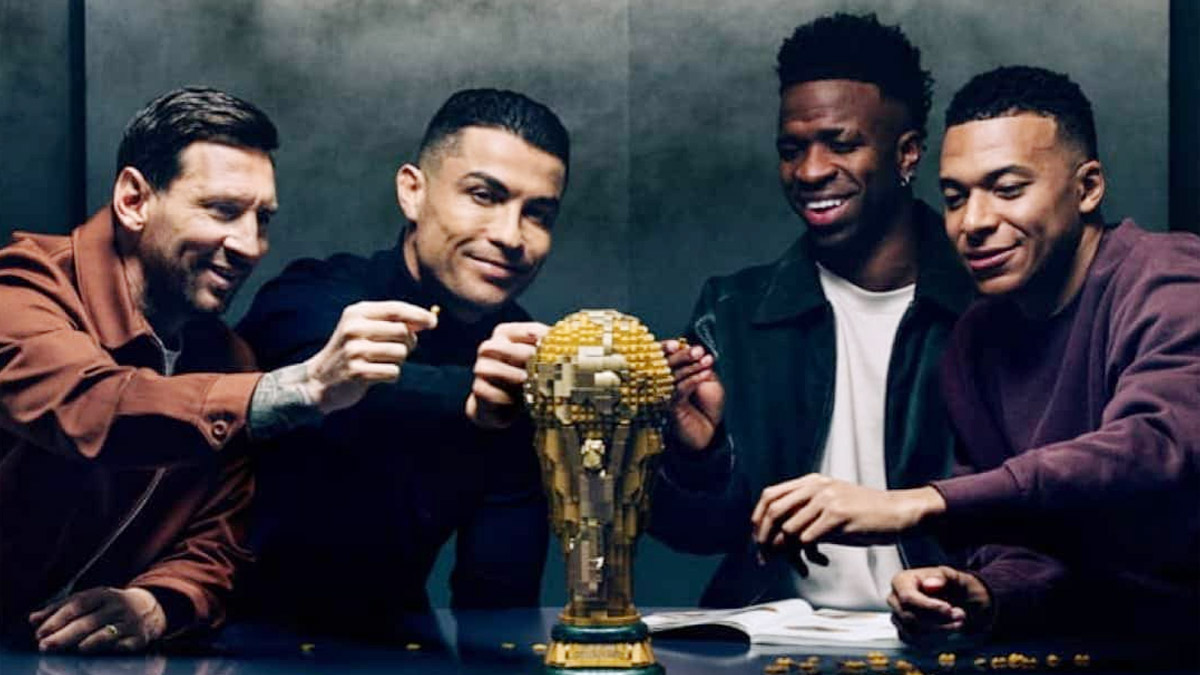
MUMBAI: Four legends, one frame and not a single tackle in sight. Lego has pulled off a crossover few thought possible, uniting Lionel Messi, Cristiano Ronaldo, Kylian Mbappé and Vinícius Júnior in a single campaign ahead of the FIFA World Cup 2026 only this time, they’re building dreams brick by brick.
Titled “Everyone wants a piece”, the campaign features the quartet assembling a Lego version of the World Cup trophy, before placing miniature versions of themselves atop it, a playful nod to football’s ultimate prize. Shared widely across social media, the ad carries a pointed disclaimer: it is not AI-generated, a subtle but telling signal in an era where even reality is often questioned.
The numbers tell their own story. The campaign has already crossed 314 million views on Instagram across the players’ accounts, with fans hailing it as a rare, almost nostalgic moment particularly for the reunion of Messi and Ronaldo, whose last shared campaign ahead of the 2022 World Cup became one of the platform’s most-liked posts.
Beyond the film, Lego is extending the play with exclusive, player-themed sets tied to each of the four stars, part of a broader football-led programme designed to ride the global momentum building towards 2026. The idea, as echoed by the players themselves, leans into the parallels between football and play experimentation, creativity, failure, and triumph.
Messi described the sets as a way to bring on-pitch moments into an imaginative, hands-on world, while Ronaldo called the transformation into a Lego figure a rare honour, blending sport with storytelling. Vinícius, meanwhile, struck a more personal note, recalling childhood moments of building with Lego and framing creativity as a universal language that transcends borders.
The timing is no accident. With the 2026 World Cup set to run from June 11 to July 19 across the United States, Canada and Mexico, and featuring an expanded 48-team format, global anticipation is already building. Argentina, led by Messi, will enter as defending champions, adding another layer of intrigue.
For Lego, the campaign does more than celebrate football, it taps into its mythology. Because when icons become figurines and rivalries turn into play, the beautiful game finds a new kind of pitch. one built, quite literally, by hand.






