Brands
For the footwear industry, the other shoe has dropped

NEW DELHI: Covid2019 has severely impacted the economy at large, with every sector struggling with its own set of challenges. The footwear industry is no exception. In the past few months, shoe brands have witnessed a fall in sales as people have mostly stayed home and are hesitant to step out, thereby limiting their need for too many footwear options.
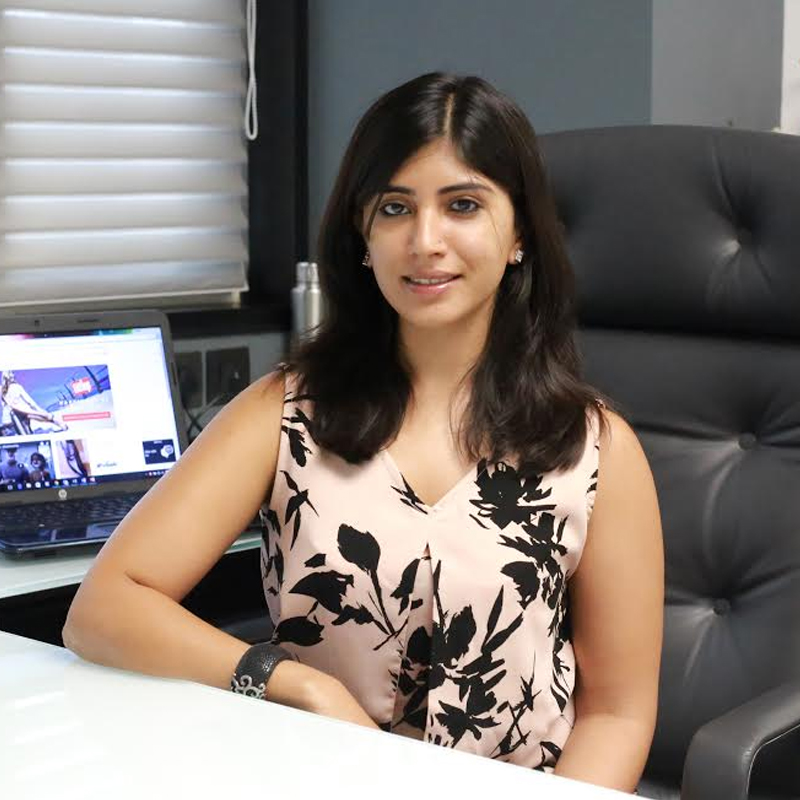
According to Metro Brands Ltd VP marketing and e-commerce Alisha Malik, the pandemic has impacted consumers’ buying patterns. “Today, we see our customers opting for footwear which is high on comfort and can be easily sanitized. The open-toe category, especially slides, are in great demand. Essentials and feel good shopping are the new mantra among buyers.”
But the overall volume of purchases has registered a significant drop, she averred. “While customers have started spending, these are more feel-good shopping therapy. Occasion wear and frequency of buying has reduced,” she explains.

The other shoe has dropped for the footwear industry, and it will take some time before things return to normalcy. In the meantime, brands have adopted innovative ways to reach their target audience. Metro shoes has been working on different formats to connect with customers and offer them a safe shopping experience without compromising on hygiene.
Trying on new outreach methods
To this end, the brand has launched special initiatives like ‘Home Visit’ and pop-up stores. As part of the ‘Home Visit’ service, the customer can take a virtual tour of the store over WhatsApp, choose products, and ‘Try and Buy’ from the comfort of their home. ‘Drive Thru’ service allows clients to make a purchase from the comfort of their car. The shoe company has also opened up pop-up stores in select apartments and housing complexes while following safety protocols.
Malik shared that the team tried to understand buyers’ sentiments by examining various modes, like effective customer relations, right communication and new ways of outreach. In particular, e-commerce has helped the brand survive in these trying times.
However, even though lockdown has been lifted, risk continues to prevail, and customers are still worried about stepping out. “Therefore, we have implemented strict safety and hygiene standards that will continue to be followed in all our stores. Providing a safe shopping experience for customers at our offline stores is one of our top priorities. Our focus is to reach customers in the most convenient manner, whether through offline stores or online channels – that is their choice.”
Going the e-retail way
The company shared that the average growth of the e-commerce business in the last few months is over 80 per cent compared to last year.
“There is a significant shift in the online-offline sales ratio. The contribution of online sales to the overall top line has increased quite a bit. Store footfalls have impacted; however, the various other channels are helping to drive numbers,” Malik added.
There has been a drastic shift in consumer behaviour since the pandemic has struck, and retailers need to adapt to these new changes. Due to the prevailing conditions, the brand has a higher focus on e-commerce, and it will remain a key strategy going forward.
Festive cheer to kickstart sales
The brand is quite optimistic that the festive season will bring a wave of positivity among people, and it will help them achieve sales. Metro has come up with a specially curated collection for the Dussehra-Diwali period.
“We do expect people to shop during the festive season for self and gifting. We will continue to reach out to customers in different ways. Along with going omnichannel and focusing on our e-commerce business, and the other additional services offered by the brand will surely help us expand our reach during the festive season. We are quite hopeful that these festivities would bring some relief to the retail segment and everyone in general,” said Malik.
Fleet-footed marketing
In terms of marketing strategy, the brand is focusing on digital media, influencers and social media marketing extensively to engage and reach out to potential customers. “On digital platforms, performance marketing continues to be a key focus, and performance advertisements give the best ROI. We are also engaged with loyal customers through conversational channels such as WhatsApp and SMS,” she added.
Two years ago, Metro roped in Sidharth Malhotra and Katrina Kaif as brand ambassadors, but due to various reasons, the company is no longer experimenting with any celebrity faces. Malik said the contract with the actors ended last year in August. When the celebrities were on board, their power was capitalised via many campaigns: instore, VM on digital and in other ways.
She explained, "Last year, we took a conscious call not to renew the deals and get any celebrity on board. Consumer trends are changing, and customers want to associate with brands that are more real. We launched our new campaign ‘Wear what you are’ without celebrities and it gave us very good traction.”
In fact, shared Malik, not having celebrities happens to give higher flexibility on content and budgets. In the age of social media virality, the brand is focusing on increasing the reach and engagement by investing in different ideas. “Today, customer ideals are changing. Celebrities are an ideal but influencer looks are achievable and attainable which fits in with today’s instant gratification customer,” she concluded.
Confident of their connect with customers and armed with an optimistic outlook, it will be interesting to see how soon Metro Brands, and the footwear industry as a whole, is able to land on its feet and race to recovery.


Brands
Tessolve lands a semiconductor veteran to drive its next big push
Ravi Kumar Chirugudu, who started his career at ISRO and has spent 35 years building chips and companies, joins the Bengaluru-based firm as president and chief operating officer
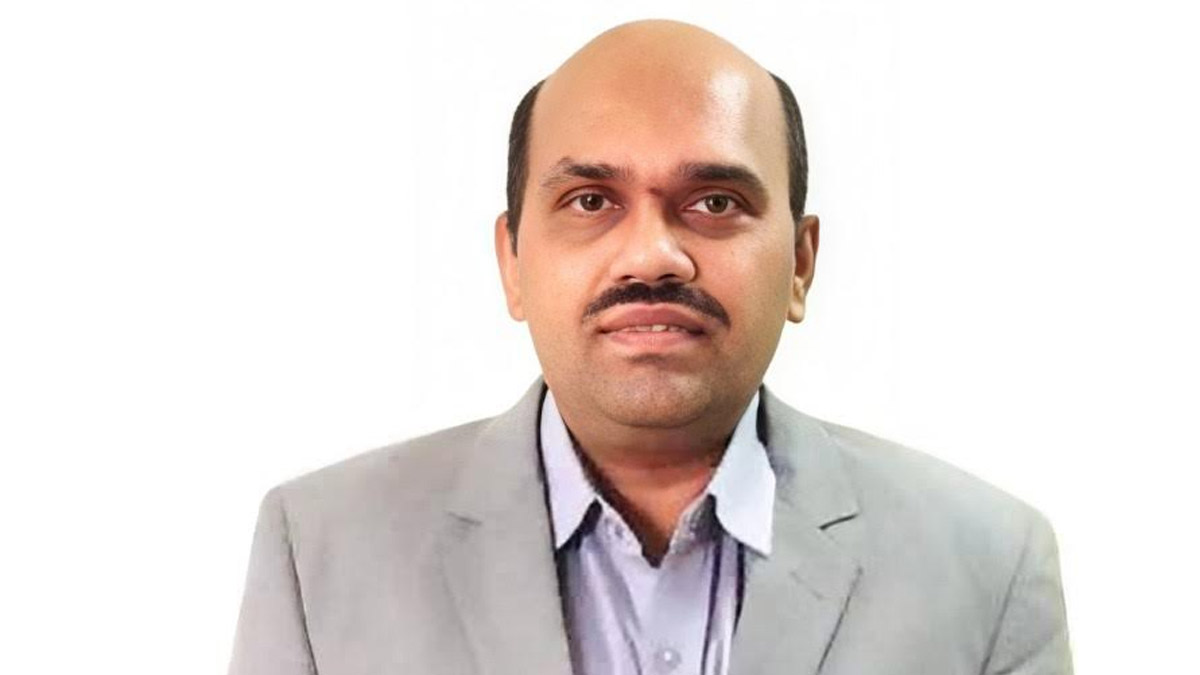
BENGALURU: Tessolve has never been shy about its ambitions. The Bengaluru-based engineering services firm already counts 18 of the world’s top 20 semiconductor companies among its clients, employs more than 3,500 engineers across 12 countries, and last year pocketed a $150m investment from TPG. Now it has hired the executive it believes can turn those assets into something bigger. Ravi Kumar Chirugudu, a 35-year semiconductor veteran who once built satellite payloads for ISRO and has since scaled engineering organisations across three continents, joins as president and chief operating officer, effective immediately.
THE MAN AND THE MANDATE
The appointment is, by any measure, a serious hire. Ravi Kumar Chirugudu comes to Tessolve after senior leadership stints at HCL Technologies, Altran and Wipro, where he managed large profit-and-loss portfolios and oversaw cross-regional teams. Over the course of his career, he has been instrumental in bringing more than 1,000 new products to market across the high-tech, energy and manufacturing verticals. Before the private sector claimed him, he began his working life as a scientist at the Indian Space Research Organisation, contributing to research and development in charge-coupled device technology and satellite payloads, a foundation that shaped everything that followed.
In his new role, he will lead Tessolve’s global growth strategy: expanding its engineering capabilities, deepening customer relationships and accelerating innovation across semiconductor and high-performance computing domains. The brief is broad, but the context is specific. Tessolve operates in the $550 billion global semiconductor market, and its recent moves, the acquisition of Germany’s Dream Chip Technologies and the TPG funding round, have sharpened both its reach and its expectations.
Srini Chinamilli, co-founder and chief executive of Tessolve, is characteristically direct about why Ravi Kumar Chirugudu was the choice:
“As we scale our global semiconductor and system engineering capabilities, Ravi’s appointment marks an important step forward. As global semiconductor demand continues to accelerate across industries, it is creating significant opportunities across the semiconductor lifecycle, from design, packaging, validation and systems integration. Ravi’s deep knowledge and leadership in this ecosystem brings the right mix of industry expertise, customer connect and execution capability, which will play a key role in strengthening our position as a trusted global engineering partner and reinforcing our market leadership.”
THE NEW ARRIVAL SPEAKS
Ravi Kumar Chirugudu, for his part, frames the move in terms of timing and culture, two factors that veteran executives tend to weigh as heavily as title or compensation:
“I am happy to join Tessolve at a time when the industry is rapidly evolving towards more complex, AI-driven systems. What stands out to me is its strong people-first culture and its commitment to bringing value to its customers. The strength of its global team, combined with its deep expertise in semiconductor innovation and next-generation product engineering, creates a solid foundation to build differentiated, scalable solutions. I look forward to working closely with the team to drive strategic growth and strengthen its role in shaping the global semiconductor ecosystem.”
The reference to AI-driven systems is not incidental. The semiconductor industry is in the midst of a structural reshaping, driven by the insatiable compute demands of artificial intelligence. For engineering services firms like Tessolve, which offers end-to-end capabilities from silicon design to packaged parts and invests in high-performance computing, high-speed interfaces, photonics and 5G, the moment is both an opportunity and a test. The company says it is well positioned to capture the next wave of industry growth. Ravi Kumar Chirugudu is now the person who has to prove it.
He came in from outer space, literally, and spent three decades learning how the semiconductor industry works from the inside out. Now Tessolve is betting that accumulated knowledge can help it cross the next frontier. In the $550 billion global chip market, the gap between ambition and execution is measured in engineering hours and leadership quality. Tessolve has just gone shopping for both.






