Ad Campaigns
Flipkart’s Sad Panda becomes a viral icon for android advantage campaign

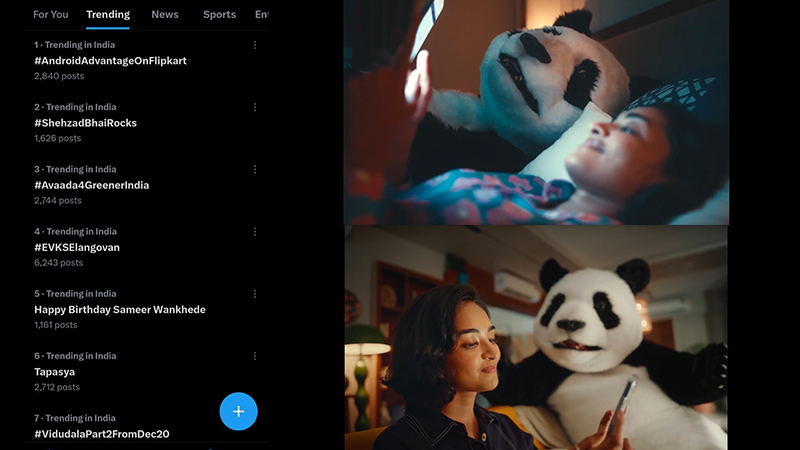
MUMBAI: In the battle of operating systems, where iPhones reign supreme and Androids hustle for the limelight, Flipkart’s Android Advantage campaign has flipped the script—quite literally.
Enter the Sad Panda, a hilariously mopey yet oddly relatable mascot who’s taken the internet by storm, transforming from a couch potato into a pop culture phenomenon overnight. With its quirky humor, snappy storytelling, and spot-on Gen Z vibes, the campaign is more than just a marketing win; it’s a cultural reset.
Forget doomscrolling—this is the wholesome viral content we didn’t know we needed.

The campaign’s narrative cleverly captures a moment of digital-age connection. It follows a man who transforms into a panda, metaphorically portraying the isolation he feels as his partner focuses on her phone. The twist? He uses Android’s exclusive features—such as Google Gemini and Circle to Search—to plan a heartfelt surprise, celebrating the role of technology in creating meaningful connections. With its compelling story and advanced tech showcase, the campaign has amassed over 100 million views on Instagram in under a week, generating widespread buzz across social media.
Even before the ad’s release, the Sad Panda was creating a stir. Spotted in meme-worthy scenarios—sulking on a park bench, holding signs at Marine Drive, or waiting outside a club—the character became an instant social media hit. Meme pages, pop culture accounts, and influencers amplified its presence, making the Sad Panda a relatable and humorous symbol of digital distraction. As it trended on Twitter, it resonated deeply with Gen Z, who embraced its quirky and lighthearted charm.
The Sad Panda campaign seamlessly weaves pop culture with cutting-edge technology, engaging younger audiences while showcasing Android’s innovative features. The campaign coincides with Flipkart’s Big Saving Days, launching on 20 December, offering exclusive deals on Android devices—a timely opportunity for audiences to upgrade their gadgets.
By capturing relatable moments of digital disconnection and emotional connection, the Sad Panda campaign exemplifies the power of storytelling in modern advertising.
What began as a forlorn character has transformed into a cultural phenomenon, leaving a lasting impression on audiences and redefining how brands engage with digital-savvy consumers.







NATIONAL: Amazon Ads has laid out a sharply tech-led vision for the advertising industry in 2026, arguing that artificial intelligence, streaming TV and creator partnerships will combine to turn brand building into a more precise, performance-driven business.
At the heart of the shift, the company says, is the fusion of AI with Amazon’s vast trove of shopping, browsing and streaming signals, allowing advertisers to move beyond blunt reach metrics to campaigns designed around real customer behaviour.
“The future of advertising is not about reaching more people, but the right people with messages that resonate,” said Amazon Ads India head and vice president Girish Prabhu. “By combining AI with deep customer insights, we help brands move from broadcasting campaigns to having meaningful conversations wherever audiences spend their time.”
One of the biggest changes, according to Amazon Ads, will be the collapse of the wall between media planning and creative development. Retail media, powered by first-party data, is increasingly shaping everything from brand discovery to final purchase, pushing marketers to design campaigns around audience insight rather than internal instinct.
AI is also moving from a support tool to a creative engine. Agentic AI, which automates and accelerates production, is expected to make high-quality creative accessible even to small businesses, compressing weeks of work into hours and giving challengers the ability to compete with larger brands on speed and scale.
Behind the scenes, AI-driven analytics will take on a bigger role in campaign optimisation, identifying patterns, spotting opportunities and recommending actions that would previously have required teams of analysts.
Streaming TV is another big battleground. With India’s video streaming audience now above 600 million and connected TV users at 129.2 million in 2025, advertisers are set to treat streaming not just as a branding channel but as a performance engine, measured increasingly by sales, sign-ups and bookings rather than just reach.
Finally, Amazon Ads sees creators and contextual advertising reshaping how brands tell stories. Creators will act less like influencers and more like long-term partners, while scene-aware ads on streaming platforms will allow brands to insert hyper-relevant offers into the flow of what viewers are watching.
Taken together, Amazon Ads argues, these shifts mark a move towards advertising that is both more human and more measurable, where AI handles the complexity, and creativity does the persuading.








