MAM
FDI, transparency needed for media industry to grow: IEC summit


MUMBAI: India Economic Summit 2005, jointly organised by the World Economic Forum and Confederation of Indian Industry, kicked off on 27 November.
A session on “Media and Entertainment: Opening the Window to the World” saw the participation of prominent media and management professionals such as Star Group CEO Michelle Guthrie, NDTV Convergence CEO Vikram Chandra, Indian Institute for Management and Development chairman NK Singh, chairman and WPP, United Kingdom & co-chairman of the summit Martin Sorrell.
According to Guthrie, the proliferation of content has ensured the importance of internet as a channel for information though satellites still remain the most cost-effective way for broadcasting television. She said there was a lack of awareness in the government about the wealth-creation potential of the industry. “There should be a consistency of taxation rules,” opined Guthrie.

A startling point, said Chandra, was that the total market capitalisation of the listed television companies in India is about $500 million, which means that for $250 million, you can control the thinking of a billion Indians. He said the proliferation of news channels has made them chase higher TRP ratings. In turn, this “has lead to a race for the lowest common denominator”. However, Chandra believes there is continued scope in TV for getting high TRPs with quality programming.
Addressing the session NK Singh said that the industry needed rationalisation of taxes as well as a framework that allowed film producers access to affordable venture capital. “There is a convergence law, but no convergence because of an opaque regulatory framework,” said Singh. He added, “The industry needed to build up its infrastructure to become an outsourcing hub, for which the government should take proactive steps”.
The media and entertainment industry needs a quick release for FDI, a more rational tax structure, and more openness, opined Sorrell. He added that laws governing Intellectual Property Rights (IPR) need to be strengthened in India to promote the industry. He said simplifying the tax structure and developing talent through adequate training would also speed up growth of the industry. Sorrell also asked the Indian government to restrict the Directorate of Audio-Visual Publicity (DAVP) from handling the advertising accounts of public sector firms and banks.
Member of the European Parliament, Brussels, Arlene McCarthy felt that the Indian media and entertainment industry needs to be managed more professionally with better governance. She said this, along with better handling of piracy and IPR issues, would encourage FDI, joint ventures and co-production. She underlined the point that the industry could attract FDI only if it demonstrated its ability and willingness to safeguard IPR.
Kirloskar’s India-Japan Initiative chairman Geetanjali Kirloskar said the film industry had to run itself more professionally to attract investment. She said for improving the quality of content, the Indian media should partner with foreign organisations. Kirloskar reiterated that professional management and better financial systems would increase transparency in the industry and enable it to get FDI. Kirloskar called upon CII to take the lead in streamlining the regulatory framework for the media and entertainment industry.


MAM
Boost Milkshake launches ‘The New Secret of Mahi Energy’ campaign with MS Dhoni
VML India crafts energetic tribute linking cricketing icon’s legacy to Gen Z fans.
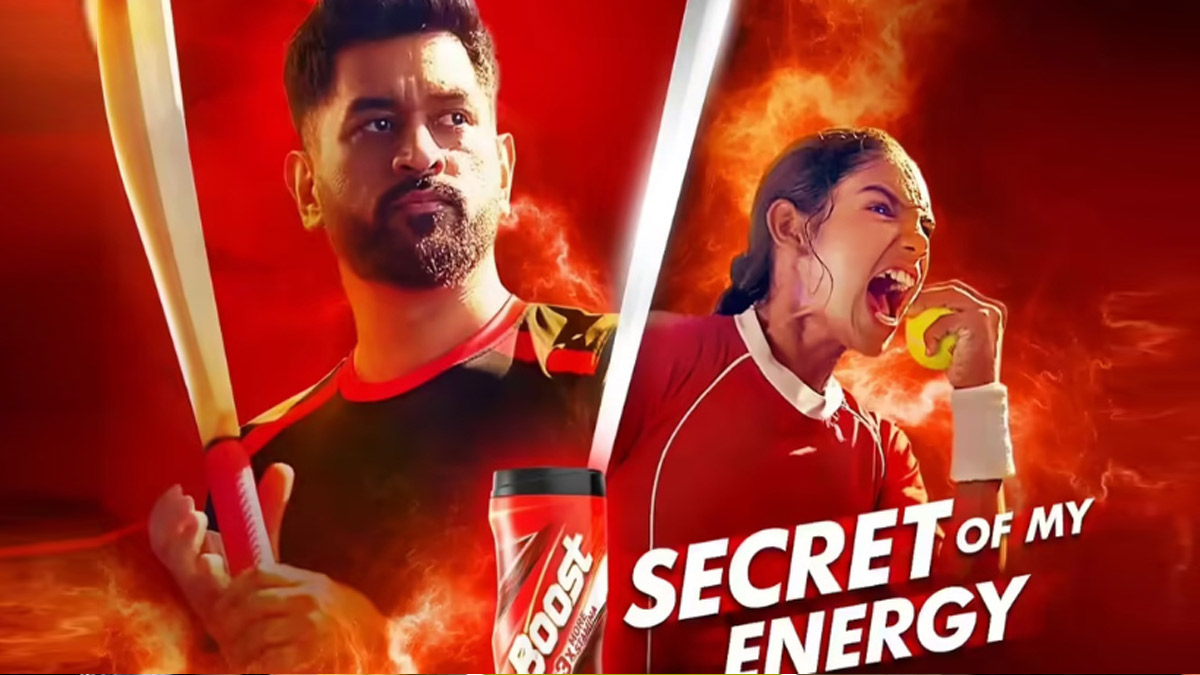
MUMBAI: Boost Milkshake has found a fresh way to charge up its brand by plugging straight into the unbeatable energy of Mahendra Singh Dhoni and his millions of passionate fans. VML India has created an electrifying new campaign for Boost Milkshake titled ‘The New Secret of Mahi Energy’. The multi-channel, social-first campaign celebrates Dhoni’s enduring legacy of excellence, resilience, and drive, while cleverly positioning the ready-to-drink milkshake as the secret fuel behind “Thala’s” iconic Number 7 energy.
Designed specifically for Gen Z’s digital habits and love for authentic, shareable experiences, the month-long campaign blends cultural insight with high-impact creative execution. It features captivating out-of-home activations in Mumbai, Chennai and Guwahati, along with strong social-first initiatives amplified by authentic Dhoni fan pages and influencers, including superfan Saravanan Hari.
VML India managing partner for North Jaibeer Ahmad said, “Boost has always stood for the energy that fuels belief. Today, energy is not just physical, it’s emotional, collective, and contagious. Boost Milkshake taps into this new-age energy, fuelling the passion of a billion fans who power every moment of greatness.”
VML India, senior VP and executive creative directors Nakul Sharma and Tirtha Ghosh added, “MS Dhoni isn’t just a player in India, he’s a phenomenon. We turned fandom from a passive emotion into an active source of energy. The same energy that powers Mahi also lives within his fans.”
Hindustan Unilever Limited (HUL) head of brand building for lifestyle nutrition Shailee Chatrath Tyagi noted, “Boost is the OG of cricket culture. With the national launch of Boost Milkshake in ready-to-drink format, ‘The New Secret of Mahi Energy’ is a befitting tribute to the eternal equation of Mahi and his million fans.”
Timed perfectly with the ongoing IPL season, the campaign reinforces Boost Milkshake’s connection with a new generation while celebrating Dhoni’s legendary status as he once again dons the iconic Number 7 jersey.
In a country where cricket runs on emotion as much as skill, Boost has smartly shifted the narrative, the real secret of Mahi’s energy isn’t just inside the champion, it’s also inside the millions of fans cheering him on. And now, there’s a tasty milkshake to power that collective belief.






