MAM
FCB Ulka appoints Surjo Dutt as national creative director

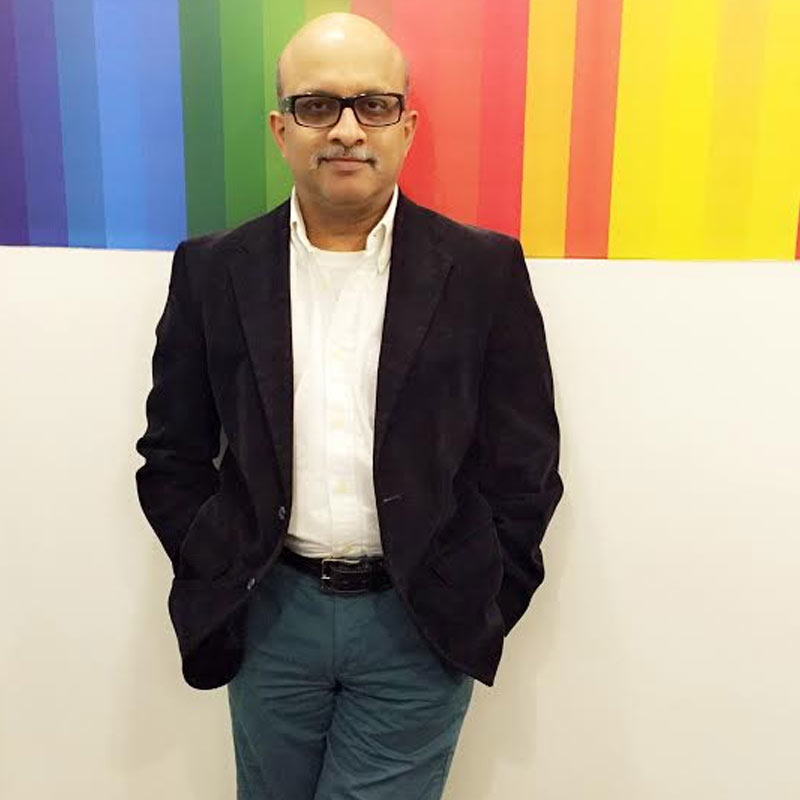
MUMBAI: FCB Ulka has appointed Surjo Dutt as national creative director. Surjo joins FCB Ulka from Sapient Nitro where he worked as Head of Creative – Delhi.
Surjo played a key role in the most successful year for Sapient Nitro’s advertising business since its’ inception in India. The Delhi office won marquee creative projects for brands like Nestle, British Airways and Philips during his 15-month stint.
The British Airways campaign #fuelledbylove and Nestle’s corporate campaign titled #100andrunning were standout pieces of creative work that not only worked in the marketplace, but also, were highly awarded. Goafest, Kyoorius, APAC brand engagement awards, Hollywood A-list awards, CIDCA, TAMBULI are some of the award shows where these campaigns were recognized.

Prior to this he was with JWT Delhi as Vice President and Executive Creative Director (ECD). He began his career with JWT as a trainee copywriter 17 years ago. In his 17-year stint Surjo worked on a huge variety of brands and categories including pretty much all brands in JWT Delhi.
Some of the brands Surjo worked on included Pepsi, 7UP, Mirinda, Mountain Dew, Slice, Tropicana, Frito Lay, Nestle, Airtel, Nokia, GSK, Hero Motocorp, UNICEF, CONGRESS, NOKIA, Hamdard and RADIKAL. He was also a part of JWT’s global High Performance Group for 2 years.
Speaking on Surjo’s new role at FCB Ulka, FCB Ulka CCO Swati Bhattacharya said, “I remember the first time we heard the line ‘cheetah bhi peeta hai’ in JWT. We all knew the new kid on the Pepsi floor was special. Surjo’s omnivorous talent comes with an infectious energy and passion that not just creates great creative work but also strong creative teams. I am absolutely excited to have him partner me in building a bright creative future for FCB India.”
Commenting on Surjo’s appointment, FCB Ulka CEO Nitin Karkare said, “Surjo is a powerhouse of talent. The sheer energy that he brings to every assignment makes him a delight to work with. He is a great people’s person and his teams are always ready to give their best for him. He is a fantastic addition to our creative leadership team and I am sure our clients will benefit from his work”.
Speaking on his new role at FCB Ulka, Dutt said, “FCB Ulka is an agency I have always admired for not just its work but also its core values and culture. And now with true game changers like Rohit and Swati coming in, it’s a wonderful time to be in this agency. I am thrilled to be a part of the team and will do everything I can to write my bit of the success story that is sure to be written.




Brands
Workday unveils Sana, a new AI tool for businesses
New conversational interface, 300+ skills and deep integrations aim to turn AI from sidekick to operator
CALIFORNIA: Workday has fired a fresh salvo in the enterprise AI race, rolling out “Sana”, a system it touts as “superintelligence for work”, designed not merely to assist, but to act. The pitch is blunt: stop dabbling with disconnected copilots and start letting AI run the plumbing of business.
Unveiled globally on March 20, Sana arrives as a three-part stack, Sana for Workday, a conversational interface; a self-service agent with more than 300 skills; and Sana Enterprise, which plugs into tools from Gmail and Outlook to Salesforce and Slack. The aim is to collapse the sprawl of enterprise software into a single AI-led workflow engine.
At its core, Sana promises four things: find, act, build and automate. Employees can query internal data, execute tasks such as updating records or contracts, generate dashboards, and trigger multi-step workflows, all within the same interface. The twist is where it sits, inside Workday’s existing systems, inheriting their permissions, compliance rules and audit trails.
“AI only works in the enterprise when it’s connected to trusted, deterministic systems,” said Aneel Bhusri, co-founder and chief executive. “Sana is what brings it all together… a powerful way for people to search, reason and orchestrate work across the enterprise.”
The critique of current AI deployments is familiar, flashy pilots, little real impact. Workday’s answer is to embed intelligence where decisions are made and actions executed. Gerrit Kazmaier, president, product and technology, framed it as a shift from suggestion to execution: “AI agents take action using trusted context, not just provide suggestions… a single experience where AI is embedded directly in the flow of work.”
Early adopters suggest traction. Berner claims 90 per cent adoption within 40 days, scrapping 400 ChatGPT licences. Cheffelo calls Sana its “AI backbone”, while Telavox says the conversation has shifted from automating tasks to reimagining entire processes.
Analysts, too, see a broader play. Josh Bersin described the integration as “a major milestone”, arguing it could reshape both customer and employee experience by making AI-native workflows the default.
Sana is being bundled via Workday’s Flex Credits, no separate licence, no added paywall, a move that lowers friction and speeds adoption. Meanwhile, Sana Enterprise extends the system beyond Workday, allowing users to search documents, schedule meetings or track project tickets across multiple platforms in one conversation.
The bet is clear: whoever controls the workflow, controls the future of enterprise software. With Sana, Workday is trying to move AI from a helpful assistant to an invisible operator. If it works, the software menus may vanish, and with them, the way work itself is done.







