Brands
Faber-Castell sees 300% hike in downloads of painting patterns and drawing tutorials during the lockdown


NEW DELHI: The Coronavirus pandemic with all of its challenges has changed societal structures around the world. Fears and concerns about personal and familial health, as well as the long-term economic outlook, are a massive mental burden on millions of people. Since the beginning of this “new reality,” many have increasingly turned to means of creative expression – as a self-prescribed and astonishingly effective therapy for stress, anxieties and loneliness. During lockdown periods, Faber-Castell registered an increase of 300% per colouring patterns and tutorial videos, with plans for an expanded range.
Cancelled pre-school education, enervating homeschooling, work from home, absence of friends and grandparents, growing fears about the future. And drawing and painting on paper can help in easing mental strains. Seeking contemplation to retreat from a seemingly hostile outside world is a human reflex that tends to intensify in times of uncertainty or even crisis. Creative expression has long been used as a therapeutic tool to alleviate stress and focus the mind. While never an adequate replacement for treating serious mental issues, drawing and painting are proving an effective therapy for calming, the stimulation of brain activity and relaxation.
The Swiss psychiatrist and Freud disciple Carl Gustav Jung (1875-1961) described the positive psychological effects of colouring figural Mandala images, for example. He described them as “holy geometric patterns,” a direct invitation to listen to the inner self and find harmony. These patterns, said Jung, would strengthen the spirit to foster personal growth has been frequently proven that interaction with artistic tools can help in better coping with traumas or difficult stages in life. According to the US magazine “Psychology Today”, the involvement with art can considerably relieve stress, improve symptoms of depression and anxiety and evoke more positive memories. Such artistic self-realization truly has healing powers.

Feelings and ideas can be expressed through pencil and brush, in shapes and colours, with each interpretation a completely singular one: Blue shades can mean open sky to some, the vast ocean to others, orange, red and yellow may represent the sun, a hearth or campfire. Others may prefer all hues of green, associating forests, summer meadows or a secluded garden. Such exercises are a means for reflection and mindfulness, no matter the individual artistic talent. They offer an opportunity for meditative relaxation and convey positive associations such as success and contentment.
Faber-Castell head of digital marketing -Oliver Hempel has monitored concrete download figures to outline the growing demand for creative activity: “During the lockdown phase of recent months, our drawing patterns and tutorials have been downloaded about three times as often as in the comparable period last year,” explains the manager. “Our online sales also went up significantly.”
Faber-Castell, India marketing director -Sonali Shah notices a hike in the engagement rate by almost 30-40% on the tutorials uploaded by the brand during lockdown than pre-COVID times. At the same time, she also says we have seen substantial growth in Art and colouring products like paints, colour pencils and accessories like canvas and brushes.
In Brazil, they offered free online drawing lessons during quarantine times and successfully so: These courses were downloaded three million times, with the number of subscribers rising by 4,500%.
In response to the fast-growing demand worldwide and the emphatically positive feedback, the stationery giant plans offer new designs and instructions on a continuous basis.
Follow Tellychakkar for the consumer facing news & entertainment






Brands
Samsung certifies 1,000 Maharashtra students in AI and coding
The South Korean electronics giant marks its first large-scale skilling push in the state, with women making up nearly half the national programme’s enrolment
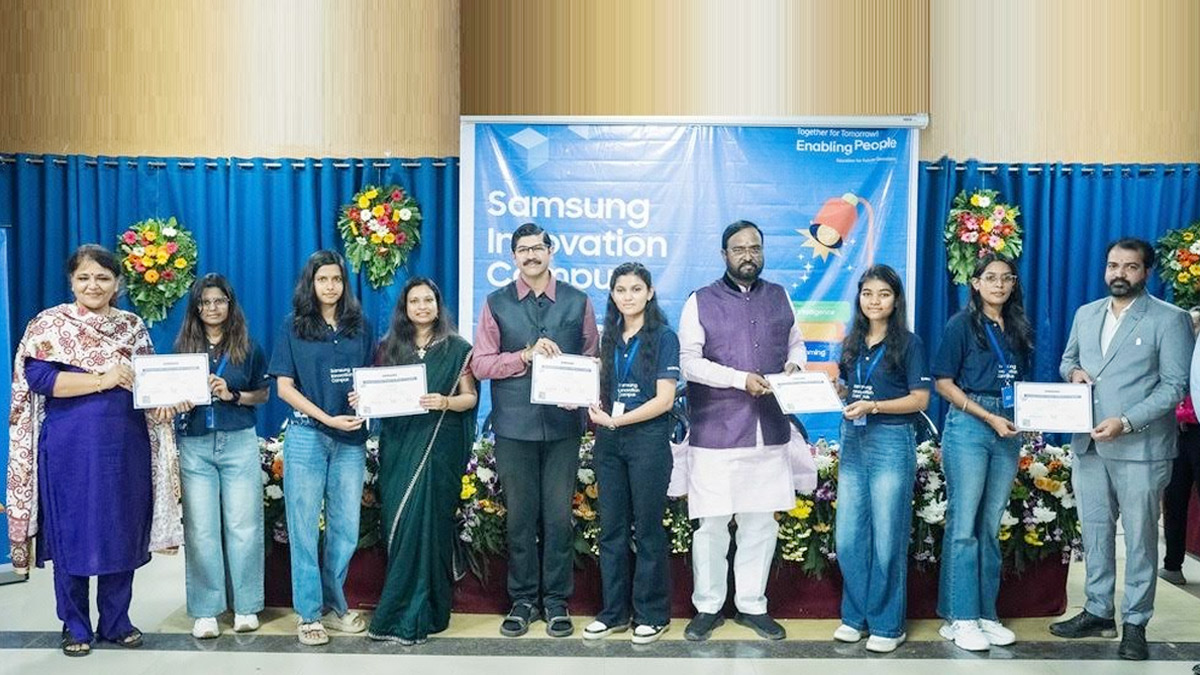
PUNE: Samsung has put 1,000 students in Maharashtra through a certified training programme in artificial intelligence and coding, the largest such drive the South Korean electronics company has run in the state and a signal that corporate India’s skilling ambitions are moving well beyond the boardroom brochure.
The certifications were awarded under Samsung Innovation Campus (SIC), the company’s flagship corporate social responsibility programme, which launched in India in 2022 with the stated aim of democratising access to future-technology education. The 1,000 graduates were drawn from four institutions: 127 from Savitribai Phule Pune University, 373 from Pimpri Chinchwad University, 250 from D.Y. Patil University’s Ramrao Adik Institute of Technology and 250 from Anjuman-I-Islam’s Kalsekar Technical Campus. All completed training in either AI or coding and programming, the two disciplines Samsung has identified as the critical pillars of the digital economy.
The programme does not stop at technical training. Soft-skills development and career-readiness modules are baked into the curriculum, a deliberate attempt to close the gap between what universities teach and what employers actually want.
“India’s digital growth story will ultimately be shaped by the quality of its talent pipeline,” said Shubham Mukherjee, head of CSR and corporate communications at Samsung Southwest Asia. “As technologies like AI move from the periphery to the core of industries, skilling must evolve from basic training to building real-world capability. This milestone in Maharashtra reflects how industry and academia can come together to create a future-ready workforce that is both globally competitive and locally relevant.”
The Maharashtra drive sits within a rapidly scaling national effort. Samsung Innovation Campus trained 20,000 young people across India in 2025, hitting its stated target for the year. Women account for 48 per cent of national enrolments, a figure the company cites as evidence of its push for an inclusive technology ecosystem. The programme is implemented in partnership with the Electronics Sector Skills Council of India and the Telecom Sector Skill Council.
Samsung, which is marking 30 years in India this year, runs SIC alongside two other initiatives, Samsung Solve for Tomorrow and Samsung DOST, as part of a broader effort to build what it calls a generation of innovators with both the technical depth and the problem-solving mindset to thrive in a fast-moving digital world.
A thousand certified students is a tidy headline. Whether they find jobs that match their new skills is the harder question, and the one that will ultimately determine whether corporate skilling programmes like this one are genuine pipelines or well-photographed gestures.






