Brands
Faber-Castell art business grows by 300% y-o-y during Covid2019

NEW DELHI: Faber-Castell is a name most children grow up with. As one of the leading manufacturers of wood-cased pencils with a varied range of products for writing, drawing, and creative design, as well as decorative cosmetics, it also found Covid2019 challenges and is now changing its strategy.
Faber-Castell marketing director Sonali Shah says, “When the country was in complete lockdown, schools were shut, stores were shut, we were completely shut. But we saw a lot of latent demand coming from e-commerce. And when stores started opening, we saw that a lot of people started putting their attention towards DIY (do it yourself) products and art which helped us gain demand for our products.”
Self isolation, work from home and study from home options led to a growth in demand for art and other stationery supplies. Faber-Castell tied up with Swiggy Genie to make stationery available at the doorstep for its consumers.

“Demand for products including highlighters, text liners, which are generally used for office purposes, now because of digitisation, people actually want to do hands-on things. Our art business has grown by 300 per cent over last year and we have recently launched our liquid paint. Art is divided into dry medium and liquid medium. Dry medium products include crayons and coloured pencils and liquid medium is acrylic paints, fabric paints, poster colours and watercolour. Our liquid paint business has grown by 84 per cent,” she shares.
Faber-Castell had restrained from any overt advertising during the pandemic. “I thought it's quite insensitive for us to do it. But what we continue doing is putting up tutorials on different techniques that people can use to do art and crafts and DIY techniques and how they can spend their time at home. So, that was something that we had done during the lockdown. Now that things are opening up, we will probably look at launching eco-friendly products, make in India products because that’s the need of the hour. So, we are launching our paper pencil and eco pencil. For now, we have taken a conscious call to not do any overt advertising as such, but we will try and put as much content out there to help people get through this tough time,” she shares.
With the thrust being given to Make in India products and eco-friendly items, Faber-Castell will refocus its attention and fast-track its product developments to meet the demand.






Brands
Samsung certifies 1,000 Maharashtra students in AI and coding
The South Korean electronics giant marks its first large-scale skilling push in the state, with women making up nearly half the national programme’s enrolment
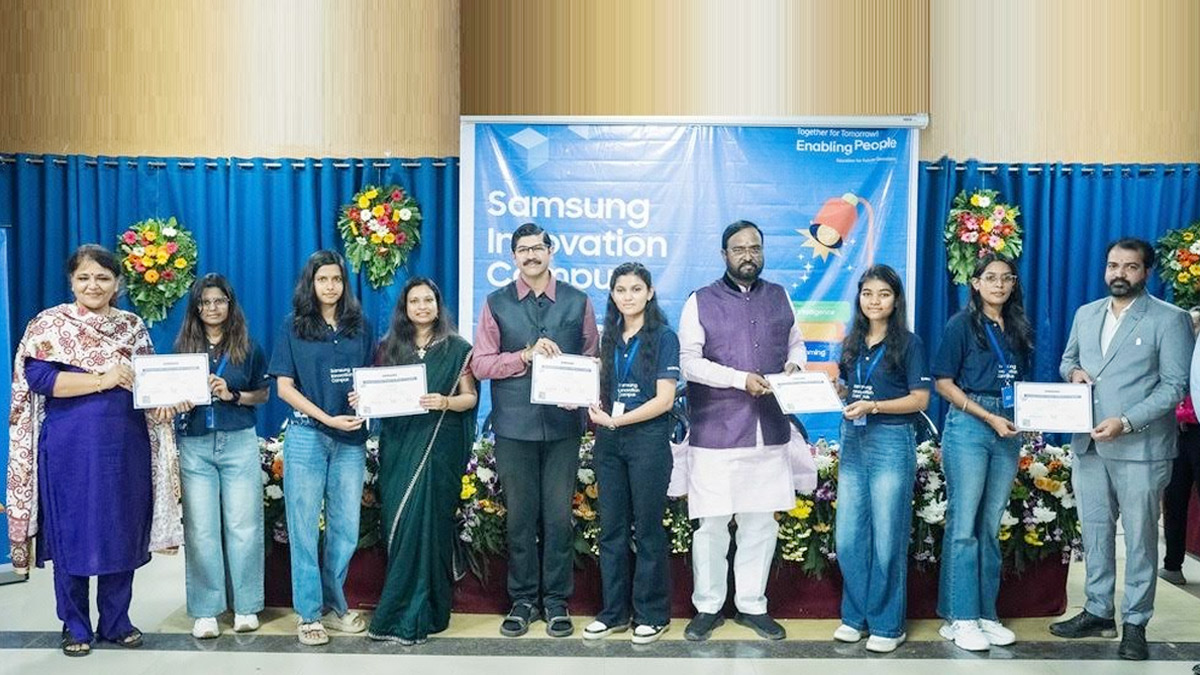
PUNE: Samsung has put 1,000 students in Maharashtra through a certified training programme in artificial intelligence and coding, the largest such drive the South Korean electronics company has run in the state and a signal that corporate India’s skilling ambitions are moving well beyond the boardroom brochure.
The certifications were awarded under Samsung Innovation Campus (SIC), the company’s flagship corporate social responsibility programme, which launched in India in 2022 with the stated aim of democratising access to future-technology education. The 1,000 graduates were drawn from four institutions: 127 from Savitribai Phule Pune University, 373 from Pimpri Chinchwad University, 250 from D.Y. Patil University’s Ramrao Adik Institute of Technology and 250 from Anjuman-I-Islam’s Kalsekar Technical Campus. All completed training in either AI or coding and programming, the two disciplines Samsung has identified as the critical pillars of the digital economy.
The programme does not stop at technical training. Soft-skills development and career-readiness modules are baked into the curriculum, a deliberate attempt to close the gap between what universities teach and what employers actually want.
“India’s digital growth story will ultimately be shaped by the quality of its talent pipeline,” said Shubham Mukherjee, head of CSR and corporate communications at Samsung Southwest Asia. “As technologies like AI move from the periphery to the core of industries, skilling must evolve from basic training to building real-world capability. This milestone in Maharashtra reflects how industry and academia can come together to create a future-ready workforce that is both globally competitive and locally relevant.”
The Maharashtra drive sits within a rapidly scaling national effort. Samsung Innovation Campus trained 20,000 young people across India in 2025, hitting its stated target for the year. Women account for 48 per cent of national enrolments, a figure the company cites as evidence of its push for an inclusive technology ecosystem. The programme is implemented in partnership with the Electronics Sector Skills Council of India and the Telecom Sector Skill Council.
Samsung, which is marking 30 years in India this year, runs SIC alongside two other initiatives, Samsung Solve for Tomorrow and Samsung DOST, as part of a broader effort to build what it calls a generation of innovators with both the technical depth and the problem-solving mindset to thrive in a fast-moving digital world.
A thousand certified students is a tidy headline. Whether they find jobs that match their new skills is the harder question, and the one that will ultimately determine whether corporate skilling programmes like this one are genuine pipelines or well-photographed gestures.






