MAM
Experian bags Café Coffee Day, Apnapaisa and Yepme

MUMBAI: Permission-based email marketing platform Experian CheetahMail has expanded its portfolio of clients by signing up with Café Coffee Day, Apnapaisa and Yepme.com. The platform will partner with these brands to help them engage with their audiences through advanced email marketing strategies.
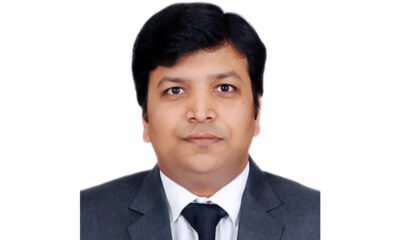
Experian Marketing Services head Naveen Bachwani said, “Experian CheetahMail is pleased to partner with Café Coffee Day, Apnapaisa and Yepme.com, to help improve the RoI on their digital marketing programs by deploying sophisticated Email Marketing strategies on the foundation of an industry-leading permission-based platform.”
Café Coffee Day president K Ramakrishnan said, “CheetahMail is an email marketing platform that has helped us communicate effectively with our customers. With a robust reporting platform and hands-on help from the team, I‘m confident we will be able to tailor our communication much better.”

Apnapaisa COO Hemang Desai said, “CheetahMail brings to ApnaPaisa a product that delivers great flexibility, combined with some of the best practices of contemporary email marketing. Today, subscriber engagement not only impacts performance but also future deliverability. Hence, working with a partner who can track and report up-to-the-minute metrics, as also advise you with real, implementable solutions to improve these metrics, is invaluable. We are delighted with our partnership with Cheetahmail.”
Yepme Co-Founder, COO and CTO Sandeep Sharma said, “Experian is a very dynamic company and has put in efforts to understand our business. The solution is designed to better understand our customers and help in ROI improvement through targeted marketing. The team understands the challenges of our business model, and tries to provide help in operational aspects. I think Experian‘s greatest strength is their people – they are not just trying to sell you a product, but are also able to look beyond to forge a long-term partnership.”
Café Coffee Day is a division of India‘s largest coffee conglomerate Amalgamated Bean Coffee Trading Company Ltd. ABCTCL is one of India‘s leading coffee exporters with clients across USA, Europe and Japan.
Apnapaisa.com is an online marketplace for comparing home loans, personal loans, car loans, business loans, credit cards and insurance products like life insurance and general insurance policies.
Yepme.com is a premier online shopping site in India that specializes in online retailing of Men‘s & Women‘s Garments and Accessories.
These new clients join an existing roster of brands such as Makemytrip, Lemon Tree Hotels and Flipkart.




Brands
HP launches Smart Champs learning game show with JioStar for students
Sanya Malhotra hosts quiz series blending fun, learning and prizes
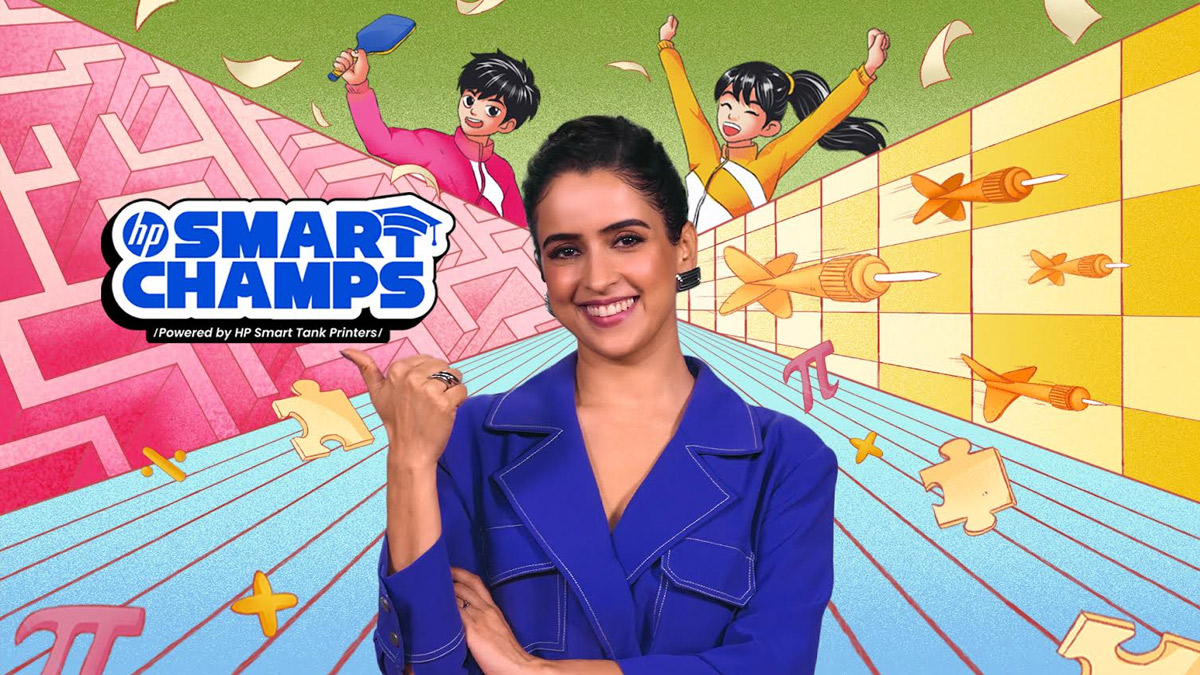
NEW DELHI: HP India has teamed up with JioStar to launch HP Smart Champs, a new learning-based game show designed to make education engaging for school students across the country.
Hosted by Sanya Malhotra, the 10-episode series brings together students from Grades 5 to 9, who compete in teams through quiz and puzzle-based challenges that test knowledge, logic and teamwork. The show will begin streaming on JioHotstar from April 11 and will premiere on Nick on April 18, with weekend episodes airing at 7 PM.
Powered by HP Smart Tank printers, the format integrates print-based learning into the gameplay, using worksheets, clues and visual problem-solving tools to encourage hands-on participation. The idea is to move students beyond rote memorisation and towards more applied, curiosity-led learning.
The competition promises high stakes, with winners set to receive a cash prize of Rs 10 lakh, while runners-up will take home Rs 5 lakh. Additional rewards include HP AI laptops, Smart Tank printers and accessories, while the winning school will be awarded an HP Smart Tech Lab.
Speaking about the initiative, HP India managing director Ipsita Dasgupta said, “At HP, we believe nurturing India’s youth is key to the country’s progress, and technology plays a foundational role in enabling this. With HP Smart Champs, we wanted to create something beyond traditional learning, a fun-filled platform where curiosity, creativity and critical thinking take centre stage.”
On the show’s reach, JioStar head entertainment sales Mahesh Shetty said, “HP Smart Champs reflects how children today learn through exploration and experience. With Nick and JioHotstar, we are creating a multi-screen approach that is both engaging and meaningful.”
Highlighting the role of print, HP India senior director print Satish Kumar said, “The show brings print-based learning to life in an engaging format, helping students develop deeper understanding through hands-on experiences.”
The journey to the finale began with participation from over 1,000 schools across 26 cities, narrowing down to 34 finalists who will compete in a studio showdown in Mumbai.
With its blend of entertainment, education and technology, HP Smart Champs is positioning itself as more than just a quiz show. It is a nationwide push to make learning interactive, accessible and, above all, a lot more fun.







