MAM
Essel group’s Fun Republic launches mobile ticketing service

MUMBAI: The Essel Group owned four-screen cinema multiplex Fun Republic has, with the aid of GurukulOnline Wireless, developed a sophisticated SMS-based movie information and ticketing service for the multiplex in Mumbai.
As of now only BPL and Airtel mobile phone subscribers can use this facility by sending an SMS to 3867.
Fun Republic’s Head – Web, Anuj Mehta said, “Our wireless booking service enables the integration with our existing Cinema-Ticketing solution. As a result, customers not only get the confirmation code, but the actual seat numbers. Fun Republic is the first multiplex to provide such information through online wireless means. As the solution is real time, chances of error are totally eliminated. It is India’s first real-time SMS cinema ticket booking facility.”
Customers can book tickets in advance and are required to turn up at Fun Republic’s booking counter 45 minutes before the start of show, after which they will be cancelled, Anuj added.
GurukulOnline CEO Shailesh Mehta said, “The wireless technology solution we have developed for Fun Republic is extremely user-friendly. It enables not only ticket bookings, but also cancellations, supply of information about movies and special schemes applicable from time to time.”

Though this service can presently be used only through BPL and Airtel services, GurukulOnline is in the process of tying up with other mobile phone service providers, Anuj said.
Fun Republic will soon launch contests through the mobile phone network developed by GurukulOnline, and winners will be entitled to a lot of exciting gifts like free tickets, combo vouchers etc at Fun Republic.


Brands
Thermocool rolls out Navratri campaign on trains and stations
Nine day digital push blends devotion and storytelling for travellers
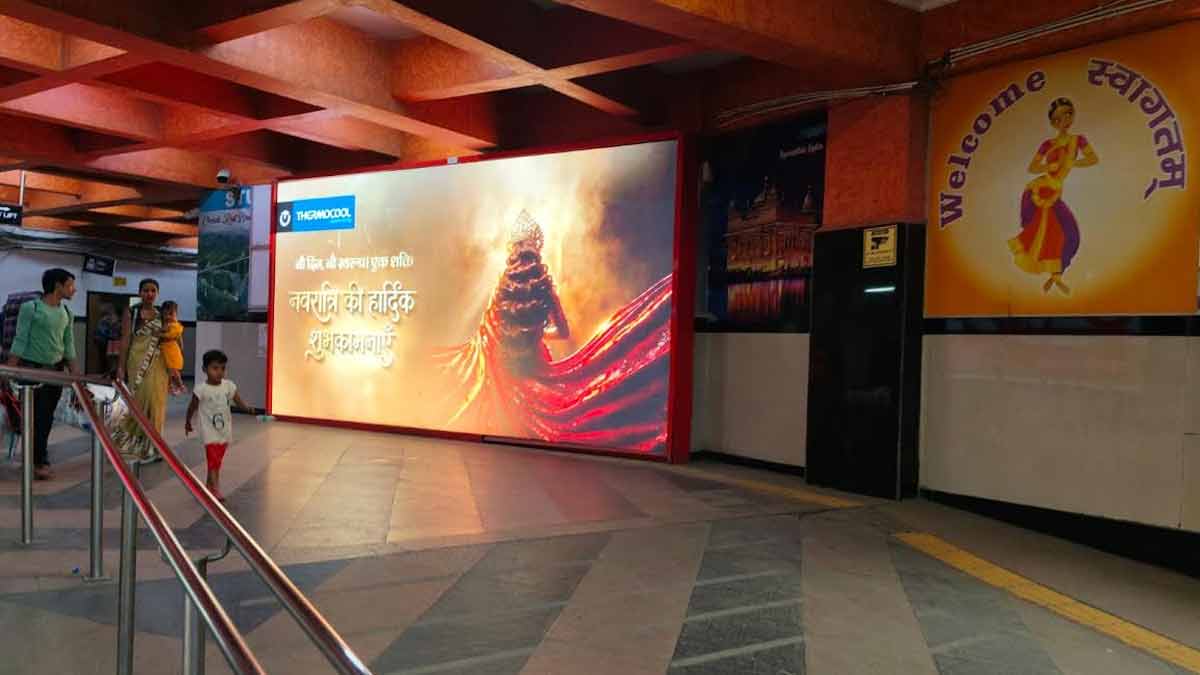
NEW DELHI: Thermocool Home Appliances has launched a high-visibility digital campaign during Navratri, turning railway stations and trains into storytelling spaces that blend culture with brand engagement.
The nine-day campaign spans key high-footfall locations including Katra, Anand Vihar, Gorakhpur, Prayagraj and Moradabad, along with the Vande Bharat Express on the Delhi-Katra route. Travellers encounter the campaign across station screens, concourses and onboard infotainment systems, making it hard to miss.
What sets the initiative apart is its narrative approach. Each day of Navratri is dedicated to one of the nine forms of Goddess Durga, with digital content explaining the significance and stories behind each day. The result is a campaign that does more than advertise, it informs and engages passengers in the middle of their journeys.
For director of sales and marketing Tanuj Gupta, the idea was to go beyond visibility. He noted that while Navratri is widely celebrated, awareness of its deeper meaning is often limited, and the campaign aims to bridge that gap in a simple and accessible way.
By tapping into high-traffic transit spaces, Thermocool is placing its message where audiences naturally gather, from busy platforms to train compartments. The repeated exposure across these touchpoints is designed to build familiarity while creating a more meaningful connection with consumers.
In a season marked by devotion and festivity, the campaign finds a clever middle ground. It turns everyday travel into a cultural moment, where storytelling travels alongside the passenger.