MAM
Emery to succeed Proctor as CEO Mindshare Worldwide

MUMBAI: Nick Emery will be taking over as Mindshare Worldwide CEO, overseeing operations across 112 countries including India.
Emery succeeds Domonic Proctor who has been elevated to the new position of GroupM president.
Emery currently leads Worldwide strategy, client service and product development for Mindshare and is also the chief strategy officer for GroupM worldwide.

Mindshare has over 5,000 employees and billings in excess of $27.8 billion.
Emery and Proctor have been partners since working together to establish Mindshare as a global network in 1997.Emery will now focus solely on Mindshare and its clients.
The focus of the company will remain on innovation, data and technology, preserving Mindshare‘s global network.
The announcement was made by GroupM Global CEO Irwin Gotlieb who has been promoted to the position of GroupM chairman. Proctor will continue to report to Gotlieb.
On his new role Emery said, “I‘m delighted to be taking on this role at this exciting time in the agency‘s evolution. Mindshare‘s agenda continues to focus on innovation, technology and added value to our clients and we want to build on the successes of recent years. The success of Mindshare has always been built upon our network, teamwork and willingness to embrace change. We will continue to increase investment in a diverse and talented team across a global network that is second to none. We have created an organisation with strong management and our work has been recognized with a string of prestigious awards during the last 12 months. We‘re confident that our clients and staff will prosper as a consequence of these changes – our rate of growth and the complexity of our business require that we constantly evolve.”
Proctor added, “I am delighted that Nick has agreed to take over. Nobody has done more than him to help build Mindshare and I know that the agency will go from strength to strength under his leadership.”






Brands
Centrum taps into daily fatigue with new Har Din Ko Kar Recharge campaign
New film highlights how a quick nutrient boost can turn everyday tiredness into energy
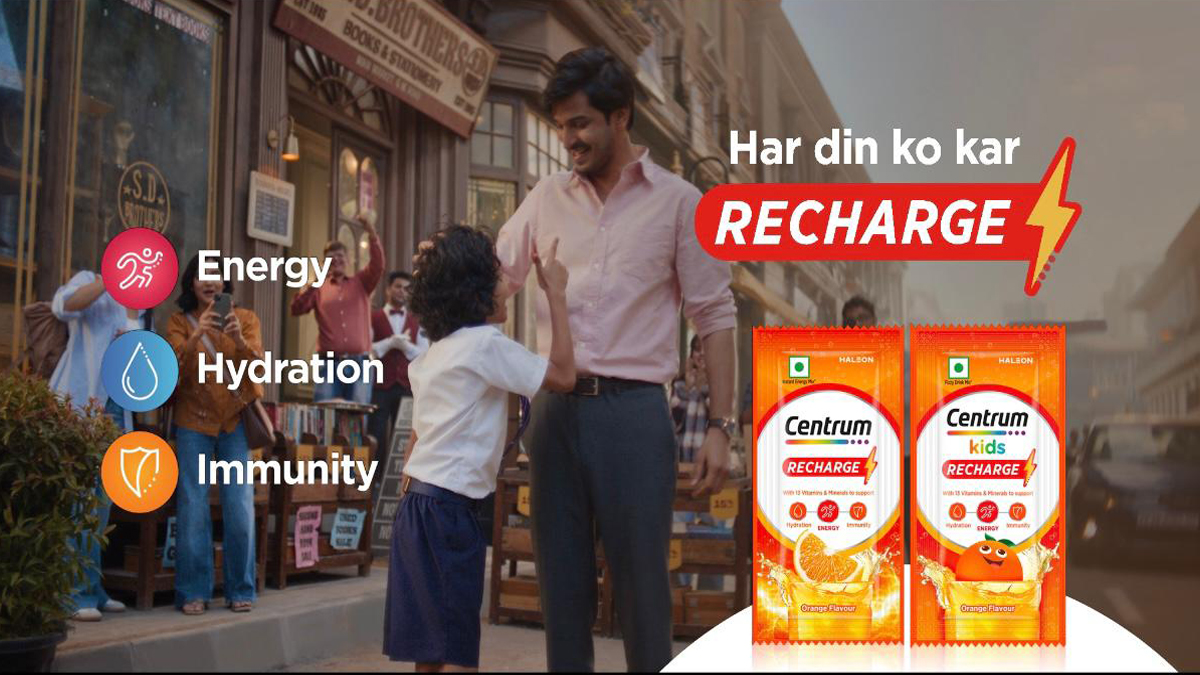
MUMBAI: In a bid to connect with India’s always-on lifestyle, Centrum has rolled out a new campaign titled ‘Har Din Ko Kar Recharge’, spotlighting the everyday struggle with fatigue and the need for simple, accessible wellness solutions.
The campaign, launched by Haleon, promotes Centrum Recharge, an effervescent energy drink mix designed to replenish essential micronutrients lost during daily activity. Priced at Rs 10 per sachet, the product combines Vitamin C, Vitamin B12, Magnesium, and Zinc to support energy, hydration, and immunity in a convenient format.
At the heart of the campaign is a light-hearted film that brings a relatable slice of life to the screen. It follows a tired young man who is unexpectedly challenged to a street game by a child. Initially reluctant, he turns to a Centrum Recharge sachet, after which his energy visibly returns, allowing him to join in with enthusiasm. The narrative neatly ties into the brand’s core message that small nutritional boosts can make a big difference in daily vitality.
Speaking on the launch, Haleon ISC head wellness & OTC Deepali Agarwal said the campaign aims to bring attention back to everyday energy and participation. She highlighted that modern routines often leave people feeling drained, and solutions like Centrum Recharge can help bridge nutritional gaps while encouraging a more active lifestyle.
The brand is also positioning the product as part of a larger push to democratise multivitamin consumption in India, especially at a time when micronutrient deficiencies remain widespread. With variants for both kids and adults and availability across retail, pharmacies, and quick commerce platforms, the company is betting on accessibility as a key growth driver.
The campaign will be amplified across digital and television platforms nationwide, supported by on-ground activations, sampling initiatives, and e-commerce visibility. As Centrum leans into the everyday energy conversation, its latest push makes a clear pitch. Staying energised, it suggests, might just be as simple as hitting refresh on your daily routine.