Comment
Embracing 2025: Navigating marketing & communication challenges in family-run businesses


MUMBAI: India’s evolution as a global business destination is both dynamic and inspiring. Driven by robust economic growth, transformative policies, and increasing global integration, initiatives like Make in India, Digital India, and Startup India have bolstered the nation’s reputation as a business-friendly destination. Moreover, simplifications such as the Goods & Services Tax (GST) and the Insolvency and Bankruptcy Code have further enhanced India’s ease of doing business ranking, signalling a promising landscape for enterprises.
Amid this, family-run businesses form the backbone of India’s economy. They contribute over 75 per cent of the GDP, a figure projected to rise to 80-85 per cent by 2047. Not only are they vital drivers of economic growth, but they also present unique opportunities for marketing and communication (marcom) professionals navigating these organisations’ intricate blend of tradition and modernity.
Most of India’s TV and film production sector and smaller broadcasters are run by families. Dharma Productions, YRF Films, Balaji Telefilms, Sagar Productions, Directors Kut, Contiloe Films, Dangal TV, Governance Now – and scores of others are either first generation or second generation run by the son, or a mother-daughter, or husband-wife or mother-son combination. Firms like Applause Entertainment and Abundantia Entertainment which are run by professionals are a handful. It’s quite possible that this article will prove handy while dealing with the family run production houses and channels.

The role of branding in business success
A strong brand goes beyond selling products; it attracts the right talent, secures funding, and builds trust. In large corporations, specialized roles like marketing heads, brand strategists or corporate communication teams typically drive these efforts separately. Conversely, in family-owned businesses, marcom generalists juggle a variety of responsibilities, offering a rare opportunity to influence all facets of branding and communication.
The allure of family-run businesses & why family businesses are a unique opportunity?
While new-generation companies may allure professionals with their innovation and glamour, family businesses offer equally compelling prospects, particularly for those ready to navigate their complexities. These organizations provide the chance to modernize deeply rooted structures, foster long-term stability, and gain invaluable experience in managing multifaceted stakeholder dynamics.
At a time when many startups and new-generation companies are facing retrenchments, family-run businesses often offer job security and a solid foundation—making them an attractive option for forward-thinking professionals.
A 2018 survey reveals that 56 per cent of Indian family businesses are first-generation owned, while 44 per cent are run by subsequent generations. From 2017 to 2022, these businesses outpaced their non-family counterparts in revenue growth by approximately 2.3 per cent. For marcom professionals who champion their modernization, this presents professional growth and a chance to shape India’s economic trajectory.

Challenges & strategies for marcom professionals
Navigating the traditional tide
For marcom professionals, family-run businesses may initially feel like a time capsule. Strategies often rely on word of mouth, local fairs, inferior content and outdated digital presence. To make an impact, start by earning trust:
* Listen first: Invest time in understanding the business’s history, nuances, and legacy.
* Start small: Introduce incremental changes that respect the established foundation.
* Build rapport: Cultivate relationships with family members and long-time employees to foster collaboration.
By respecting the company’s traditions while gently advocating for modernization, you can lay the groundwork for sustainable transformation.
Understanding the unseen hierarchy
Decision-making in family-run businesses doesn’t always align with organizational charts. Informal power structures often influence key decisions, with founders or long-serving employees playing pivotal roles.
Strategies for Success:
* Map key decision-makers: Early on, identify who holds formal and informal influence.
* Foster inclusion: Organize workshops or brainstorming sessions to involve all stakeholders in shaping marcom strategies.
* Position yourself as neutral: Act as a mediator to ensure all voices are heard while guiding the team toward a unified direction.
By aligning stakeholders through clear communication and structured processes, you can mitigate conflicting opinions and drive initiatives forward.
Balancing tradition with innovation
Family businesses often resist change, clinging to their legacy. Modernizing their marketing efforts requires a careful balance:
* Advocate incremental changes: Propose strategies that modernize while staying true to the company’s values.
* Leverage success stories: Use examples of similar businesses that benefited from digital transformation.
* Pilot projects: Introduce small-scale initiatives to demonstrate measurable results, building trust without risking the entire business.

Addressing emotional decision-making
Family dynamics often overshadow data-driven decision-making. While this reflects personal investment, it can hinder effective marketing strategies.
What you can do:
* Present data-driven insights: Tie your ideas to tangible goals such as revenue growth or enhanced brand equity.
* Emphasise legacy protection: Position your strategies as tools to safeguard and enhance the family’s legacy.
* Foster open dialogue: Address differing viewpoints respectfully to build credibility and collaboration.
Overcoming resource constraints
Conservative budgets and reliance on traditional methods can be challenging. However, these constraints also offer opportunities for creative problem-solving.
Strategies:
* Focus on high-impact, low-Cost initiatives: Leverage social media campaigns, content marketing, and influencer partnerships.
* Prioritise quick wins: Demonstrate the value of modern approaches before advocating for larger budgets.
* Introduce scalable solutions: Emphasize cost-effective tools like CRM systems or targeted digital ads to support long-term growth.
Professionalizing the marketing function
Family businesses often lack formalized structures, leading to inefficiencies. Modernizing these processes is critical to achieving sustainable success.
Your approach:
* Standardise workflows: Implement documentation practices and performance metrics to professionalize the department.
* Set clear objectives: Establish goals and KPIs to ensure accountability and focus.
* Showcase long-term benefits: Demonstrate how professionalism and structure contribute to profitability and growth.
Adapting to 2025 workplace trends
The evolving professional landscape—shaped by remote work, sustainability, and AI—offers an opportunity for family-run businesses to modernize.
Marcom professionals can:
* Introduce remote collaboration tools to enhance efficiency.
* Advocate for sustainable practices to align with global trends.
* Leverage AI-driven analytics to optimize marketing strategies.
Attracting and retaining talent
Family businesses often struggle to attract top talent due to perceptions of favoritism or limited growth opportunities.
Your Strategy:
* Foster positive workplace culture: Celebrate achievements and promote transparency.
* Leverage networking skills: Attract professionals who align with the company’s values.
* Offer clear growth paths: Highlight opportunities for career development to retain talent, particularly among Gen Z employees.
Leveraging India’s growing family business economy
Family businesses are integral to India’s economy. According to a McKinsey report, top-performing family businesses achieve higher revenue growth and shareholder returns compared to their peers.
2025 Strategy:
* Highlight success metrics: Use industry data to support growth-oriented marketing plans.
* Adopt digital tools: Enhance agility and adaptability to respond to market changes.
New year roadmap
2025 is a pivotal year for marcom professionals in family-run businesses. By respecting traditions while championing innovation, you can turn challenges into opportunities in disguise. Focus on building trust, fostering collaboration, and delivering measurable results. As a bridge between tradition and modernity, your role is to ensure the organization’s long-term success.
By embracing these strategies, you can not only achieve your professional goals, but also contribute to India’s economic transformation—making 2025 a milestone year for both your career and the family business you represent.
(The writer of this article is Tropical Agrosystem (India) Pvt Ltd general manager- branding & communications Chandrika Rodrigues. The views expressed are her own and need not reflect Indiantelevision.com’s views on the same.. The pictures for this comment piece were generated using Microsoft Designer. No copyright infringement is intended)






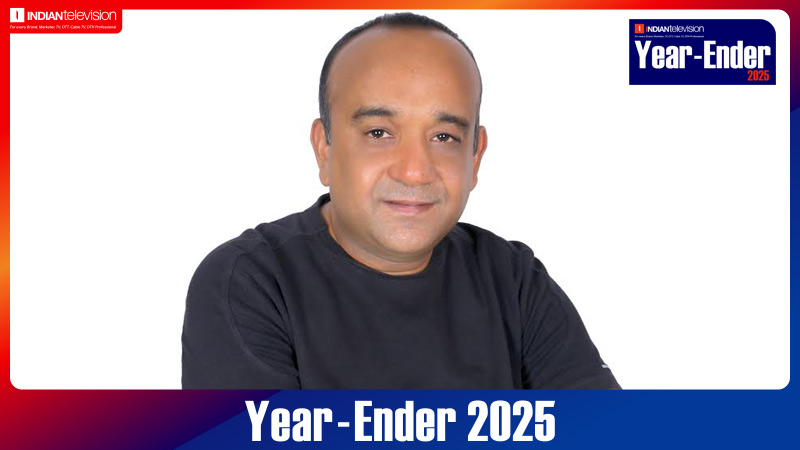
MUMBAI: 2025 will be remembered as the year India’s OTT industry stopped chasing scale for its own sake and began reckoning with how audiences actually consume content. Completion rates fell, patience wore thin and the limits of long-form excess became impossible to ignore. In this guest column, Pratap Jain, founder and CEO of ChanaJor, traces how micro-drama moved from the fringes to the centre of viewing behaviour, why short-form fiction emerged as a retention engine rather than a trend, and how platforms that respected time, habit and emotional payoff were the ones that truly grew up in 2025.
If there is one thing 2025 will be remembered for in the Indian OTT industry, it’s this: the industry finally stopped pretending.
Stopped pretending that bigger automatically meant better.
Stopped pretending that viewers had endless time.
Stopped pretending that scale without retention was success.
What began as a quiet reset in 2023 and a cautious correction in 2024 turned into a very visible shift in 2025. Business models matured. Content strategies tightened. And most importantly, platforms started aligning themselves with how Indians actually watch content, not how the industry wished they would.
At the centre of this shift was micro-drama—not as a trend, but as a behavioural inevitability.
When OTT finally understood the time problem
For years, long episodes were treated as a marker of seriousness. A 45–60 minute runtime was almost a badge of credibility. Shorter formats were pushed to the margins, labelled as “snack content” or “mobile-only.”
That belief quietly collapsed in 2025.
What platform data showed very clearly was not a drop in interest—but a drop in patience. Viewers weren’t rejecting stories. They were rejecting commitment.
Across platforms, the same patterns appeared:
* First-episode drop-offs on long-form shows kept increasing
* Completion rates continued to slide
* Viewers were sampling more titles but finishing fewer
At the same time, shows with episodes in the six to 10 minute range started showing the opposite behaviour: higher completion, higher repeat viewing, and stronger daily habit formation.
Micro-drama didn’t win because it was short. It won because it respected time.
Micro-Drama didn’t arrive loudly. It took over quietly.
There was no single moment when micro-drama “launched” in India. It crept in through dashboards and retention charts.
By mid-2025, it was clear that viewers were happy watching four, five, sometimes six short episodes in one sitting—even when they wouldn’t finish a single long episode. Romance, relationship drama, slice-of-life conflict, and grounded comedy worked especially well.
This wasn’t disposable content. It was compressed storytelling.
In shorter formats, there was no room for indulgence. Every episode had to move the story forward. Weak writing was punished faster. Strong writing was rewarded immediately.
Micro-drama raised the bar instead of lowering it.
Where ChanaJor naturally fit into this shift
ChanaJor didn’t pivot to micro-drama in 2025 because the market demanded it. In many ways, the platform was already built around the same viewing behaviour.
From the beginning, ChanaJor focused on short-to-mid-length fictional stories that felt close to everyday Indian life—hostels, rented flats, office romances, small-town relationships, young people figuring things out. Stories that didn’t need heavy context or cinematic scale to connect.
What worked in ChanaJor’s favour in 2025 was clarity:
* A clearly defined audience
* Tight episode lengths
* Storytelling that prioritised emotion and pace over spectacle
While several platforms rushed to copy global micro-drama formats, ChanaJor stayed rooted in familiar Indian settings and conflicts. That familiarity mattered. Viewers didn’t have to “enter” the world of the show—it already felt like theirs.
Why audiences started responding differently
One of the biggest misconceptions going into 2025 was that audiences wanted shorter content because their attention spans had reduced. That wasn’t entirely true.
What viewers actually wanted was meaningful payoff per minute.
On platforms like ChanaJor, episodes didn’t waste time setting the mood for ten minutes. Conflicts arrived early. Characters were recognisable within moments. Emotional hooks landed fast.
A typical consumption pattern looked like real life:
* One episode during a break
* Two more before sleeping
* A few the next day
This is how viewing habits are built—not through marketing spends, but through comfort and consistency.
Viewers came back not because every show was a blockbuster, but because they knew what kind of experience to expect.
2025 was also the year OTT faced business reality
The other big change in 2025 was on the business side. Subscriber growth slowed. Discounts stopped hiding churn. Customer acquisition costs rose.
Platforms were forced to ask harder questions:
* Are viewers finishing what they start?
* Are they returning without reminders?
* Is this content worth what we’re spending on it?
This is where micro-drama began outperforming expectations. A well-written short series could deliver sustained engagement without massive budgets. It didn’t peak for one weekend and disappear—it stayed alive through repeat viewing.
Platforms like ChanaJor benefited because they weren’t chasing inflated launch numbers. The focus was on consistency and retention, not noise.
Failures Became Visible Faster
2025 also exposed weaknesses brutally.
Several platforms assumed micro-drama was a shortcut—short episodes, quick shoots, instant traction. What they discovered was that bad writing fails faster in short formats than in long ones.
Viewers dropped off within minutes. Episodes were abandoned mid-way. Weak stories had nowhere to hide.
Micro-drama didn’t forgive laziness. It amplified it.
The platforms that survived were the ones that treated short storytelling with the same seriousness as long-form—sometimes more.
OTT Stopped Chasing Prestige and Started Chasing Habit
Perhaps the most important shift in 2025 wasn’t technical or creative—it was psychological.
OTT stopped trying to look like cinema. It stopped chasing validation through scale and awards alone. It began behaving like what it actually is in people’s lives: a daily companion.
Platforms like ChanaJor found their space here because that mindset was already baked in. The goal wasn’t to dominate a weekend launch. It was to quietly become part of someone’s everyday viewing routine.
That shift changed everything—from release strategies to how success was measured.
What 2025 Ultimately Taught the Industry
By the end of the year, three truths were impossible to ignore:
* Time is the most valuable thing a viewer gives you
* Retention matters more than reach
* Format must follow behaviour, not ego
Micro-drama didn’t take over because it was fashionable. It took over because it fit real life.
Looking Ahead
Micro-drama is not replacing long-form storytelling. It is redefining the baseline of engagement.
Longer shows will survive—but only when they earn their length. Short-form fiction will continue to evolve, becoming sharper, more emotionally confident, and better written.
Platforms like ChanaJor have shown that it’s possible to grow without shouting—by understanding the audience, respecting their time, and telling stories that feel real.
2025 wasn’t the year OTT became smaller. It was the year it became smarter.
Note: The views expressed in this article are solely the author’s and do not necessarily reflect our own.






