Digital
Eight-year-old coder steals the show at India AI Impact Summit 2026
Ranvir Sachdeva meets Sundar Pichai and Sam Altman, links ancient philosophy to modern AI

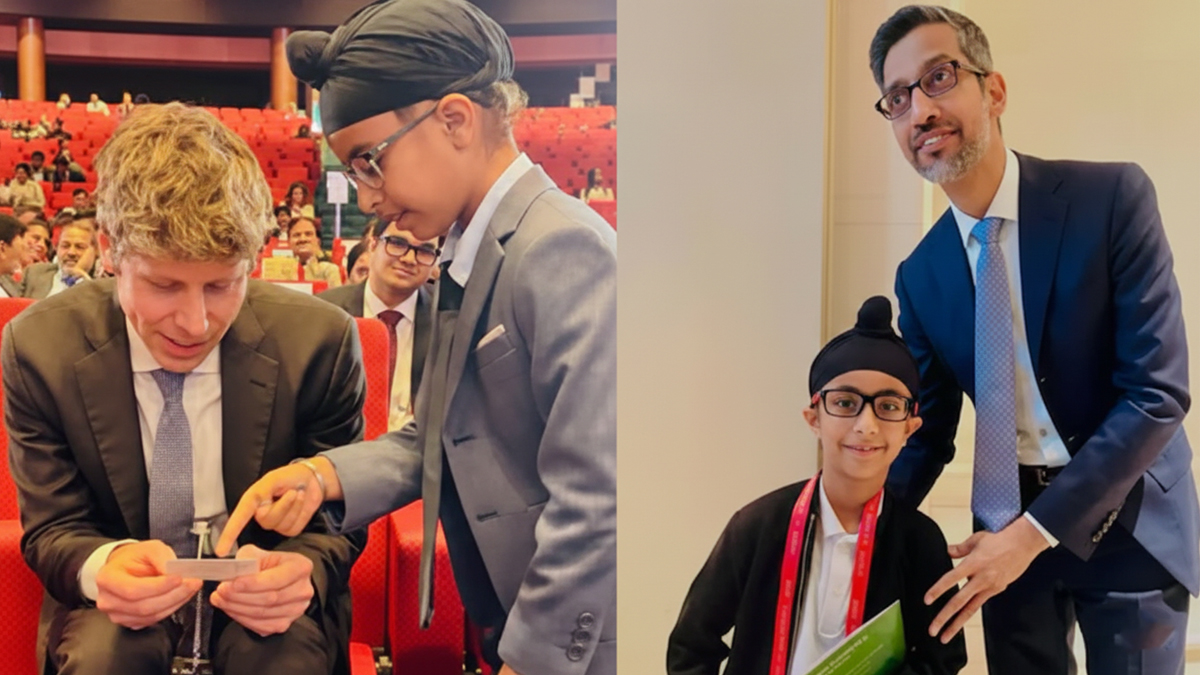
DELHI: Amid a sea of global tech chiefs and policy heavyweights, the loudest buzz at Bharat Mandapam this week came from a boy barely tall enough to see over the lectern.
Ranvir Sachdeva, eight, became the youngest keynote speaker at the India AI Impact Summit 2026 in New Delhi, elbowing his way into a line-up dominated by chief executives, founders and ministers. Calm, bespectacled and fiercely articulate, he declared himself a technologist — and spoke like one.
“I’m here as the youngest keynote speaker at the India AI Impact Summit. I’m talking about how I’m linking ancient Indian philosophies to modern-day technologies. I’m also covering the different approaches which the rest of the nations are building AI,” he told news agency ANI.

He added: “I’m talking about how India is building AI with. I’m sharing my own use case of an Indian AI model just released and how I’m contributing to India’s GDP and driving AI literacy with it.”
The summit, held from February 16 to 21 in New Delhi, has drawn global names. Ranvir met Google chief executive Sundar Pichai and OpenAI chief executive Sam Altman on the sidelines, sharing photographs of the encounters. He has previously met Salesforce chief executive Marc Benioff and Doreen Bogdan-Martin, secretary-general of the International Telecommunication Union, at the AI for Good Global Summit in Geneva.
In 2024, he met António Guterres, United Nations secretary-general.
His most high-profile brush with corporate royalty came earlier. In 2023, during the opening of Apple’s Delhi store, Ranvir demonstrated his Swift coding skills to Apple chief executive Tim Cook in a one-on-one session. Cook later posted: “What an incredible reception, Delhi, thank you! We’re delighted to welcome our customers to our newest store—Apple Saket!”
What an incredible reception, Delhi, thank you! We’re delighted to welcome our customers to our newest store—Apple Saket! pic.twitter.com/5Jmi79ixzl— Tim Cook (@tim_cook) April 20, 2023
Ranvir replied publicly: “Thank you so much, @tim_cook! It was great meeting you today and showcasing my Apple Swift coding skills! You are an inspiration and I so want to meet you at #WWDC2023!”
Thank you so much, Tim! You are an inspiration and I so want to meet you at #WWDC2023 ! 🙂 https://t.co/BVthznLjD8— Ranvir Singh Sachdeva (@ranvirsachdeva) April 20, 2023
The invitation followed. Cook extended a personal call for Ranvir to attend the Worldwide Developers Conference 2023 at Apple Park in Cupertino.
This is not Ranvir’s first turn on the global stage. In 2025, aged seven, he addressed the United Nations’ AI for Good Global Summit in Geneva as its youngest keynote speaker. He spoke for 20 minutes on “Agents of Change: A 7-Year-Old’s Lens on Generation AI for Good”, in front of more than 10,000 attendees from over 180 countries and 53 UN partner organisations.
He shared the broader stage with Geoffrey Hinton, Nobel laureate and Turing Award winner, alongside senior figures from Amazon, Meta and Salesforce. According to a LinkedIn post by the Ardee School, Ranvir argued that “Generation AI are the true changemakers”, highlighting healthcare breakthroughs from bionic solutions and exoskeletons to assistive devices for ALS patients. He called for the democratisation of such tools to bridge the digital divide.
The precocity runs deep. At six, he became the world’s youngest TEDx speaker, speaking on technology and innovation. At five, he won a gold medal as a “Super Presenter” in the 2022 Global Reading Challenge. Media reports say that in 2021 he built a prototype rocket aimed at supporting NASA’s Mars exploration, earning recognition from the Jet Propulsion Laboratory.
In 2023, he became the youngest recipient of a robotics and AI certification from IIT Delhi after a summer workshop at the I-HUB Foundation for Robotics.
He began coding at three.
At an event otherwise obsessed with trillion-dollar valuations, sovereign AI stacks and regulatory guardrails, it was a small voice that cut through. Linking Sanskrit thought to silicon chips, GDP to generative models, Ranvir Sachdeva did more than make history. He made the grown-ups listen.
#WATCH | Delhi: At #IndiaAIImpactSummit2026, Ranvir Sachdeva, Child Prodigy, Technologist, Global Author says, "I'm here as the youngest keynote speaker at the India AI Impact Summit. I'm talking about how I'm linking ancient Indian philosophies to modern-day technologies. I'm… pic.twitter.com/e3OGgtxyDK— ANI (@ANI) February 19, 2026





Introduction
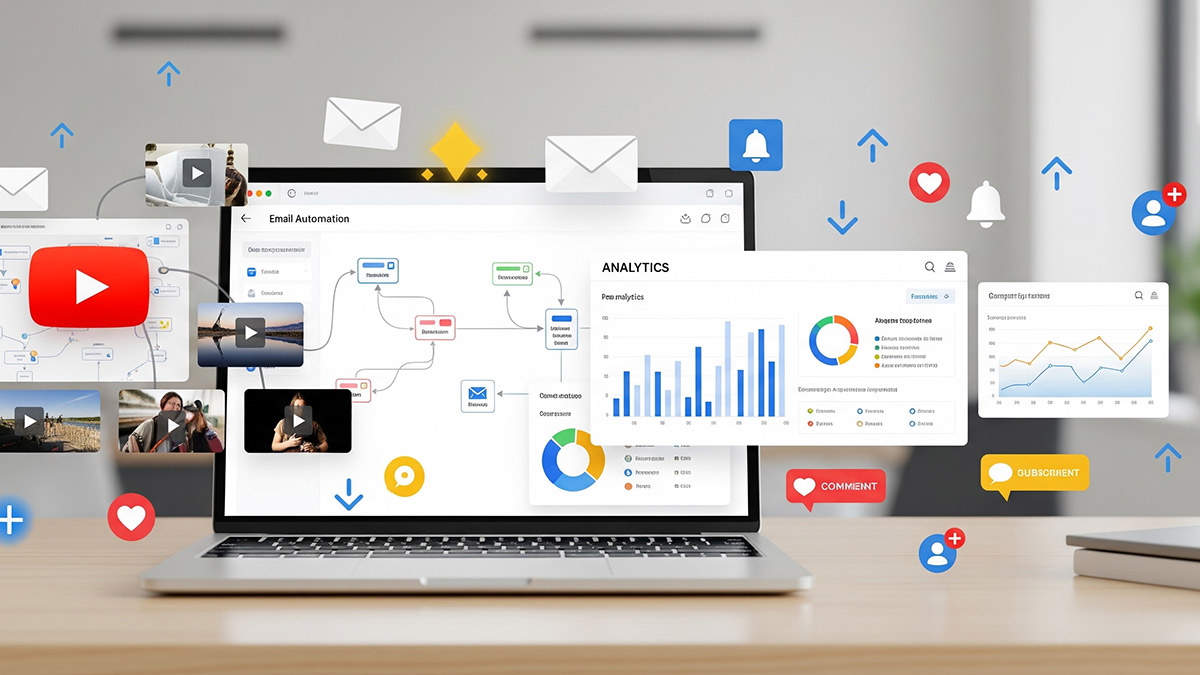
In the modern digital landscape, businesses are constantly seeking innovative ways to reach their audience, build relationships, and drive conversions. Two of the most powerful tools in digital marketing today are email automation and YouTube marketing. These strategies not only help brands engage with their audience but also provide measurable results that can significantly impact business growth. Platforms like ExamCollection offer valuable insights and resources for mastering these techniques. In this article, we will explore how email automation and YouTube marketing can transform your digital strategy and help you achieve long-term success.
The Power of Email Marketing Automation
Email marketing remains one of the most effective channels for communication and conversion. However, manually managing email campaigns can be time-consuming and inefficient. This is where marketing automation comes into play. Automation tools allow businesses to send personalized messages based on user behavior, preferences, and engagement patterns. This not only improves efficiency but also enhances the customer experience.
Benefits of Marketing Automation
Marketing automation provides several advantages, including increased productivity, improved targeting, and better customer retention. By automating repetitive tasks, businesses can focus on strategy and creativity. Additionally, automation enables marketers to segment their audience and deliver highly relevant content, which leads to higher open rates and conversions. It also provides valuable analytics that help optimize campaigns for better performance.
How to Master Email Automation
To master email automation, businesses need to understand their audience and create targeted campaigns. This involves setting up workflows, designing engaging email templates, and analyzing performance metrics. Tools like CRM systems and automation platforms can help streamline the process. Learning from expert guides and resources can significantly improve your skills and results.
The Rise of YouTube Marketing
YouTube has become one of the most influential platforms for digital marketing. With billions of users worldwide, it offers businesses an فرصة to reach a massive audience. Video content is highly engaging and can convey messages more effectively than text or images. As a result, many brands are investing in YouTube marketing to build their online presence and connect with their audience.
Key Strategies for YouTube Success
Successful YouTube marketing requires a well-planned strategy. This includes creating high-quality content, optimizing videos for search, and engaging with viewers. Consistency is also crucial, as regular uploads help build a loyal audience. Additionally, using analytics tools can help track performance and identify areas for improvement.
Explore more: https://www.examcollection.com/blog/master-youtube-marketing-with-these-10-powerful-steps/
Combining Email and YouTube Marketing
Integrating email automation with YouTube marketing can create a powerful synergy. For example, businesses can use email campaigns to promote new videos, share exclusive content, and drive traffic to their YouTube channel. Similarly, YouTube videos can encourage viewers to subscribe to email lists, creating a continuous cycle of engagement. This integrated approach can significantly enhance marketing effectiveness.
The Role of Data and Analytics
Data plays a crucial role in both email and YouTube marketing. By analyzing user behavior and engagement metrics, businesses can make informed decisions and optimize their strategies. Metrics such as open rates, click-through rates, watch time, and subscriber growth provide valuable insights into campaign performance. Using these insights, marketers can refine their approach and achieve better results.
Challenges and How to Overcome Them
While email automation and YouTube marketing offer numerous benefits, they also come with challenges. These include content creation, audience engagement, and staying updated with changing algorithms. To overcome these challenges, businesses need to invest in continuous learning and adapt to new trends. Leveraging reliable resources and expert guidance can make a significant difference.
Future Trends in Digital Marketing
The future of digital marketing is likely to be shaped by advancements in artificial intelligence, personalization, and interactive content. Automation tools will become more sophisticated, enabling even more personalized experiences. Video content will continue to dominate, with platforms like YouTube playing a central role in marketing strategies. Businesses that stay ahead of these trends will have a competitive advantage.
FAQ
1. What is email marketing automation?
Email marketing automation involves using software to send targeted and personalized emails based on user behavior and preferences.
2. Why is YouTube important for marketing?
YouTube provides a platform to reach a large audience and engage users through video content.
3. Can small businesses benefit from these strategies?
Yes, both email automation and YouTube marketing are highly scalable and suitable for businesses of all sizes.
4. How can I improve my email open rates?
By creating compelling subject lines, segmenting your audience, and delivering relevant content.
5. What tools are used for YouTube marketing?
Tools like video editing software, analytics platforms, and SEO tools are commonly used.
Conclusion
Digital marketing is evolving rapidly, and businesses must adapt to stay competitive. Email automation and YouTube marketing are two powerful strategies that can drive significant growth when implemented effectively. Email automation allows businesses to deliver personalized and timely messages, improving customer engagement and retention. On the other hand, YouTube marketing provides a platform to connect with a vast audience through engaging video content. By combining these strategies, businesses can create a comprehensive marketing approach that maximizes reach and impact. Platforms like ExamCollection offer valuable resources that help marketers understand and implement these techniques effectively. The integration of data and analytics further enhances the effectiveness of these strategies, enabling businesses to make informed decisions and optimize their campaigns. However, success in digital marketing requires continuous learning, creativity, and adaptability. As technology continues to advance, new opportunities and challenges will emerge. Businesses that stay updated with the latest trends and leverage the right tools will be well-positioned for success. Ultimately, mastering email automation and YouTube marketing can lead to increased brand visibility, higher engagement, and improved conversion rates. By investing time and effort into these strategies, businesses can achieve sustainable growth and long-term success in the competitive digital landscape.






