MAM
Effies 2015: MullenLowe Lintas crowned Agency of the Year

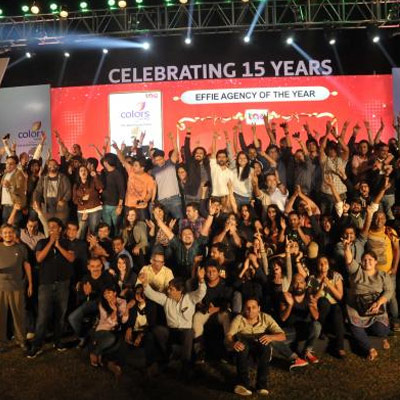
MUMBAI: It’s that time of the year again when the entire advertising, marketing and creative media fraternity converge together to laud the most effective creative work amongst their peers. The Effie Awards, organised by The Advertising Club, has entered its 15th chapter with much pomp and show.
Even as the Effie Awards 2015 left agencies wanting for more Gold trophies as several categories went without any takers in the category, MullenLowe Lintas was crowned Agency of the Year with the most number of metals to its name. Claiming victory over four different categories and tying with themselves on a single, MullenLowe Lintas took home six Gold Effies, followed by five Silver and 13 Bronze trophies, making their overall count 24. The agency’s winning streak was bagging the Grand Effie for the campaign, ‘Drinks and Memories’ for Paperboat under the Integrated Advertising Campaign category.

Amongst marketers, Hindustan Unilever was named as the Client of the Year for its award winning campaigns for various brands.
A total of 15 Gold, 26 Silver and 54 Bronze statuettes were given away at the Effie Awards 2015.
Defending champions, Ogilvy and Mather (O&M) emerged as the agency to take home the most number of metals — four Gold, four Silver and a whopping 20 Bronze statuettes — taking their award tally to 28.
McCann Worldgroup India was third in line to bag the maximum awards with two Gold, four Silver and four Bronze, followed by DDB Mudra with four Silver and five Bronze. BBDO India took home two Gold, and one Bronze. The last Golden trophy was taken home by Contract Advertising for its campaign for Truecaller under Telecom and related products category.
The Leo Group India bagged two Silver and one Bronze statuettes.
Law & Kenneth Saatchi & Saatchi won Silver for the newly introduced category of New Product or Service – ‘Best campaign for a Start up category’ for their offline to online furniture shopping campaign for Pepperfry.com, while MullenLowe Lintas Group India bagged the bronze for ‘Life Mein Campaign’ for Practo. JWT also took home two Bronze.
The Effie India Awards 2015 were adjudged by an eminent jury panel of 285 industry leaders from across Mumbai, Delhi and Bangalore representing agency and clients. Some of the key categories included were consumer products, consumer durable, services, healthcare, small town and rural marketing etc.
“In an era where marketing budgets are under strain and scrutiny, it is extremely heartening that effectiveness has become the mantra of the marketing and advertising fraternity. The overwhelming response to the Effie 2015 is witness to this, with an all-time high participation of 57 agencies and 603 entries. The fact that the Effie award has become the most coveted trophy on the shelves of marketers and agency alike is the greatest joy for me,” said Effie India Awards 2015 chairman Ajay Kakkar.
Elaborating further on the entries, Effie India Awards 2015 co-chairman Vikram Sakhuja said, “The Effies this time too has it all, the power of insight, non-conventional marketing plans and ultimately a great brand success stories.”
“The business environment is constantly changing and it is imperative that we align ourselves these changes to meet the expectations of our clients. I take this opportunity to appreciate and congratulate all the winners and my industry colleagues who are driving and leading this change,” added The Advertising Club president and Colors CEO Raj Nayak in parting.






MAM
Ogilvy appoints Carol Reed as Global Chief Innovation Officer
Advertising veteran joins to drive human-first innovation in an AI-powered world.

MUMBAI: Carol Reed has found a new creative canvas and this time, she’s bringing her innovation brush to one of advertising’s most iconic names. Ogilvy Group has appointed Carol Reed as its new global chief innovation officer. Reed, who previously served as Chief Innovation Officer at WPP Open X, brings deep expertise at the intersection of creativity, technology, media, and commerce.
In a note announcing her move, Reed said she was drawn to Ogilvy because of its unmatched legacy. “The most powerful thing AI can do is make human creativity more extraordinary not replace it,” she stated. “This is an agency with something no algorithm can replicate, a 78-year legacy of ideas that change culture and drive real business results.”
Reed will focus on building new products, platforms, and partnerships to amplify Ogilvy’s creative heritage for clients and its global talent network. She will work closely with Global CEO Laurent Ezekiel and global chief creative officer Liz Taylor.
Her career began at Publicis Groupe’s Digitas as an associate media planner. She later moved to Omnicom Media Group and rose to senior vice president and programmatic lead at Digitas, where she built an in-house programmatic team of over 40 members. Most recently, at WPP, she served as executive vice president for data and product marketing.
With her appointment, Ogilvy strengthens its innovation leadership as the industry navigates rapid advancements in AI and technology.
From building programmatic teams to championing human creativity in an AI era, Carol Reed has consistently stayed ahead of the curve. Her arrival at Ogilvy signals a fresh push to blend cutting-edge innovation with the agency’s legendary creative spirit.






