MAM
Doceree launches text-based programmatic ads in Rx drug marketing

NEW DELHI: Doceree Inc has launched the first text-based programmatic advertising for pharmaceutical brands, with a view to making Rx drug marketing effective and efficient.
The company is on a mission to accelerate digital adoption among Rx drug brands globally. With the latest product release, Doceree is aiming to cut the high level of approvals required for making a digital campaign live and create an environment that is conducive for digital ways of working. This will help facilitate ease of approval and ease of optimization, resulting in better efficiency of digital campaigns.
Rx drug brands are behind the curve in digital adoption compared to consumer brands which have gained significantly by implementing digital technologies. As Rx drug manufacturers work under the ambit of stringent rules and regulations, they already remain guarded with digital marketing campaigns. On top of it, strict branding guidelines further delays digital campaigns, making it tough for Rx drug companies to embrace the digital change.

“Time frames are longer and there are multiple layers of approvals in pharmaceuticals. It gets all the more complex in case a digital campaign of a brand consists of a visual. A lot of details are involved with regard to the brand’s colour scheme, placement of logo, zinc codes, fonts to be used, among others. Many resources are used as well in building those creatives. To accelerate the approval process in pharma and fasten up the process of digital campaigns, we have launched yet another feature of text-based programmatic ads that does away with the use of any visuals in campaigns. This shall result in faster implementations and quicker digital campaigns,” said Doceree founder-CEO Harshit Jain.
Prior to launching the new product feature, the company also took into account the fact that physicians effectively consume scientific content that does not have any visuals.
In the recent past, the company has launched programmatic display ads, AI-enabled dashboard to ensure transparency in doctor reach and results and recently introduced a feature of programmatic email.


MAM
8PM Packaged Drinking Water named Lead Trouser Sponsor for Sunrisers Hyderabad
Brand partners with IPL team for 2026 season with campaign ‘Rise in Orange, Celebrate with Black’.
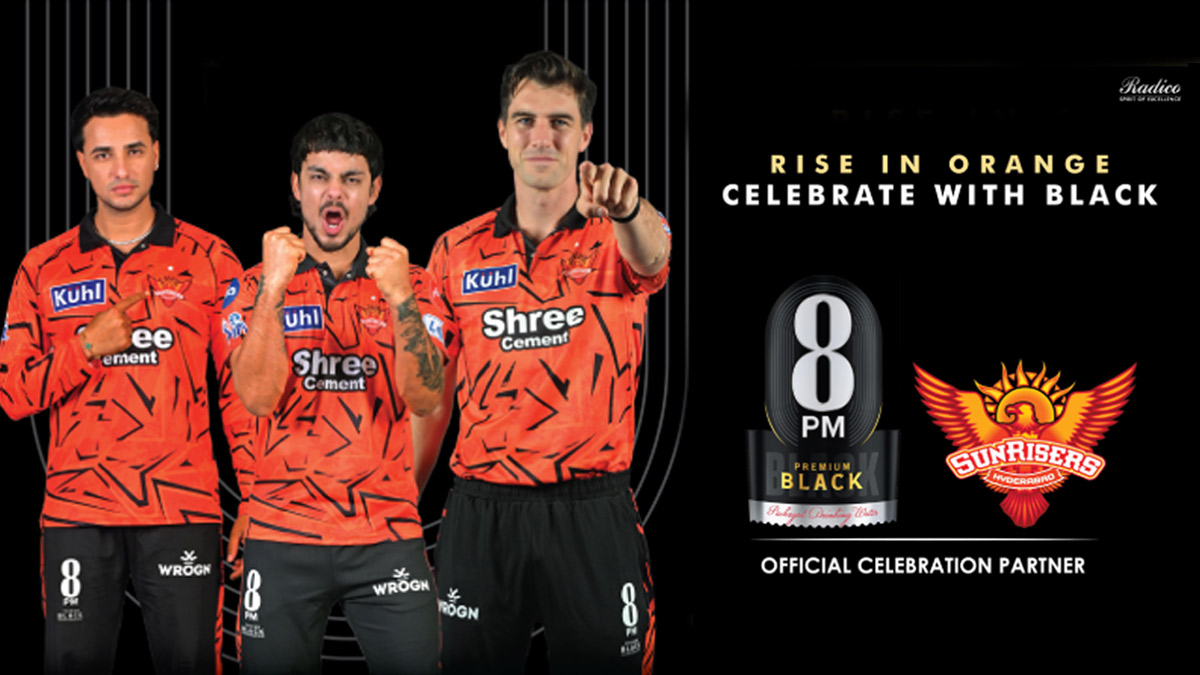
MUMBAI: 8PM Packaged Drinking Water has found a clever way to stay in the game by hitching its wagon to one of cricket’s most exciting teams. The brand from Radico Khaitan Limited has announced its association with Sunrisers Hyderabad as the Lead Trouser Sponsor for India’s Premier Cricket League 2026. The partnership will see 8PM Packaged Drinking Water gain prominent visibility during the high-energy tournament.
To mark the collaboration, the brand has launched the campaign thought “Rise in Orange, Celebrate with Black.” The idea cleverly links the on-field intensity of Sunrisers Hyderabad’s iconic orange jersey with the off-field celebrations powered by 8PM Premium Black Packaged Drinking Water.
Radico Khaitan Limited chief marketing officer Kunal Madan said, “We are delighted to be associated with Sunrisers Hyderabad for the 2026 season. With the league’s unmatched reach and the team’s strong fan following, this is a great opportunity to connect meaningfully with consumers across the country.”
Sunrisers Hyderabad enters the season with a formidable lineup featuring players such as Abhishek Sharma, Ishan Kishan, Travis Head, and Pat Cummins, making it one of the most watched teams this year.
A spokesperson from Sunrisers Hyderabad added, “We are pleased to welcome 8PM Packaged Drinking Water to the Sunrisers family. This association brings together shared values of energy, resilience, and excellence.”
The partnership underscores Radico Khaitan’s strategy of aligning with marquee sporting platforms to build contemporary, consumer-centric brands. By tapping into the emotional connect and massive viewership of the league, 8PM aims to deepen engagement and strengthen brand affinity during the cricket season.
In the fiercely competitive world of Indian cricket sponsorships, 8PM has chosen to play it smart, pairing the thrill of orange with the cool refreshment of black. As Sunrisers Hyderabad prepare for another exciting season, the brand is set to ride the wave of passion, performance, and celebration.







