MAM
Discovery, Interference’s creativity for ‘Shark Week’

NEW YORK: This is news that should give our broadcasters some pause for thought! Discovey US is continuously thinking of unusual ways to promote its specials. Earlier this year it used the ad agency Interference Inc. to promote Walking With Cavemen which was its collaboration with BBC Worldwide.
That initiative saw 30 “cave people” taking a tour of three key cities – New York, Los Angeles and Washington D.C. More recently to create buzz around Shark Week, which aired in the US from 10-17 August, the network again embraced the alternative outdoor advertising medium.
Work done for Shark Week (Picture courtesy mediapost.com)
A Mediapost report indicates that the cities targeted this time were New York, Los Angeles, Las Vegas and Orlando. The out of home (OOH) ads that intereference Inc. created supported print, TV and outdoor advertising. Noteworthy was an underwater ad in the shape of a great white shark approaching from below coupled with details of when the show would air. The decal, measuring 6,500-square feet, was placed on the bottom of the world-class wave pool at the Mandalay Bay Resort & Casino in Las Vegas from 1-10 August.

A similar underwater ad, measuring 1,000 square feet, was installed on the pool bottom at the Royal Pacific Resort Hotel in Orlando. Another highlight were the shark bite media. Here common objects such as cars, surfboards and trashcans appeared as if they had been victims of shark attacks. The objects were placed in high-traffic areas such as Times Square and Grand Central Station in New York and Santa Monica Pier and Sunset Boulevard in Los Angeles. The basic message was “Shark Week Is Back.” Interference has dubbed this unique marketing style guerilla campaign.
The Cavemen campaign
Such a campaign often involves face-to-face interaction at times and places when people are most receptive to hearing about the brand. These times and places differ depending on the product, messaging, desired result and consumer mindset. Guerrilla and alternative marketing also manifests itself in unique ways for consumers to encounter a brand message. These encounters are usually media spaces that are created for the purpose of the message distribution, not traditional ‘ad buys.’ Examples include feet on the street, product sampling, publicity stunts, random free shuttle buses as well as random acts of kindness. Guerrilla Marketing is effective as it is able to deliver a relevant message to a desired individual, at an appropriate location, in a time when they are most receptive to it by any means necessary.
Coming back to Discovery, the agency claims that the Cavemen campaign was a huge success. It managed to stop traffic in almost every location. Consumers took lots of pictures with the cavemen. This translated into on-air ratings. It remains to be seen whether or not the Shark Week campaign drew a similar response.






MAM
8PM Packaged Drinking Water named Lead Trouser Sponsor for Sunrisers Hyderabad
Brand partners with IPL team for 2026 season with campaign ‘Rise in Orange, Celebrate with Black’.
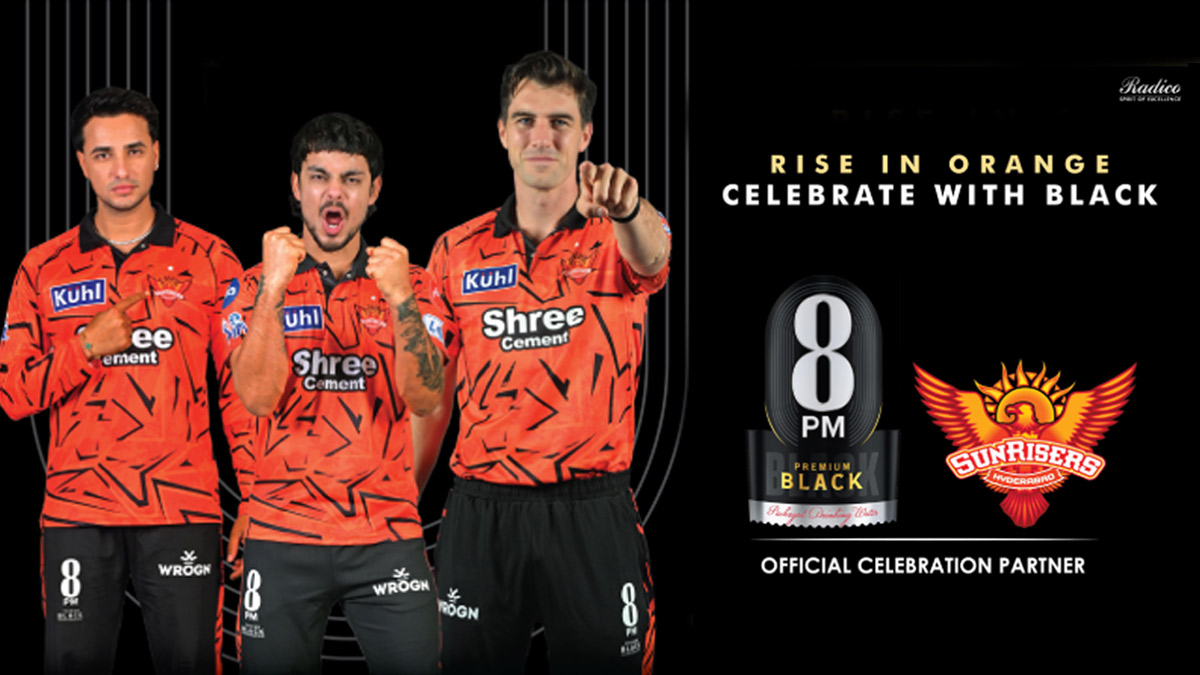
MUMBAI: 8PM Packaged Drinking Water has found a clever way to stay in the game by hitching its wagon to one of cricket’s most exciting teams. The brand from Radico Khaitan Limited has announced its association with Sunrisers Hyderabad as the Lead Trouser Sponsor for India’s Premier Cricket League 2026. The partnership will see 8PM Packaged Drinking Water gain prominent visibility during the high-energy tournament.
To mark the collaboration, the brand has launched the campaign thought “Rise in Orange, Celebrate with Black.” The idea cleverly links the on-field intensity of Sunrisers Hyderabad’s iconic orange jersey with the off-field celebrations powered by 8PM Premium Black Packaged Drinking Water.
Radico Khaitan Limited chief marketing officer Kunal Madan said, “We are delighted to be associated with Sunrisers Hyderabad for the 2026 season. With the league’s unmatched reach and the team’s strong fan following, this is a great opportunity to connect meaningfully with consumers across the country.”
Sunrisers Hyderabad enters the season with a formidable lineup featuring players such as Abhishek Sharma, Ishan Kishan, Travis Head, and Pat Cummins, making it one of the most watched teams this year.
A spokesperson from Sunrisers Hyderabad added, “We are pleased to welcome 8PM Packaged Drinking Water to the Sunrisers family. This association brings together shared values of energy, resilience, and excellence.”
The partnership underscores Radico Khaitan’s strategy of aligning with marquee sporting platforms to build contemporary, consumer-centric brands. By tapping into the emotional connect and massive viewership of the league, 8PM aims to deepen engagement and strengthen brand affinity during the cricket season.
In the fiercely competitive world of Indian cricket sponsorships, 8PM has chosen to play it smart, pairing the thrill of orange with the cool refreshment of black. As Sunrisers Hyderabad prepare for another exciting season, the brand is set to ride the wave of passion, performance, and celebration.







